Can supplements replace diet and a healthy lifestyle?

Sonia Biecka
Dietitian

Medical review: lek. Wojciech Sierocki
Content medically reviewed by an Optimals team physician.

A multivitamin in the morning. Omega-3 at lunch. Vitamin D. Magnesium. A probiotic. Something "for immunity". Plus a few more capsules meant to improve sleep, focus or metabolism.
If the supplement stack is well chosen, can you worry a little less about your diet?
The short answer is: no.
Supplements can complement a diet, prevent specific deficiencies or help treat them. At certain stages of life and with certain eating patterns they matter a great deal.
But they are not a substitute for vegetables, fruit, wholegrain products, fish, legumes, adequate protein intake, physical activity, sleep or not smoking.
And this is not simply about "natural being better".
It is that diet and lifestyle act on far more areas of the body than a single vitamin sealed in a capsule.
A supplement complements a diet. It does not rebuild one
Picture someone whose eating pattern rests mainly on sugary drinks, ready-made snacks, fast food and products with very little fibre.
On top of that, they take a multivitamin every day.
The product may deliver vitamin C, B vitamins, zinc or selenium.
What it will not deliver is what a properly composed diet provides as a whole.
It will not replace adequate fibre. It will not affect satiety the way a complete meal does. It will not automatically reduce intake of salt, added sugars or saturated fat. It will not change the energy content of the diet.
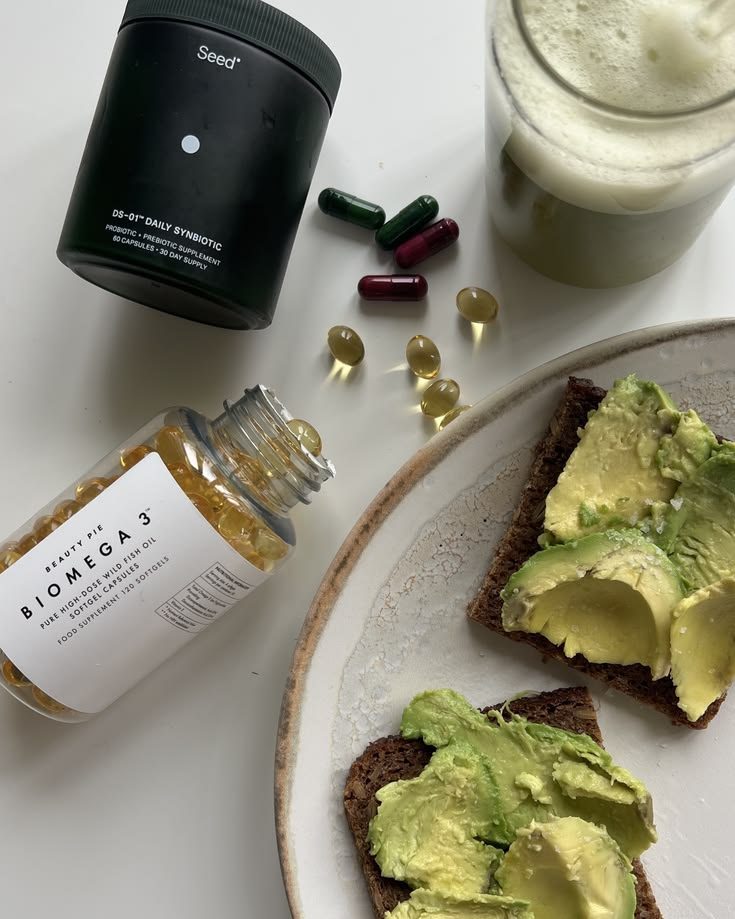
Foods also supply many substances that occur together within the natural structure of food, among them polyphenols, carotenoids and other bioactive compounds.
This is why current nutrition recommendations still base chronic disease prevention primarily on whole dietary patterns rich in vegetables, fruit, wholegrain products, legumes, nuts, fish and sources of unsaturated fats. The same mechanism sits behind what an anti-inflammatory diet actually means in practice: the whole eating pattern does the work, not a single ingredient.
Health is more than adequate vitamin levels
Suppose supplementation covers your requirement for most vitamins and minerals.
That still leaves:
- diet quality,
- energy balance,
- fibre intake,
- the quality of the fats you eat,
- physical activity,
- muscle function,
- sleep,
- smoking,
- alcohol,
- blood pressure,
- body weight and how it is distributed,
- recovery.
There is no capsule that can simultaneously replace all of these.
Research on whole dietary patterns illustrates this well. A 2024 meta-analysis covering 18 studies found that higher diet quality, assessed with the Healthy Eating Index, was associated with lower all-cause, cardiovascular and cancer mortality. People in the highest diet-quality category had roughly 20% lower risk of death from any cause than those in the lowest category. These are observational data, so they do not directly prove causation, but they fit the broader body of research on healthy eating patterns.
Similar conclusions come from research on the Mediterranean diet, whose benefits were observed particularly in the context of cardiovascular health.
Can a multivitamin be "insurance" against a poorer diet?
It is a very appealing idea.
I do not eat perfectly, so I will take a product containing a dozen or so vitamins and minerals. If something is missing from the diet, the capsule will make up the difference.
The problem is that research does not clearly show that routine multivitamin use by healthy adults protects against the major chronic diseases.
A review prepared for the U.S. Preventive Services Task Force analysed 84 studies covering more than 739,000 participants in total. For most vitamins and minerals it found little or no meaningful effect on the risk of cardiovascular disease, cancer and mortality in healthy people without documented deficiencies.
The USPSTF concluded that current evidence is insufficient to recommend for or against routine multivitamin use for preventing cardiovascular disease and cancer. At the same time it recommended against using vitamin E or beta-carotene for that purpose.
A large cohort study published in 2024 followed more than 390,000 healthy adults. Regular multivitamin use was not associated with improved longevity.
This does not mean multivitamins "do not work".
It means something far more specific:
we have no grounds for treating a multivitamin as a substitute for a healthy diet or as a way to prevent most chronic diseases in a healthy person.
But the body does need vitamins
Of course it does.
Supplementation itself is not the problem.
The problem appears when we draw a faulty conclusion from a correct observation:
"If vitamin C is needed, then more vitamin C must mean more health".
The body needs specific amounts of nutrients. Once adequate intake is reached, piling on ever larger doses does not necessarily bring additional benefit.
The same applies to other nutrients.
If someone is iron deficient, correcting it can be very important.
If iron is not lacking, an extra 50 mg a day does not automatically deliver "more energy".
If someone is deficient in vitamin B12, correcting it properly is treatment.
If there is no deficiency, taking enormous doses does not mean a proportional improvement in how the body functions.
Supplementation makes the most sense when it answers a specific need.
There are, however, situations where supplementation is genuinely needed
And it is important not to swing to the opposite extreme.
The claim that "everything can be supplied by diet" is not always true either.
Folic acid before and in early pregnancy
This is one of the best examples of supplementation with well-documented importance.
The WHO recommends that women planning a pregnancy take 400 µg of folic acid daily from the time they start trying until week 12 of pregnancy, in order to reduce the risk of neural tube defects. Different doses are used in specific clinical situations.
Here a diet rich in folate remains important, but it does not replace the recommended supplementation.
Vitamin B12 on a diet that excludes animal products
Vitamin B12 occurs naturally above all in foods of animal origin.
NICE lists an eating pattern that excludes or heavily restricts animal products as one of the factors increasing the risk of B12 deficiency, particularly if the diet does not regularly include fortified foods or an appropriate supplement.
In a well-planned vegan diet, supplementing vitamin B12 is therefore not a sign that the diet is "bad".
It is part of planning it properly.
Vitamin D
Vitamin D is a special case, because the scope for meeting requirements by diet alone is limited, and skin synthesis depends among other things on exposure to UVB radiation.
Polish recommendations from 2023 set out preventive vitamin D supplementation according to age, body weight, sun exposure and other factors.
At the same time, this does not mean that larger doses of vitamin D prevent every disease. The 2024 Endocrine Society guideline indicates that in healthy adults under 75, no benefit has been demonstrated from routinely using doses above the recommended intake purely for broad disease prevention.
Iron deficiency
Here a supplement is not a "wellness extra".
It can be part of treatment.
If tests confirm iron deficiency, appropriately chosen preparations can rebuild stores. At the same time it is very important to establish why the deficiency occurred, particularly when anaemia is present.
Malabsorption and gastrointestinal surgery
Coeliac disease, inflammatory bowel disease, some bariatric operations and extensive gastrointestinal procedures can all increase the risk of deficiencies.
In such situations supplementation may be necessary long term, and sometimes larger doses or a different route of administration are required.
For instance, current NICE guidance on vitamin B12 indicates that after some gastrointestinal operations, or with malabsorption, ongoing B12 replacement may be necessary.
A supplement will not repair a low-quality diet
Suppose someone takes:
- vitamin C,
- magnesium,
- a multivitamin,
- omega-3.
At the same time their diet contains very few vegetables, fruit, legumes and wholegrain products, and most of their energy comes from ultra-processed foods.
Does supplementation make the two eating patterns metabolically equivalent?
No.
A large umbrella review published in the BMJ in 2024, covering data from almost 10 million participants, found numerous associations between a higher share of ultra-processed food in the diet and adverse health outcomes, particularly in metabolic and cardiovascular health. It should be noted that a substantial part of these data came from observational studies, so not every association can be treated as causal.
A vitamin tablet does not change the fact that the overall eating pattern may remain unfavourable.
A supplement does not replace movement either
You can take magnesium, vitamin D, creatine and omega-3.
None of these supplements produces the effects the body gets from muscles working regularly.
Physical activity affects, among other things, fitness, muscle strength, glucose metabolism, blood pressure, cardiovascular health, bone health and the ability to stay functional with age.
The same goes for sleep.
There is no supplement that biologically replaces regularly sleeping an adequate number of hours.
A product "for stress" likewise does not remove the source of chronic overload.
A supplement can act on one specific element. Lifestyle acts on the whole system.
What about supplements like omega-3, creatine or protein powder?
This is a good example of why it is not worth lumping all supplements together.
Protein powder can simply be a convenient way to increase protein intake.
Creatine has well-documented use above all in the context of exercise and increasing the capacity for short, high-intensity work.
Omega-3 fatty acids can matter in specific clinical and nutritional situations.
None of this changes the basic principle.
An effective supplement does not thereby become a substitute for a proper diet.
A serving of protein powder can help you reach adequate protein intake, but it will not deliver the same set of nutrients as a complete meal.
Omega-3 in a capsule can supply EPA and DHA, but it does not replace the full nutritional value of fish.
So the question to ask is not:
"Is this supplement good?"
but:
"What specific problem is it supposed to solve?"
Is it worth taking supplements "just in case"?
Not always.
Taking products without a specific indication can lead to unnecessary duplication of the same ingredients.

The multivitamin contains vitamin D.
You take vitamin D separately.
The "immunity" product also contains vitamin D.
The magnesium supplement additionally contains vitamin B6.
Another supplement contains B6 as well.
The daily dose ends up having little in common with what it looked like at the outset.
The Committee of Human Nutrition Science of the Polish Academy of Sciences points to both the risk of taking excessive amounts of vitamins and minerals and the possibility of interactions between supplements and medicines.
This is why a supplement list should be analysed as a whole, not as several independent products.
More does not mean better
For some nutrients, an excess can be harmful.
The USPSTF points among other things to the possibility of adverse effects at high doses of vitamin A, vitamin D, calcium and some other nutrients.
The best-documented example is beta-carotene. Supplementing it increased the risk of lung cancer in higher-risk groups, smokers among them.
That is another reason why the logic:
"if a small amount is needed, a large amount will be even better"
does not hold in nutrition.
When does supplementation make the most sense?
A good supplement should have a specific job to do.
That job might sound like:
"I supplement vitamin B12 because I do not eat foods that are a reliable source of it",
"I follow the recommended preventive vitamin D supplementation",
"I am treating a confirmed iron deficiency",
"I am preparing for pregnancy and taking folate as recommended",
"after bariatric surgery I have to supplement specific nutrients".
Far less convincing is:
"I take it for metabolism",
"to cleanse the body",
"just in case",
"because apparently everyone is deficient".
The more specifically we can answer the question what for, the greater the chance that supplementation is genuinely justified.
What to check before buying your next supplement
It is worth starting with a few simple questions.
Is there a real indication?
Does it follow from a deficiency, an eating pattern, age, pregnancy, illness, medication or a specific goal?
Can the nutrient be effectively supplied by diet?
If the problem is too few vegetables, a capsule will not be the best solution.
Is the dose justified?
1000% of the reference intake does not automatically mean a product that is "10 times better".
Am I already taking this ingredient in another product?
It is worth reviewing the whole supplement list.
Could the supplement interact with my medication?
This applies particularly to people on long-term treatment.
Does the product address my problem, or does it mainly sound good in marketing terms?
That last question can eliminate a surprising number of products from the list. Once you know a given ingredient really is needed, the next step is assessing the quality of the supplement itself.
Summary
Supplements can be a very valuable tool.
They can prevent deficiencies.
They can treat them.
They can supply nutrients that, for various reasons, are hard to obtain in adequate amounts.
They can be essential in pregnancy, with certain eating patterns, in illness or with malabsorption.
But there is one thing they cannot do:
replace a healthy lifestyle.
A multivitamin will not replace vegetables.
Omega-3 will not replace a whole healthy way of eating.
Magnesium will not replace sleep.
A product "for metabolism" will not replace physical activity.
So rather than building an ever longer supplement list, it is worth taking care of the foundations first.
Diet, movement, sleep and prevention form the foundation. Supplementation should be a well-chosen addition to it, not an attempt to build the foundation out of capsules.
Frequently asked questions
Can a multivitamin replace vegetables and fruit?
No. It can supply some vitamins and minerals, but it does not reproduce the full nutritional value of vegetables and fruit, including fibre and many bioactive compounds. Current nutrition recommendations still advise that nutrient requirements be met first and foremost through a properly composed diet.
Is it worth taking a multivitamin every day?
In a healthy person eating a varied diet, there is not enough evidence to recommend routine multivitamin use for preventing cardiovascular disease or cancer. The decision may look different where there are specific deficiencies or increased requirements.
Can you have a healthy diet and still need supplementation?
Yes. Good examples are folate before pregnancy, vitamin B12 on a vegan diet, and preventive vitamin D supplementation in line with national recommendations. Supplementation and a healthy diet are not opposites.
Is vitamin D supplementation enough if I barely leave the house?
No. Vitamin D can top up one specific nutrient, but it does not replace the effects of physical activity, time outdoors, proper sleep or the remaining elements of lifestyle.
Can a supplement make up for lack of sleep?
No. There is no supplement that replaces the biological function of sleep. Caffeine or other substances can temporarily reduce the feeling of sleepiness, but they do not remove the consequences of chronic sleep deprivation.
Can “immunity” products replace a healthy lifestyle?
No. Proper immune function depends on many factors. Correcting a genuine deficiency in a specific nutrient can be important, but taking large doses of vitamins without a deficiency does not automatically create "stronger immunity".
Can supplements be harmful?
Yes. Particularly at high doses, when combining several products and through interactions with medicines. "Over the counter" does not mean "without risk".
Are all supplements unnecessary if I eat well?
No. In some situations supplementation is recommended regardless of how good the diet is. It all depends on the specific nutrient, health situation, age, eating pattern and stage of life.
References
- O'Connor E.A. et al. Vitamin, Mineral, and Multivitamin Supplements for the Primary Prevention of Cardiovascular Disease and Cancer: Updated Evidence Report and Systematic Review for the US Preventive Services Task Force. JAMA, 2022;327(23):2334–2347.
- US Preventive Services Task Force. Vitamin, Mineral, and Multivitamin Supplementation to Prevent Cardiovascular Disease and Cancer: Preventive Medication. JAMA, 2022.
- Loftfield E. et al. Multivitamin Use and Mortality Risk in 3 Prospective US Cohorts. JAMA Network Open, 2024;7(6):e2418729.
- Hao X., Li D. The Healthy Eating Index-2015 and All-Cause/Cause-Specific Mortality: A Systematic Review and Dose-Response Meta-Analysis. Advances in Nutrition, 2024;15(3):100166.
- Lane M.M. et al. Ultra-processed food exposure and adverse health outcomes: umbrella review of epidemiological meta-analyses. BMJ, 2024;384:e077310.
- Sebastian S.A. et al. Long-term impact of Mediterranean diet on cardiovascular disease prevention: A systematic review and meta-analysis of randomized controlled trials. Current Problems in Cardiology, 2024.
- Hareer L.W. et al. The effectiveness of the Mediterranean Diet for primary and secondary prevention of cardiovascular disease: An umbrella review. Nutrition & Dietetics, 2025.
- Płudowski P. et al. Guidelines for Preventing and Treating Vitamin D Deficiency: A 2023 Update in Poland. Nutrients, 2023;15(3):695.
- Demay M.B. et al. Vitamin D for the Prevention of Disease: An Endocrine Society Clinical Practice Guideline. Journal of Clinical Endocrinology & Metabolism, 2024.
- NICE. Vitamin B12 deficiency in over 16s: diagnosis and management. NG239, 2024.
- Snook J. et al. British Society of Gastroenterology guidelines for the management of iron deficiency anaemia in adults. Gut, 2021;70:2030–2051.
- Jarosz M. et al. Statement of the Committee of Human Nutrition Science of the Polish Academy of Sciences on the use of dietary supplements containing vitamins and minerals by adults. 2021.