
How to assess the quality of a dietary supplement

Sonia Biecka
Dietitian

Medical review: lek. Wojciech Sierocki
Content medically reviewed by an Optimals team physician.
"Which magnesium is best?", "Which vitamin D should I buy?", "Does this omega-3 have a good formulation?" When choosing a supplement, most of us start with the ingredient list.
That is a good starting point, but it is not enough. It is also worth settling an earlier question first: whether supplements can replace diet, and whether the product in question solves a specific problem at all.
Two supplements can declare an identical amount of vitamin D, magnesium or omega-3 fatty acids and still differ significantly in quality. What matters is not only what the manufacturer printed on the label, but also:
- whether the declared ingredient is actually present in the product,
- whether it is present in the declared amount,
- whether an appropriate form and dose were used,
- whether the product is tested for contaminants,
- whether it remains stable until the end of its shelf life,
- whether the manufacturer can document the quality of a specific batch.
A dietary supplement is not a medicine
In Poland and the European Union, a dietary supplement is legally classified as a foodstuff intended to supplement the normal diet.
Unlike a medicinal product, a supplement does not go through the pre-market registration process that applies to drugs, nor the clinical trials required to authorise a medicinal product.
In Poland, a business placing a supplement on the market for the first time must notify the Chief Sanitary Inspectorate (GIS), which maintains a public register of notified products.
The presence of a supplement in the GIS register does not mean its quality has been approved by GIS.
GIS does not authorise dietary supplements for sale the way medicinal products are authorised. Compliance with food law is the responsibility of the business itself.
For that reason, "notified to GIS" should not be treated as a quality certificate.
What does supplement quality actually mean?
When assessing supplementation, it helps to separate three questions.
1. Product quality
Does the preparation contain the declared ingredient? Is it present in the appropriate amount? Is the product tested for contaminants and does it stay stable?
2. Ingredient efficacy
Are there reliable studies showing a benefit for this substance in a specific application?
3. Whether supplementation is justified
Does this particular person actually need this ingredient, at this dose, for a defined period of time?
So you can end up with a very well tested product containing an ingredient that a given person simply does not need. This is a common scenario with magnesium, which is why we covered when magnesium supplementation makes sense separately. The same applies to the long ingredient lists in "immune support" supplements, where a well-made product still doesn't guarantee it answers a real need.
The reverse is also possible. An ingredient may have well-documented effects but sit inside a product whose actual content differs significantly from the label declaration.
Can a supplement contain a different amount than declared?
Yes. Studies of products available on the Polish market show this.
A study published in 2021 analysed 116 supplements containing magnesium. In 58.7% of samples, the measured magnesium content fell outside the accepted tolerance ranges relative to the manufacturer's declaration.
Similar observations apply to vitamins.
A Polish analysis published in 2023 assessed supplements containing vitamins D and K. Of the 25 products analysed, only 11 had a measured vitamin content exceeding 95% of the declared value.
This does not mean most supplements on the market are of poor quality. These studies cover specific product groups and their results cannot be extrapolated to the entire market.
They do show, however, that a label carries the manufacturer's declaration, not the result of an independent laboratory analysis of that particular package.
1. Start with the full label
The front of the package is primarily marketing.
The most important information is found in the full product composition.
The label should include, among other things:
- the term "dietary supplement",
- the product composition,
- the amounts of active ingredients,
- the recommended daily portion,
- directions for use,
- a warning not to exceed the recommended portion,
- information regarding use of the product.
Polish regulations also require the amounts of ingredients with a nutritional or physiological effect to be stated per recommended daily portion.
A good label should let you answer one simple question: how much of this specific substance am I actually taking per day?
If a manufacturer heavily promotes a "1000 mg complex" but does not state the exact amount of the active substance you care about, the product deserves a closer look.
2. Look at the amount of active ingredient
This matters especially in a few popular supplement categories.
Omega-3
"1000 mg of fish oil" does not yet tell you how much EPA and DHA the product delivers.
Far more useful is:
- EPA: X mg
- DHA: Y mg
It is the combined EPA and DHA that lets you realistically assess the dose of long-chain omega-3 fatty acids. We covered the role of these fatty acids in everyday eating in our piece on the anti-inflammatory diet.
Plant extracts
"500 mg of ashwagandha" may also mean something other than 500 mg of a standardised extract.
With botanical supplements, it is worth checking:
- the species name of the plant,
- the plant part used in production,
- the type of extract,
- the extraction ratio, where relevant,
- standardisation to specific active compounds.
Modern quality control of botanical preparations uses chromatography, mass spectrometry, spectroscopic techniques and genetic methods for confirming the authenticity of plant material.
3. Check the form of the ingredient
The chemical form can affect:
- bioavailability,
- gastrointestinal tolerance,
- stability,
- the amount of elemental ingredient,
- suitability for a specific application.
That does not mean there is a single best form of every ingredient for everyone.
Claims such as "the only absorbable form", "100% bioavailability" or "the best form on the market" are best treated as marketing messages until backed by appropriate data.
The form of an ingredient should be justified by studies relating to a specific application. Creatine monohydrate is a good example, being the best studied form of that ingredient, as we described in our article on creatine for women.
4. Look for testing of the finished product
One of the strongest quality signals is being able to see analytical results for the finished supplement.
A manufacturer may test, among other things:
Identity
Is the declared substance actually present in the preparation?
Content
Does the amount of active ingredient match the declaration?
Purity
Does the product meet contaminant requirements?
Microbiology
This matters particularly in some products containing natural raw materials.
Heavy metals
Depending on the product, lead, cadmium, mercury or arsenic may be analysed.
Pesticide residues
This is relevant especially for some plant-derived raw materials.
Stability
Does the declared ingredient content hold up over the storage period?
Current reviews of supplement adulteration indicate that quality control should cover identity, purity, content and potential contaminants.
5. Ask for the Certificate of Analysis
A Certificate of Analysis, or CoA, is a certificate of analysis for a product or raw material.
The most valuable document is one relating to a specific batch of the finished supplement.
It is worth checking:
- the batch number,
- the date of analysis,
- the name of the laboratory,
- the parameters tested,
- the methods used,
- the results obtained,
- reference values or permitted limits.
An additional plus is having the analysis performed by an independent laboratory.
With laboratory testing, it is also worth checking whether the laboratory holds appropriate accreditation, for example to ISO/IEC 17025, and whether its scope covers the specific analytical method.
The phrase "laboratory tested" on its own says very little.
Far more informative is a statement such as: "This batch was tested for ingredient content, heavy metals and microbiological parameters by an independent laboratory".
6. A certificate can be a plus
Supplements may carry marks from external quality control programmes such as:
- NSF,
- USP,
- Informed Sport,
- other independent testing systems.
You do need to check what a given programme actually confirms.
Individual certifications may assess different parameters and apply different criteria.
Certification can therefore increase a product's credibility, but it is not automatic proof that supplementation works.
It may confirm quality, compliance of the composition or the absence of specific contaminants. It does not answer the question of whether a given person needs that particular supplement.
7. Pay attention to packaging and storage
Product quality can also change after it leaves the factory.
What matters:
- temperature,
- light,
- oxygen exposure,
- humidity,
- the type of packaging,
- time since opening.
Studies of omega-3 preparations show that product form and packaging type can affect oxidative stability.
Storage instructions are therefore worth treating as a real component of product quality.
8. More ingredients does not always mean better
A product containing 20 or 30 substances looks appealing on the label.
That does not automatically mean greater efficacy.
A supplement with fewer ingredients at clearly defined doses is often more transparent.
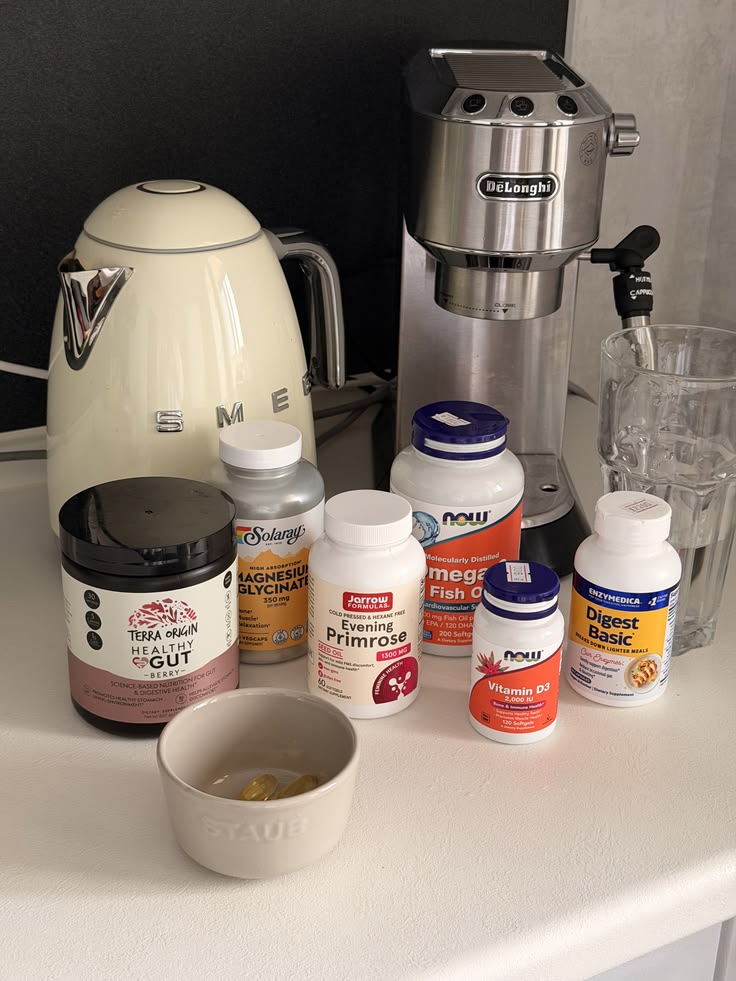
Multi-ingredient preparations also increase the risk of unknowingly doubling up on substances.
For example, one person might simultaneously take:
- a multivitamin,
- a "hair" supplement,
- an "immunity" preparation,
- vitamin D,
- magnesium.
Each product assessed on its own may look reasonable, but the problem appears once all the doses are added up.
This is why supplementation is worth analysing as a whole.
9. Be wary of products promising spectacular results
Particular caution is warranted with preparations marketed as:
- fat burners,
- rapid weight-loss preparations,
- testosterone boosters,
- some pre-workouts,
- muscle mass builders,
- products improving sexual performance.
In these product groups, one problem described in the literature is the deliberate addition of pharmacologically active substances not stated on the label.
Reviews from recent years show that contamination or adulteration of supplements with steroids, stimulants or other active substances can pose a health hazard and a doping risk.
A Polish study published in 2024 also found various contaminants and pharmacologically active substances in some of the products analysed.
Such studies do not allow the entire market to be judged, but they show why manufacturer transparency and independent testing matter.
Does natural mean safe?
No.
The natural origin of a substance does not automatically determine its:
- safety,
- efficacy,
- quality,
- appropriate dose,
- interaction risk.
Botanical supplements are a particular challenge, because beyond the content of specific compounds you also need to confirm the identity of the raw material and rule out potential admixtures and contaminants. This also applies to the ginger extract products popular in autumn, which we cover in ginger for immunity: does it really work?.
"Natural" describes where an ingredient comes from. It is not a quality certificate.
Is a more expensive supplement better?
Price alone is not a reliable indicator of quality.
It may reflect:
- raw material quality,
- the size of the dose,
- the cost of laboratory testing,
- a more advanced manufacturing process,
but also the cost of marketing, packaging, brand partnerships or margin.
When comparing two products, it is therefore worth looking beyond the price of the whole package.
Far more useful is the price of an effective daily dose of the specific ingredient.
Is a supplement from a pharmacy better?
Not automatically.
A pharmacy can be a credible sales channel, but a supplement sitting on a pharmacy shelf remains a dietary supplement.
It does not change its legal category and does not become a medicinal product.
The place of purchase may reduce some of the risk associated with a product's provenance, but it does not replace an assessment of its composition and quality.
How to evaluate a supplement before buying
Ask yourself seven questions.
1. Why do I want to take it?
Supplementation should have a specific goal.
2. Do I know the actual dose of the active ingredient?
Not the amount of a blend or complex, but the specific amount of the substance you care about.
3. Does the manufacturer clearly state the form and source of the ingredient?
This matters especially for minerals, plant extracts and omega-3 preparations.
4. Does the product have quality testing behind it?
Analyses of the finished product and of a specific batch are the most valuable.
5. Does the manufacturer show the results?
"Product tested" is far less valuable than an available analysis report.
6. Do the manufacturer's promises sound realistic?
The more spectacular the promised effect, the more closely the evidence deserves scrutiny.
7. Does the product fit my supplementation as a whole?
You need to account for other supplements, medications taken, diet and health status.
Summary
Assessing a supplement starts with the full label, not the front of the package. What counts is the specific amount of active substance in a daily portion, its form and source, and whether the manufacturer can show analytical results for a particular batch.
A registry entry, the word "natural", a higher price and a pharmacy shelf are not quality certificates. External certifications and a Certificate of Analysis say more, but they answer only the question of product quality, not whether taking it is justified.
The final question is always the same: do I need this ingredient, at this dose, for this period of time? The starting point there is diet, symptoms, medications and test results, not a product ranking.
This material is educational and does not replace an individual medical or dietetic consultation. With chronic conditions, pregnancy, breastfeeding and while taking medication, supplementation is worth discussing with a doctor or pharmacist.
Frequently asked questions
How do I check whether a supplement is of good quality?
Check the exact composition, the dose of active ingredient per daily portion, the form of the ingredient, manufacturer transparency and the availability of testing on the finished product. Analyses of a specific batch performed by an independent laboratory are the most valuable, not simply a "tested" claim on the package.
Is it worth checking a supplement in the GIS register?
Yes, it lets you check whether the product was notified to Poland's Chief Sanitary Inspectorate. Presence in the register means only that a notification was made. It does not mean GIS approved the product's quality or authorised it for sale the way medicines are authorised.
Does a certificate mean the supplement works?
No. A certificate may confirm selected quality elements, such as the composition matching the declaration or testing for specific contaminants. Efficacy depends on evidence for the specific ingredient, dose, application and population, and no quality certificate settles that question.
What is a CoA?
A Certificate of Analysis is a document containing laboratory analysis results for a product or raw material. The most informative CoA relates to a specific batch of the finished supplement and states the batch number, date of analysis, laboratory name, method used, results obtained and reference values.
Is GMP enough to judge supplement quality?
GMP is a positive signal about manufacturing standards, but the mark alone is not enough for a full assessment of a product. Testing of raw materials and the finished supplement, supplier qualification and contaminant control also matter, including heavy metals and microbiological parameters.
Is a more expensive supplement better?
Not always. Price may reflect raw material quality, dose size and the extent of laboratory testing, but it may equally come from marketing costs, packaging or brand positioning. A more useful comparison is the price of an effective daily dose of the specific ingredient.
Does more ingredients mean a better supplement?
No. Appropriate doses and a justification for each ingredient matter more. Multi-ingredient preparations also increase the risk of unknowingly doubling up on substances when someone simultaneously takes a multivitamin, a "hair" supplement, vitamin D and magnesium.
How do I check the quality of an omega-3 supplement?
Check the amount of EPA and DHA per daily portion rather than the mass of fish oil alone. The source of the oil, analytical results for EPA and DHA content, contaminant testing, oxidation parameters where the manufacturer reports them, and the recommended storage conditions all matter too.
How do I check the quality of a botanical supplement?
Look for the plant species name, the plant part used, the type of extract and information about standardisation to specific active compounds. The manufacturer should also control the identity of the raw material and potential contaminants, including pesticide residues and heavy metals.
Should everyone supplement vitamins and minerals?
No. Supplementation should be matched to your eating pattern, age, physiological status, test results, medical conditions, medications and a specific goal. The same preparation can be justified in one person and entirely unnecessary in another, even when its quality is very good.
At Optimals we do not start from a supplement ranking. We start from your diet, symptoms and test results, and reach for a preparation only when it genuinely makes sense. See how the free start works →
References
- Ma C., Monagas M., Bronstein L., Cadwallader A., Goldman V. Dietary Supplement Adulteration: Laboratory Approaches to Risk Mitigation. Journal of Natural Products. 2025;88(8):2029–2040. doi:10.1021/acs.jnatprod.5c00456.
- Stępień K.A., Kalicka A., Giebułtowicz J. Screening the quality of legal and illegal dietary supplements by LC-MS/MS. Food Additives & Contaminants: Part B. 2024;17(4):328–341. doi:10.1080/19393210.2024.2382221.
- Starek M., Gumułka P., Dąbrowska M. Quality Control of the Dietary Supplements Containing Selected Fat-Soluble Vitamins D and K. Nutrients. 2023;15(7):1650. doi:10.3390/nu15071650.
- Puścion-Jakubik A., Bartosiewicz N., Socha K. Is the Magnesium Content in Food Supplements Consistent with the Manufacturers' Declarations? Nutrients. 2021;13(10):3416. doi:10.3390/nu13103416.
- Jagim A.R., Harty P.S., Erickson J.L., Tinsley G.M., Garner D., Galpin A.J. Prevalence of adulteration in dietary supplements and recommendations for safe supplement practices in sport. Frontiers in Sports and Active Living. 2023;5:1239121. doi:10.3389/fspor.2023.1239121.
- Hands J.M., Anderson M.L., Cooperman T., Frame L.A. A Multi-Year Rancidity Analysis of 72 Marine and Microalgal Oil Omega-3 Supplements. Journal of Dietary Supplements. 2024;21(2):195–206. doi:10.1080/19390211.2023.2252064.
- Bawiec P., Sawicki J., Łasińska-Pracuta P. et al. In Vitro Evaluation of Bioavailability of Cr from Daily Food Rations and Dietary Supplements from the Polish Market. Nutrients. 2024;16(7):1022. doi:10.3390/nu16071022.
- Bawiec P., Sawicki J., Łasińska-Pracuta P. et al. In Vitro Evaluation of Bioavailability of Se from Daily Food Rations and Dietary Supplements. Nutrients. 2023;15(6):1511. doi:10.3390/nu15061511.
- Hancu G., Székely-Szentmiklósi B., Stroia D.G., Kelemen H. Applications of Capillary Electrophoresis for the Detection of Adulterants in Dietary Supplements. Pharmaceuticals. 2024;17(9):1119. doi:10.3390/ph17091119.
- Advanced Methodologies for the Quality Control of Herbal Supplements and Regulatory Considerations. 2025. PMID: 40555399.
- Phan D.T.A., Kongkaew C., Heinrich M. et al. From 'traditional' remedies to 'modern' supplements: a systematic review and meta-analysis of pharmaceutical adulteration in weight-loss natural products. Frontiers in Pharmacology. 2025;16:1594975. doi:10.3389/fphar.2025.1594975.
- Ma C. et al. A new database to guide reference material selection for dietary supplement and nutrition science. Analytical and Bioanalytical Chemistry. 2025;417(12):2379–2386. doi:10.1007/s00216-024-05664-4.
- Sakai T., Tanaka M., Azuma Y. et al. Simultaneous identification of 50 illegal adulterants in dietary supplements using high-performance liquid chromatography-single quadrupole mass spectrometry. Journal of Pharmaceutical and Biomedical Analysis. 2026;270:117300. doi:10.1016/j.jpba.2025.117300.
- Wu J., Zhang Y., Liu W. et al. Trends in microchemical detection methods for illegal adulterants and heavy metals in sports nutrition supplements. Environmental Research. 2026;305(Pt 2):125048. doi:10.1016/j.envres.2026.125048.