
Sun and health: how to enjoy summer in a way that supports your body and protects your skin

Sonia Biecka
Dietitian

Medical review: lek. Wojciech Sierocki
Content medically reviewed by an Optimals team physician.
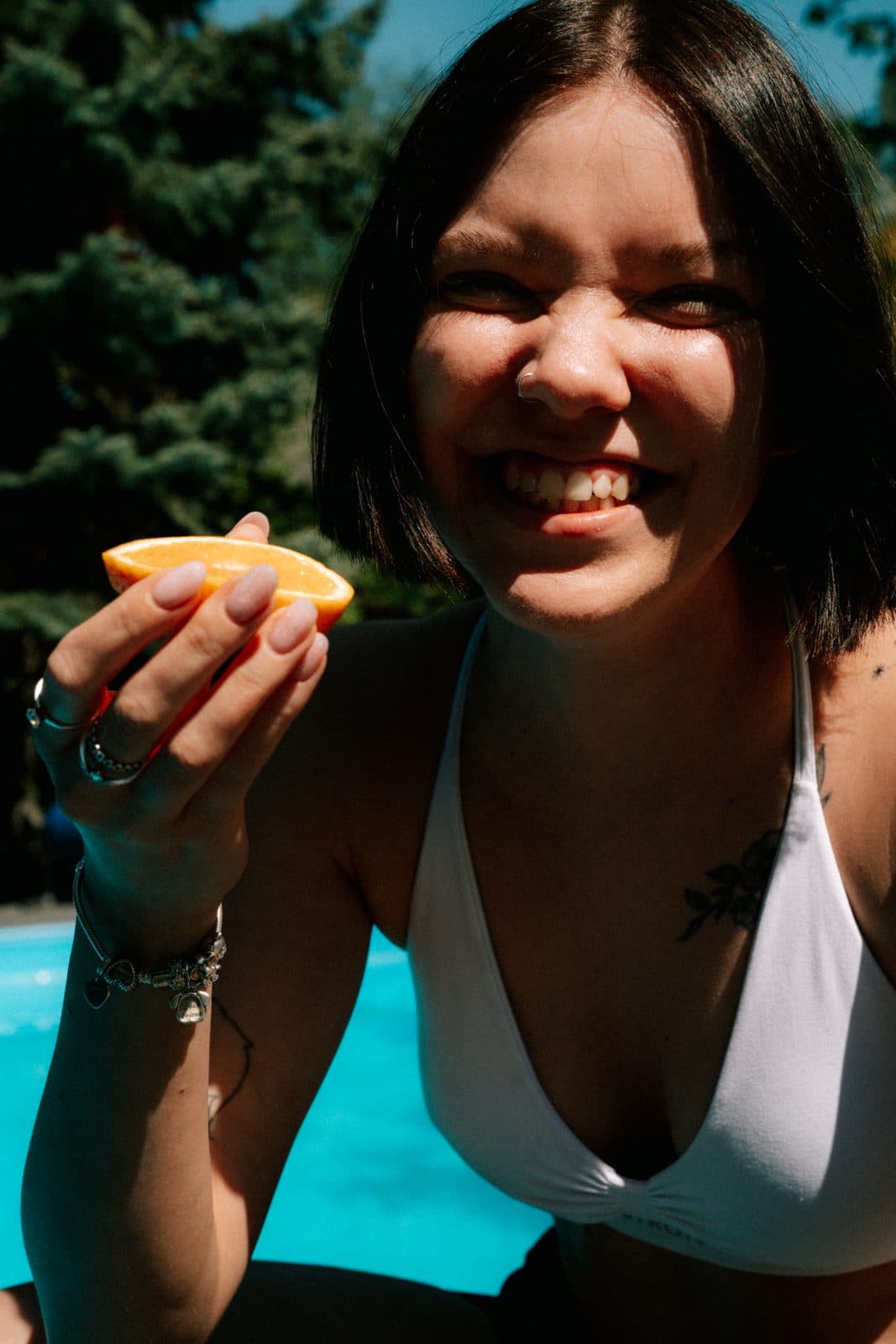
Summer naturally pulls us outdoors. Longer days, more light, holidays, walks, the beach, sport, a coffee on the balcony. The sun is associated with energy, a better mood and vitamin D. And rightly so, because sunlight really does affect the body in many ways at once.
At the same time, the very radiation that helps regulate the circadian rhythm and takes part in vitamin D synthesis can damage the skin, speed up its ageing and increase the risk of skin cancer. So when it comes to the sun, it isn't about extremes. Neither avoiding light completely, nor uncontrolled tanning. The most sensible approach is mindful exposure: taking advantage of the benefits of light, but without allowing burns or chronically overloading the skin with UV radiation.
The sun is more than just vitamin D
We most often talk about the sun in the context of vitamin D. Under the influence of UVB radiation, previtamin D3 forms in the skin and is then converted in the body into the active forms of vitamin D. This matters for calcium and phosphate balance, bones, muscles and the immune system.
But sunlight does more than that. Research in recent years increasingly points out that exposure to natural light may influence:
- synchronisation of the circadian rhythm,
- sleep quality,
- mood and energy levels,
- blood pressure regulation,
- skin and immune system function,
- health behaviours, because people who spend more time outdoors often move more.
This is important, because vitamin D supplementation can help correct a deficiency, but it does not reproduce all of the biological effects of natural light.
Morning light: a small habit, a big signal for your body clock
One of the most interesting areas of research is the effect of light on the circadian rhythm. The body needs contrast: a bright day and a darker evening. Natural light in the morning is one of the strongest signals to the brain that "the day has begun". We cover this in more detail in a separate article on how morning light affects sleep and energy.
In studies from 2025 it was observed that morning exposure to sunlight may be linked to better regulation of sleep midpoint and improved sleep quality. In practice this means that even a short walk in the morning or breakfast in natural light can support the sleep-wake rhythm.
The point isn't to expose your skin to intense sun in the morning. It's enough to step outside, let your eyes take in natural light and give your body a clear environmental signal. Sunglasses are needed when it's very sunny, but morning light, especially before the strongest UV, can be a good part of circadian hygiene.

What happens in the skin under UV?
UV radiation is divided mainly into UVA and UVB.
UVB acts more superficially and is strongly linked to redness, sunburn and direct DNA damage. UVB is also responsible for vitamin D synthesis in the skin.
UVA reaches deeper. It can intensify oxidative stress, contribute to the degradation of collagen and elastin, and play a part in photoaging. UVA also passes through clouds and glass to a greater extent than UVB, which is why protecting the skin matters not only when "the sun is beating down".
In practice, after excessive exposure the skin launches a defensive response: inflammation, redness, melanin production, DNA damage repair. A tan is therefore not a sign of "healthy skin" but a trace of the body's response to radiation.
Photoaging: wrinkles are only part of the story
The sun is one of the most important factors accelerating skin ageing. Photoaging isn't only about wrinkles. It can include:
- loss of elasticity,
- discolouration,
- uneven skin tone,
- rough skin,
- dilated capillaries,
- a weakened skin barrier,
- greater susceptibility to inflammation.
The mechanism is multifactorial. UV increases oxidative stress, activates enzymes that degrade collagen, affects the skin's immune cells and can lead to chronic micro-inflammation.
It's also worth remembering that visible light, especially in people prone to discolouration, melasma or post-inflammatory hyperpigmentation, can also worsen uneven skin tone. That's why tinted sunscreens containing iron oxides, which protect against visible light better than classic SPF, can be helpful for such people.
The sun and skin immunity
The skin is an immune organ. It isn't just a "barrier" but an active communication system with the immune system. UV radiation can have an immunomodulating effect. Under controlled conditions this is used in dermatology, for example in phototherapy for psoriasis, atopic dermatitis or vitiligo.
The problem arises when exposure is too high, repeated and uncontrolled. UV can weaken the skin's local immune mechanisms, make it easier for cells with damaged DNA to survive, and increase the risk of precancerous changes and skin cancers.
That's why the slogan "the sun supports immunity" is too much of a simplification. The sun can have beneficial biological effects, but excess UV is damaging.
How to enjoy the sun wisely?
The best strategy isn't avoiding the sun but sensible exposure. It's worth catching natural light, especially in the morning, while protecting your skin and body when UV radiation and temperatures are high.
In practice:
- check the UV Index - at a value of 3 or more, take care to protect yourself,
- avoid sunburn and lying in full sun for long stretches,
- during the strongest sun hours choose shade, a hat or cap, sunglasses and light, breathable clothing,
- use SPF 30 or 50, especially on the face, neck, décolletage, ears and hands,
- reapply sunscreen roughly every 2 hours and after swimming, sweating or towelling off,
- take care of hydration - drink regularly, before strong thirst appears,
- in heat, with heavy sweating or physical activity, remember electrolytes, sodium above all,
- schedule walks and workouts rather for the morning or late afternoon,
- remember that SPF is not an invitation to hours of tanning.
The goal isn't to give up the sun, but to use it in a way that supports the body rather than overloading the skin and the thermoregulation system.

Frequently asked questions
Is the sun healthy?
Yes, but in the right dose. Natural light supports the circadian rhythm and can influence sleep, mood and vitamin D synthesis. The problem isn't contact with the sun itself, but excessive exposure to UV radiation, especially the kind that leads to burns.
Is SPF enough to protect the skin well?
Not always. SPF is important, but the best protection is a combination of several things: shade, head covering, sunglasses, breathable clothing and sunscreen on exposed skin. Sunscreen shouldn't be treated as permission for hours of tanning.
When should I think about electrolytes?
Electrolytes are especially important when you sweat a lot: in the heat, on long walks, during workouts, while travelling, working outdoors or at the beach. Sodium, which we lose with sweat, matters most. With short, light activity, water and normal meals are usually enough, but with longer effort or heavy sweating it's worth taking care of electrolytes too.
Does sunscreen block vitamin D?
Sunscreen limits UVB radiation, which is involved in vitamin D synthesis, but in everyday life it usually doesn't block it completely. If there's a risk of vitamin D deficiency, a better solution is to measure 25(OH)D and adjust supplementation rather than deliberately tanning without protection.
References
- Razzaghi Z., Ahmadzadeh A. Examination of the biological effects of sunlight on the skin: a review. Journal of Lasers in Medical Sciences. 2025;16:e52. doi:10.34172/jlms.2025.52.
- Tang X., Yang T., Yu D., Xiong H., Zhang S. Current insights and future perspectives of ultraviolet radiation exposure: friends and foes to the skin and beyond the skin. Environment International. 2024;185:108535. doi:10.1016/j.envint.2024.108535.
- Gromkowska-Kępka K.J., Puścion-Jakubik A., Markiewicz-Żukowska R., Socha K. The impact of ultraviolet radiation on skin photoaging - review of in vitro studies. Journal of Cosmetic Dermatology. 2021;20:3427-3431. doi:10.1111/jocd.14033.
- de Menezes-Júnior L.A.A., Sabião T.S., Carraro J.C.C., Machado-Coelho G.L.L., Meireles A.L. The role of sunlight in sleep regulation: analysis of morning, evening and late exposure. BMC Public Health. 2025;25:3362. doi:10.1186/s12889-025-24618-8.
- Raymond-Lezman J.R., Riskin S.I. Benefits and risks of sun exposure to maintain adequate vitamin D levels. Cureus. 2023;15(5):e38578. doi:10.7759/cureus.38578.
- Gatta E., Cappelli C. Sunscreen and 25-hydroxyvitamin D levels: friends or foes? A systematic review and meta-analysis. Endocrine Practice. 2025;31:839-848. doi:10.1016/j.eprac.2025.03.014.
- Tran V. et al. Effect of daily sunscreen application on vitamin D: findings from the open-label randomized controlled Sun-D Trial. British Journal of Dermatology. 2025;193:1128-1137. doi:10.1093/bjd/ljaf310.
- He M., Chen Y., Jin H., Zhang L. Visible light protection: an updated review of tinted sunscreens. Photodermatology, Photoimmunology & Photomedicine. 2025. doi:10.1111/phpp.70033.
- Doan V. et al. Iron oxides in tinted sunscreen for hyperpigmentation: product analysis and literature review. Journal of Drugs in Dermatology. 2026. doi:10.36849/jdd.9919.
- World Health Organization. Ultraviolet radiation. Fact sheet. 2022. (who.int)
- World Health Organization. Radiation: protecting against skin cancer. Questions and answers. 2024. (who.int)
- American Academy of Dermatology. Sunscreen FAQs. 2026. (aad.org)
- Centers for Disease Control and Prevention. Sun Safety Facts. 2026. (cdc.gov)
- Centers for Disease Control and Prevention, NIOSH. Heat-related illnesses. 2026. (cdc.gov)
- Centers for Disease Control and Prevention. CDC Yellow Book 2026: Heat and Cold Illness in Travelers. 2025. (cdc.gov)
- World Health Organization Regional Office for Europe. Staying hydrated in the heat: what the public can learn from professional athletes. 2024.