Zinc and immunity: when does supplementation make sense?

Sonia Biecka
Dietitian

Medical review: lek. Wojciech Sierocki
Content medically reviewed by an Optimals team physician.
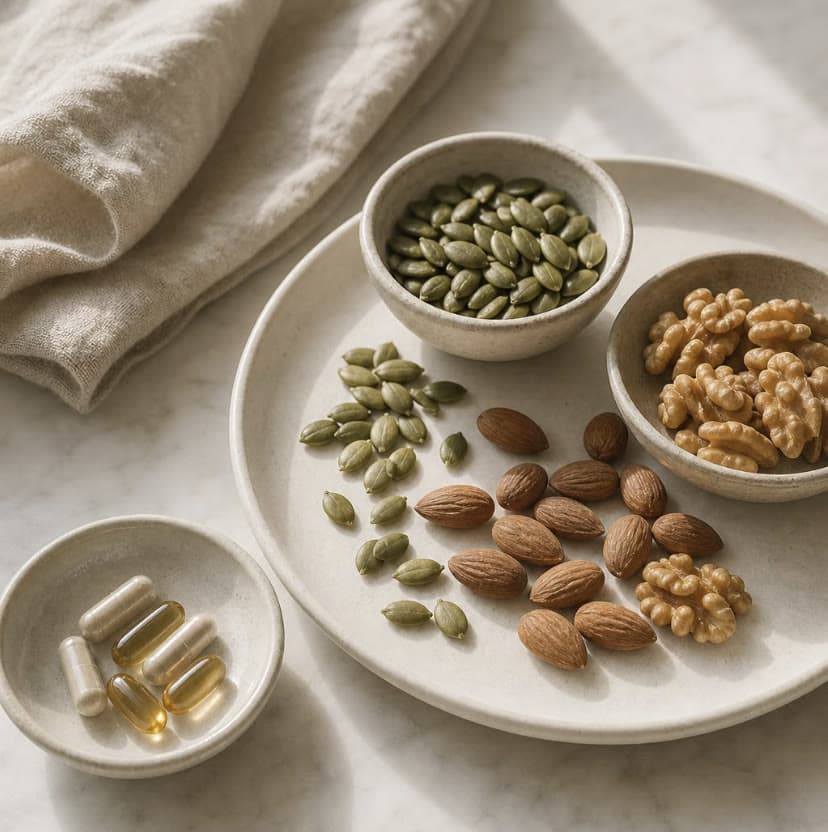
Zinc turns up again and again in products marketed as immune support. In autumn especially, it's easy to find immune supplements that combine it with vitamin C, vitamin D, selenium or plant extracts.
Zinc really is essential for the immune system to work properly. A deficiency can impair the immune response. That doesn't mean, though, that every healthy person should take extra zinc preventively throughout the autumn and winter season.
What matters far more is whether your diet covers your needs, whether you have factors that raise the risk of deficiency, and what the supplement is actually meant to do.
Why do we need zinc?
Zinc is involved in the activity of hundreds of enzymes and takes part in, among other things:
- the metabolism of protein, fat and carbohydrates,
- protein synthesis,
- cell division,
- wound healing,
- the sense of taste and smell,
- normal immune function.
A deficiency can therefore affect many processes in the body, including weakening the immune response.
It's worth separating two situations, though:
correcting a deficiency and taking extra zinc when you don't have a deficiency.
In the first case, supplementation may be necessary. In the second, a bigger dose doesn't automatically mean a better-functioning immune system.
How much zinc do we need?
According to the Polish Nutrition Norms, adult requirements are fairly small compared with the doses found in some supplements.
| Group | Recommended intake |
|---|---|
| Adult women | 8 mg/day |
| Adult men | 11 mg/day |
| Pregnant women ≥19 years | 11 mg/day |
| Breastfeeding women ≥19 years | 12 mg/day |
| Girls 13–18 years | 9 mg/day |
| Boys 13–18 years | 11 mg/day |
The problem can be too little zinc in the diet. This applies especially to older people and to anyone whose diet is low in good sources of zinc.
That doesn't immediately mean a clinical deficiency, but it is a signal to take a closer look at your everyday diet.
Where do we find zinc?
The best sources of zinc are mainly animal products, but it's also found in plant foods.
| Food | Value as a source of zinc |
|---|---|
| Oysters and seafood | very good source |
| Beef and other meat | good source |
| Cheese | good source |
| Eggs | moderate source |
| Pumpkin seeds | good plant source |
| Nuts | plant source |
| Lentils, beans, chickpeas | plant source |
| Whole grains | source with lower bioavailability |
Zinc from animal foods is usually better absorbed. In plant foods, absorption can be limited by phytates, found among other places in whole grains and legumes.
That doesn't mean a plant-based diet can't cover your needs. It does mean paying closer attention to eating enough zinc-rich foods and to how food is prepared.
Soaking, sprouting and fermentation can reduce phytate content and improve zinc bioavailability.
Who is more at risk of deficiency?
Supplementation makes far more sense when there's a real risk of inadequate intake or poorer absorption.
People who should pay closer attention include those who:
- follow a vegan or some vegetarian diets,
- have inflammatory bowel disease,
- have coeliac disease,
- have had bariatric surgery,
- follow very restrictive diets,
- are pregnant or breastfeeding,
- chronically misuse alcohol,
- are older and eat little or very monotonously.
With digestive conditions, individual assessment is particularly important. A diagnosis of coeliac disease or inflammatory bowel disease alone doesn't automatically mean zinc has to be supplemented long-term.
What can zinc deficiency look like?
The symptoms aren't specific to zinc alone, which is why it's hard to recognise a deficiency based on how you feel.
They may include:
- slower wound healing,
- reduced appetite,
- changes in taste and smell,
- hair loss,
- skin changes,
- impaired growth in children,
- with more severe deficiency, weaker immune function.
Each of these symptoms can, however, have many other causes.
Is it worth testing zinc in the blood?
Serum or plasma zinc can be part of the diagnostic workup, but a single result doesn't always give the full picture.
It is affected by, among other things:
- time of day,
- infection,
- inflammation,
- age,
- hormonal changes,
- recent weight loss.
That's why, when deficiency is suspected, it's worth assessing diet, risk factors, symptoms and test results together.
Blood zinc alone isn't always enough to reach a clear diagnosis.
What about zinc during a cold?
This is the most interesting area of zinc research.
A 2024 Cochrane review indicates that taking zinc preventively probably has little or no effect on the risk of catching a cold.
Taking zinc once symptoms have already started may be a different story.
Some studies observed infections that were on average about two days shorter, but the quality of the evidence was rated low and results varied widely between studies.
Side effects were also more common, mainly:
- an unpleasant taste,
- nausea,
- digestive complaints.
Zinc is therefore more interesting as a short-term intervention at the start of a cold than as a supplement taken daily "for immunity".
Do lozenges work better?
Cold studies have often used lozenges containing zinc acetate or zinc gluconate.
Some earlier analyses suggested a shorter cold with sufficiently high doses. Later studies didn't always confirm that effect.
So you can't say that every zinc lozenge on the pharmacy shelf will work the same way.
What can matter:
- the chemical form of zinc,
- the dose,
- the product's composition,
- how often it's taken,
- when you start,
- how long you take it.
The result of a study on one specific product can't be transferred directly to every zinc supplement.
Is it worth taking zinc preventively in autumn?
For a healthy person with a well-balanced diet and no risk factors for deficiency, there's currently no strong case for routine zinc supplementation just because cold-and-flu season is starting.
Preventive zinc use shows no clear effect on the risk of catching a cold.
It's far more sensible to first check whether your everyday diet regularly includes sources of zinc.
When is supplementation more justified?
| Situation | How to approach supplementation |
|---|---|
| Healthy person with a varied diet | usually not routinely needed |
| Few zinc sources in the diet | improve the diet and possibly consider a supplement |
| Plant-based diet | assess both intake and bioavailability |
| Coeliac disease, IBD, after bariatric surgery | individual assessment of nutritional status recommended |
| Confirmed deficiency | supplementation may be justified |
| Preventively all autumn | no strong evidence of benefit |
| Start of a cold | selected products may shorten the infection, but the data are inconsistent |
So the key question isn't "is zinc good for immunity?" but "why does this particular person want to take it?"
Does more zinc mean better?
No.
Taking high doses long-term can lead, among other things, to impaired copper absorption and copper deficiency.
Too much zinc can cause:
- nausea,
- abdominal pain,
- vomiting,
- loss of appetite,
- headaches.
Chronic excess intake can also impair immune function.
The European tolerable upper intake level for total zinc intake in adults is 25 mg a day. This isn't a recommended supplement dose; it's the maximum long-term intake from all sources combined.
Keep that in mind when combining several products, such as a multivitamin, an "immune support" supplement and extra zinc.
Why did studies use higher doses?
Some cold studies used doses above 75 mg of zinc a day.
These were, however, short-term interventions during an infection, not a daily preventive supplementation regimen.
Such doses shouldn't be carried over to use for weeks or months.
A dose studied for a few days during a cold isn't automatically a dose that's safe for long-term use.
Frequently asked questions
Does zinc improve immunity?
Zinc is essential for normal immune function, and a deficiency can impair it. There's no evidence, however, that high doses of zinc further "boost" immunity in someone who isn't deficient.
Is it worth taking zinc all autumn?
There's no such general recommendation. For a healthy person with a varied diet, routine supplementation usually isn't needed.
Does zinc prevent colds?
Current evidence indicates that preventive supplementation has little or no effect on the risk of getting sick.
Can zinc shorten a cold?
Possibly. Some studies observed infections shortened by about two days, but the certainty of the evidence is low and results are inconsistent.
Should I take zinc at the first symptoms?
Some studies suggest a benefit from early use of certain lozenges, but no single optimal product or dosing regimen has been established.
Which form of zinc is best?
No single form is best in every situation. Cold studies have most often looked at zinc gluconate and zinc acetate.
Is 25 mg of zinc a day a lot?
Yes. It's the European tolerable upper level for total long-term intake in adults, not a routine supplement dose.
Can I take zinc for several months?
It depends on the dose and the reason. Long-term use of high doses can lead to copper deficiency, so with longer supplementation it's worth checking whether it's justified.
Should people on a plant-based diet supplement zinc?
Not everyone on a plant-based diet needs a supplement. It's worth eating enough seeds, nuts, legumes and whole grains, and paying attention to zinc bioavailability.
Does zinc interact with medicines?
Yes. It can reduce the absorption of some antibiotics, including tetracyclines and fluoroquinolones, as well as penicillamine. If you take medicines, check the recommended spacing between products.
✨ In the Optimals app you can build a health protocol tailored to your goal – with supplements backed by your diet and lab results, not seasonal advertising.
References
- Nault, D., Machingo, T.A., Shipper, A.G. et al. (2024). Zinc for prevention and treatment of the common cold. Cochrane Database of Systematic Reviews, 5, CD014914. doi:10.1002/14651858.CD014914.pub2.
- Hemilä, H. (2017). Zinc lozenges and the common cold: a meta-analysis comparing zinc acetate and zinc gluconate, and the role of zinc dosage. JRSM Open, 8(5), 2054270417694291. doi:10.1177/2054270417694291.
- Hemilä, H., Haukka, J., Alho, M., Vahtera, J. & Kivimäki, M. (2020). Zinc acetate lozenges for the treatment of the common cold: a randomised controlled trial. BMJ Open, 10, e031662. doi:10.1136/bmjopen-2019-031662.
- National Institute of Public Health NIH – National Research Institute, Poland (2024). Nutrition Norms for the Polish Population – 2024. https://www.pzh.gov.pl/normy-zywienia-2024/.
- European Food Safety Authority (EFSA). Summary of Tolerable Upper Intake Levels for vitamins and minerals. https://www.efsa.europa.eu/sites/default/files/2024-05/ul-summary-report.pdf.
- National Institutes of Health, Office of Dietary Supplements. Zinc – Fact Sheet for Health Professionals. https://ods.od.nih.gov/factsheets/Zinc-HealthProfessional/.