
Is frying really unhealthy? What actually happens to food in the pan

Sonia Biecka
Dietitian

Medical review: lek. Wojciech Sierocki
Content medically reviewed by an Optimals team physician.
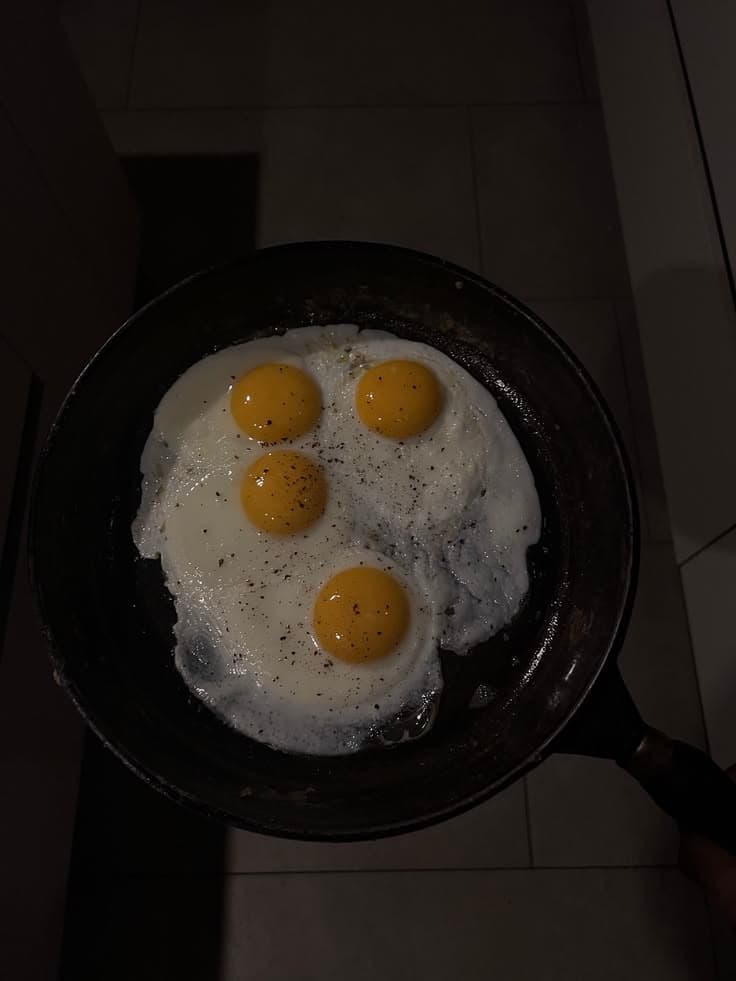
Steaming is healthy, baking is fine, and frying should be eliminated altogether?
That belief has been around for years. Fried food gets associated with more calories, "bad fat," and compounds that might harm your health. On the other hand, it's hard to put scrambled eggs cooked in a little olive oil in the same category as fries made in oil that's been reused many times.
And that's exactly where the real difference lies.
The problem isn't the pan itself. What matters is what you fry, in what, for how long, at what temperature, and how often fried food shows up in your diet.
What actually happens during frying?
Frying uses a much higher temperature than boiling in water. Depending on the technique, the fat's temperature can reach roughly 150–190°C.
Under high heat, fats undergo oxidation, hydrolysis and polymerisation reactions, among others. Over time, the oil's chemical composition changes, and lipid oxidation products can form, including aldehydes and other compounds that arise as fats break down [1].
This process becomes especially intense when the fat is heated for a long time, reaches very high temperatures, or is reused multiple times [1].
That doesn't mean every dish that's touched a pan becomes harmful.
Briefly frying vegetables in a small amount of a suitable oil is a completely different situation from reusing the same fat several times to fry chips.
Why is reheating oil repeatedly a problem?
The longer fat is exposed to high heat and oxygen, the more its oxidation progresses.
Heating can produce lipid peroxides, aldehydes, polymers and other degradation products, among others. Under very intense heating, further changes to fatty acid structure are also possible [1].
That's why one of the most important frying rules is avoiding reusing the same oil, especially if it was heated for a long time at a high temperature.
This practice, sometimes seen in deep frying, is a much bigger problem than adding fresh olive oil or oil to a home skillet.
Does frying produce carcinogenic substances?
This is more complicated than the popular claim that "frying causes cancer."
During intense heat processing, compounds can indeed form that are worth limiting excessive exposure to. These include acrylamide, heterocyclic amines, polycyclic aromatic hydrocarbons, and some Maillard reaction products [3,8].
How much forms depends on the type of food, the temperature, the cooking time and the degree of browning.
Acrylamide
Acrylamide forms mainly in starchy products during processing above roughly 120°C with low moisture content [3].
This isn't limited to frying.
Acrylamide can also form during baking and roasting. Its significant dietary sources include fries, potato crisps, bread, cookies and coffee [3].
For potatoes, the degree of browning matters a lot. The darker and more browned the fries, the higher the acrylamide content tends to be. That's why EFSA points to a simple rule: starchy products are better cooked to a golden, not dark brown, colour [3].
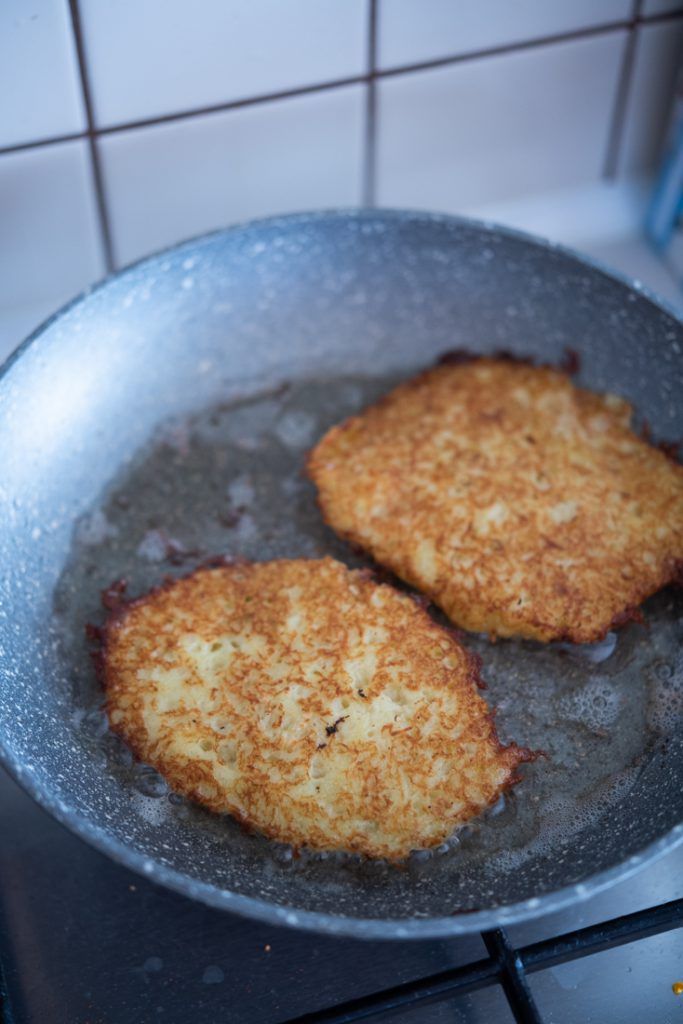
So the problem isn't the pan alone. What matters most is the combination of:
high temperature + a particular food + long heating + heavy browning.
What about AGEs?
Heat processing can also produce advanced glycation end-products, or AGEs.
They form more readily with high temperature and relatively low water content, which is why frying, grilling and baking can produce more AGEs than boiling or steaming [4].
AGEs can also form naturally in the body. Their excessive accumulation has been linked to oxidative stress and inflammatory processes, though the effect of AGEs from food specifically on disease development is still being studied [4].
An interesting randomised trial published in 2025 offers some useful data. Participants received meals made from the same ingredients but prepared using different cooking methods. Techniques that generate fewer AGEs, such as boiling and steaming, led to lower serum concentrations of certain AGEs and favourable changes in lipid profile compared with methods using more intense heating [5].
That doesn't mean we need to boil everything from now on.
It does show, though, that how a meal is prepared can genuinely matter metabolically - much like what and when you eat affects blood glucose swings.
Frying increases the calorie content of food
This is one of the most practical issues, mainly with deep frying.
During frying, some of the water in the food evaporates, and fat can partly take its place. As a result, the food can end up containing more fat and energy than before frying [6].
The difference can be large, especially for breaded products, fries, doughnuts and other deep-fried foods.
It doesn't work the same way for every type of frying, though.
An egg fried in a teaspoon of olive oil doesn't suddenly end up loaded with fat. What matters far more is how much fat is used and how much of it the food is able to absorb.
That's why it's worth distinguishing frying in a small amount of fat from deep frying.
Does fried food increase heart disease risk?
Observational studies do show such a link.
A meta-analysis covering large groups of adults found that people eating the most fried food had a higher risk of major cardiovascular events and coronary heart disease than those eating the least [2].
That doesn't mean frying itself can be pointed to as the direct cause, though.
These studies are observational. People who often eat fried food may also more often eat fast food, fries, breaded meat, ultra-processed products and more calories overall, while eating fewer vegetables or whole grains - and it's that excess energy and visceral fat, not the pan itself, that most strongly tracks with cardiovascular risk.
The meta-analysis's authors also note the wide variability in results and the limitations of the available studies [2].
So the statement:
"Any frying increases heart disease risk"
would be too much of a simplification.
It's far more accurate to say that frequently eating typical foods deep-fried in large amounts of fat can be part of an eating pattern that raises the risk of metabolic and cardiovascular disease [2].
What's the best fat to fry with?
Looking at the smoke point alone isn't enough.
An oil's stability during frying depends on its fatty acid composition, its content of natural antioxidants, and the temperature and duration of heating, among other factors [1].
Fats rich in monounsaturated fatty acids are generally more resistant to oxidation than oils very high in polyunsaturated fatty acids. Olive oil, among others, can show good stability under heat, largely thanks to its high oleic acid content and the presence of antioxidant compounds [1].
For short home frying, olive oil or rapeseed oil are both reasonable choices.
Far more important than hunting for one "perfect" fat is simply not overheating it and not reusing it.
If the oil starts smoking heavily, the temperature is too high.
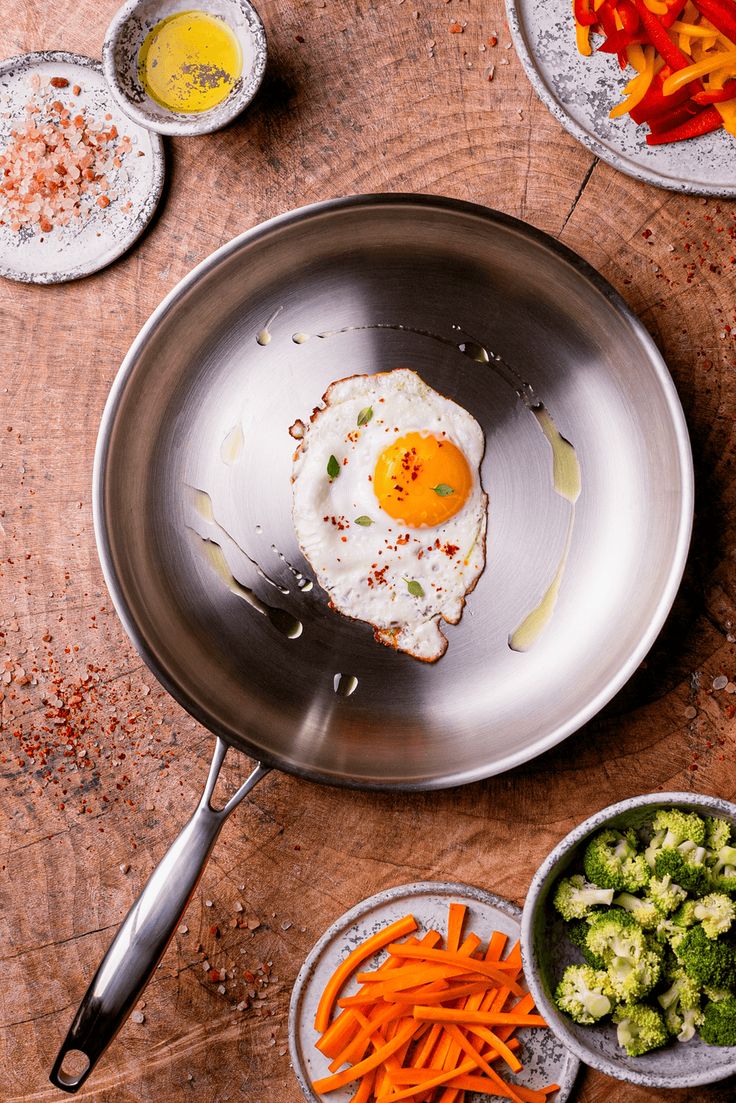
Does an air fryer solve the problem?
An air fryer lets you prepare food using much less fat, so it can be a good option, especially for people who often make foods traditionally deep-fried.
That doesn't mean everything made in an air fryer is automatically "healthy," or that the device eliminates the formation of high-heat compounds.
In one study comparing potatoes prepared in an oven, deep fat, and an air fryer, the highest average acrylamide content was actually found in some of the air-fried samples [7].
That doesn't mean an air fryer is worse than a deep fryer.
It shows, rather, that temperature, time and the degree of browning matter most, not the name of the appliance.
So do you need to give up frying?
No.
Frying isn't a technique a healthy person needs to avoid entirely.
A much better approach is to vary your cooking methods - much like with an anti-inflammatory diet, where the overall pattern matters more than any single technique. Your diet can include boiled, braised, baked, steamed and fried foods.
If you do fry, it's worth doing it in a way that limits unfavourable changes in the food.
In practice, that means: use fresh fat, don't reuse oil, don't let it smoke, fry as briefly as possible, avoid heavily browning your food, and reach for frying in a small amount of fat rather than deep frying more often.
Is frying unhealthy? The bottom line
Not all frying is a problem. The problem mainly starts with the combination of very high temperature, long heating, large amounts of fat, heavy browning, and reusing the same oil repeatedly.
If you occasionally make scrambled eggs, salmon or vegetables in a pan with a little olive oil, there's no reason to treat that meal as a health risk.
If most of your diet is built around fries, breaded products, fried meat and fast food, the situation looks quite different.
As is usually the case in nutrition, what matters isn't a single meal, but frequency, amount, and your overall way of eating.
Frequently asked questions
Is frying in olive oil healthy?
You can fry in olive oil. It's high in monounsaturated oleic acid, and extra virgin olive oil also contains phenolic compounds that support its oxidative stability. What matters most is not letting the fat smoke heavily.
Can you reuse frying oil?
At home, it's best to limit reusing fat, especially if it was heated for a long time at high temperature. Repeated heating cycles speed up the oil's degradation and oxidation.
Is it better to fry with butter or oil?
It depends on the temperature and the dish. For regular frying, plant fats rich in unsaturated fatty acids, such as olive or rapeseed oil, are a good choice. What matters most, though, is not overheating the fat.
Does frying destroy all the nutrients in food?
No. Heat processing can reduce the content of some heat-sensitive vitamins, but it doesn't strip food of all its nutritional value. The effect depends on the food, the temperature and the cooking time.
Does frying cause cancer?
You can't say that frying by itself causes cancer. Intense heat processing can produce compounds that may be unfavourable for health, though, so it's worth limiting burnt food, very high temperatures and reusing fat.
Are air fryer fries healthier?
They usually contain less added fat than deep-fried fries. An air fryer still uses high heat, though, so acrylamide can still form. How much depends mainly on temperature, cooking time and browning.
Which cooking method is healthiest?
You don't have to pick just one. Boiling, steaming and braising limit the formation of some compounds typical of high-heat cooking. A healthy diet can still include baked and fried dishes, though.
✨ In the Optimals app you can build a health protocol matched to your goal - with concrete nutrition guidance, not blanket bans.
References
- Abrante-Pascual, S., Nieva-Echevarría, B. & Goicoechea-Oses, E. (2024). Vegetable Oils and Their Use for Frying: A Review of Their Compositional Differences and Degradation. Foods, 13(24), 4186. doi:10.3390/foods13244186.
- Qin, P. et al. (2021). Fried-food consumption and risk of cardiovascular disease and all-cause mortality: a meta-analysis of observational studies. Heart, 107(19), 1567–1575. doi:10.1136/heartjnl-2020-317883.
- European Food Safety Authority (EFSA). Acrylamide. https://www.efsa.europa.eu/en/topics/topic/acrylamide.
- Zhang, Q., Wang, Y. & Fu, L. (2020). Dietary advanced glycation end-products: Perspectives linking food processing with health implications. Comprehensive Reviews in Food Science and Food Safety, 19(5), 2559–2587. doi:10.1111/1541-4337.12593.
- Wellens, J. et al. (2025). Cooking methods affect advanced glycation end products and lipid profiles: A randomized cross-over study in healthy subjects. Cell Reports Medicine, 6(5), 102091. doi:10.1016/j.xcrm.2025.102091.
- Mahmud, N. et al. (2023). A review of different frying oils and oleogels as alternative frying media for fat-uptake reduction in deep-fat fried foods. Heliyon, 9(11), e21500. doi:10.1016/j.heliyon.2023.e21500.
- Navruz-Varlı, S. & Mortaş, H. (2024). Acrylamide formation in air-fried versus deep and oven-fried potatoes. Frontiers in Nutrition, 10, 1297069. doi:10.3389/fnut.2023.1297069.
- Li, C. et al. (2023). Utilization of plant extracts to control the safety and quality of fried foods: A review. Comprehensive Reviews in Food Science and Food Safety. doi:10.1111/1541-4337.13148.