
Lipoprotein(a): the test worth doing at least once in your life

Sonia Biecka
Dietitian

Medical review: lek. Wojciech Sierocki
Content medically reviewed by an Optimals team physician.
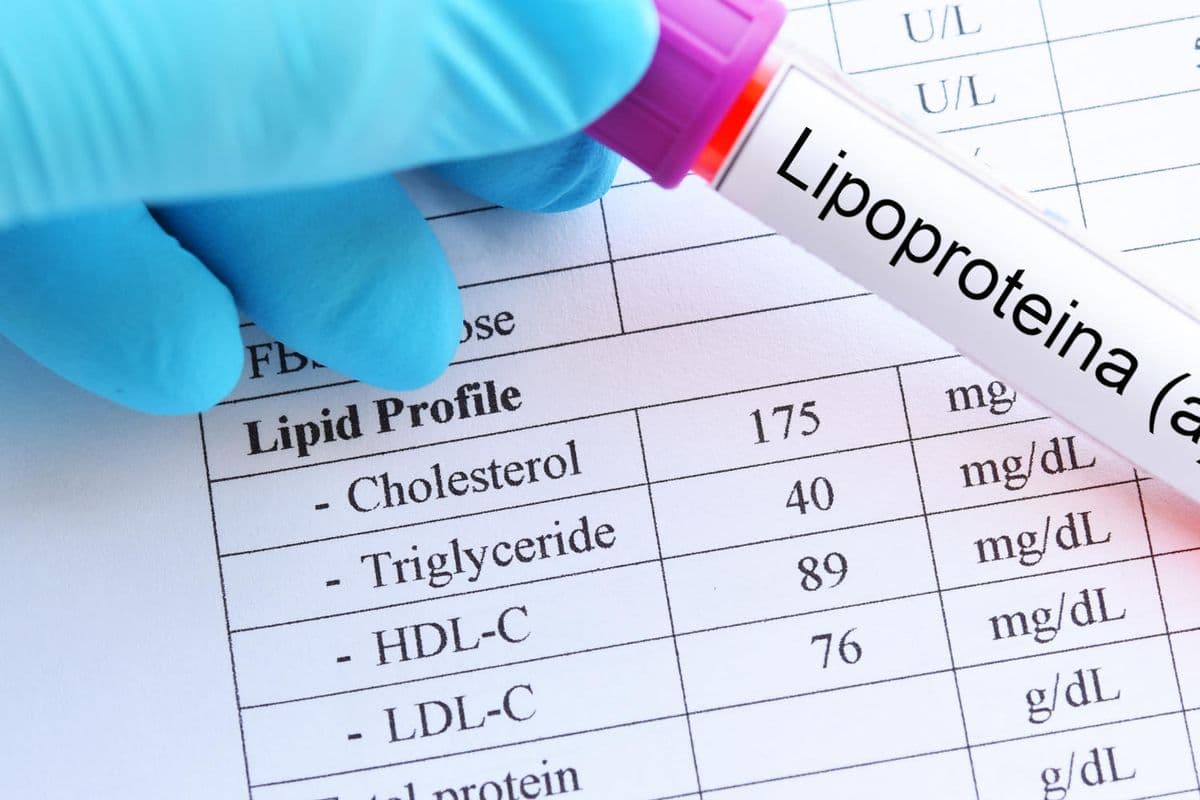
You can have a normal total cholesterol, a good LDL level and a healthy lifestyle, and still carry an additional, largely inherited risk factor for cardiovascular disease.
That factor is lipoprotein(a), written as Lp(a).
Its elevated level usually produces no symptoms, does not have to be visible on a standard lipid panel, and depends only slightly on diet or physical activity. Even so, it can increase the risk of atherosclerosis, heart attack, ischaemic stroke and aortic valve stenosis.
For this reason, current European recommendations state that measuring Lp(a) is worth considering at least once in the life of every adult, ideally alongside the first or a subsequent lipid panel.
What is lipoprotein(a)?
Lipoproteins are particles that transport cholesterol and other fats in the blood. Lipoprotein(a) resembles an LDL particle but contains an additional protein, apolipoprotein(a).
This extra part gives Lp(a) properties that can promote:
- deposition of cholesterol in artery walls,
- intensification of inflammatory processes,
- the development and progression of atherosclerosis,
- calcification of the aortic valve.
Epidemiological and genetic studies point to a continuous, causal relationship between a higher Lp(a) level and the risk of atherosclerotic cardiovascular disease and aortic valve stenosis. The risk does not appear suddenly once one specific value is exceeded – it gradually rises together with the Lp(a) level.
Lp(a), on the other hand, is not currently recognised as a confirmed risk factor for venous thrombosis, such as deep vein thrombosis or pulmonary embolism.
Why is it worth measuring Lp(a) at least once?
The concentration of lipoprotein(a) is more than 90% genetically determined. This means that, unlike LDL, glucose or triglycerides, it usually does not change significantly with everyday diet, physical activity or weight loss.
In most people the result remains relatively stable throughout life. A single properly performed measurement is therefore often enough to assess whether Lp(a) is an additional cardiovascular risk factor.
Elevated values affect at least around 20% of the population, meaning as many as one in five adults. Many of them are unaware of this, because Lp(a) is not automatically measured in a standard lipid panel.
Knowing the result does not allow you to predict exactly whether and when a heart attack or stroke will occur. It does, however, help to better assess overall risk and decide how intensively the remaining factors should be controlled, especially LDL, blood pressure, smoking, blood glucose and body weight.
Is Lp(a) included in a standard lipid panel?
No. A standard lipid panel most often includes:
- total cholesterol,
- LDL,
- HDL,
- triglycerides.
Lipoprotein(a) is a separate measurement and must be specified on the referral or ordered additionally.
A normal lipid panel therefore does not rule out a high Lp(a) level. An elevated result can occur even in a person with low LDL and without other typical risk factors. The European expert statement emphasises that Lp(a) remains a risk factor even at a very low LDL level.
Who in particular should have the test?
Current recommendations increasingly cover all adults. The test is, however, especially important if at least one of the following situations applies:
- heart attack, stroke or peripheral artery disease at a young age,
- coronary artery disease despite few typical risk factors,
- a family history of early heart attacks or strokes,
- diagnosed familial hypercholesterolaemia,
- very high LDL,
- calcification or stenosis of the aortic valve,
- recurrent cardiovascular events despite treatment,
- borderline or moderate risk where the result may influence the decision about the intensity of prevention,
- elevated Lp(a) in a parent, sibling or child.
High Lp(a) can modify the risk assessment, especially in people who are near the threshold for starting or intensifying LDL-lowering treatment. In the 2025 update of the ESC/EAS guidelines, a value above 50 mg/dl, corresponding in that document to more than 105 nmol/l, was included as a factor modifying cardiovascular risk.
Is the test available under public health coverage?
Yes, but currently not for every age group.
Within the "Moje Zdrowie – adult health check" programme, Lp(a) is included in the extended panel and is performed once in a lifetime for people aged 20–39. The programme is delivered by primary care facilities after completing a health questionnaire.
A person outside this age group can talk to a doctor about indications for the test or have it done privately. The availability of reimbursement outside the programme depends on the clinical situation and the rules in force at a given facility.
How to prepare for the test?
Lp(a) is measured from a venous blood sample. The test itself can be performed without fasting, because a meal does not significantly affect its genetically determined level.

If Lp(a) is measured together with other parameters, the laboratory or doctor may recommend fasting because of the remaining tests. So always check the instructions of the specific laboratory.
For the measurement it is best to choose a period of stable health. Some illnesses and physiological states can temporarily affect the result, so interpretation should be postponed or the test repeated if it was carried out in an unusual clinical situation.
In what units is the result reported?
Laboratories most often report Lp(a) in:
- nmol/l: the number of particles,
- mg/dl: the mass of Lp(a).
These units describe slightly different properties and should not be converted using a single, fixed multiplier.
Apolipoprotein(a) particles differ in size between individuals. For this reason the same mass of Lp(a) can correspond to a different number of particles. The National Lipid Association recommends reporting the result in nmol/l and advises against using a universal factor to convert mg/dl to nmol/l.
The result should be interpreted in the unit reported by the laboratory, using thresholds that refer to that particular unit.
How to interpret the Lp(a) result?
According to the 2024 update of the National Lipid Association statement, the following can be taken as a rough guide:
- below 75 nmol/l or below 30 mg/dl: lower risk associated with Lp(a),
- 75–125 nmol/l or 30–50 mg/dl: an intermediate range,
- at least 125 nmol/l or at least 50 mg/dl: elevated risk.
| Risk category | nmol/l | mg/dl |
|---|---|---|
| Lower risk | < 75 | < 30 |
| Intermediate range | 75–125 | 30–50 |
| Elevated risk | ≥ 125 | ≥ 50 |
This does not mean that a result of 49 mg/dl is completely safe and 50 mg/dl automatically means disease. The risk increases gradually, so the result should be assessed as part of the whole cardiovascular profile.
The 2025 European guidelines indicate that a slight increase in risk is already visible in the range of about 30–50 mg/dl, and becomes more clinically significant above 50 mg/dl.
Why can the thresholds in nmol/l differ?
In some recommendations the equivalent of 50 mg/dl is 105 nmol/l, and in others 125 nmol/l. This is not an error, but a consequence of differences between laboratory methods and the structure of apolipoprotein(a) particles.
That is why you should not convert the result yourself or directly compare values obtained in different units. The meaning of the result should be assessed by a doctor, relating it to the method used, the remaining lipids and the patient's overall risk.
Does a high result mean a heart attack will happen?
No. Elevated Lp(a) is a risk factor, not a diagnosis of a heart attack, atherosclerosis or heart disease.
Two people with the same result may have completely different overall risk. What also matters is:
- age,
- sex,
- LDL and non-HDL cholesterol,
- blood pressure,
- smoking,
- diabetes,
- kidney disease,
- body weight and activity,
- previous cardiovascular disease,
- family history.
A person with high Lp(a) but well-controlled remaining factors may have lower risk than a person with lower Lp(a) who smokes, has high LDL, hypertension and diabetes. Observations included in the NLA statement show that very good overall cardiovascular fitness reduces risk even in people with elevated Lp(a).
The result should therefore not cause panic. It should be a signal to organise prevention more carefully.
Can diet lower Lp(a)?
Usually not in a clinically significant way.
The Lp(a) level is primarily genetically determined, so even a very well-composed diet, regular training and weight loss may not produce a visible decrease.
This does not mean, however, that lifestyle is irrelevant.
Healthy eating, physical activity, not smoking, an appropriate body weight, sleep and blood pressure control limit the impact of the remaining risk factors. In a person with elevated Lp(a) this is especially important, because we cannot easily change genetic risk, but we can reduce the environmental risk layered on top of it.
What to do if Lp(a) is elevated?
The first step should be an assessment of the entire risk profile, not an attempt to "treat the result itself".
The doctor may consider:
- a full lipid panel,
- an assessment of LDL, non-HDL cholesterol and sometimes ApoB,
- a blood pressure measurement,
- an assessment of blood glucose,
- an analysis of smoking, body weight and activity,
- taking a detailed family history,
- estimating risk using SCORE2 or SCORE2-OP,
- more intensive LDL lowering,
- in selected situations, further cardiological diagnostics.
With elevated Lp(a) the aim is usually the best possible control of the factors that can be influenced. Current guidelines emphasise above all earlier and more intensive LDL lowering, tailored to overall cardiovascular risk. It is also worth checking which preventive tests are worth doing once a year.
Do statins lower Lp(a)?
Statins are not drugs intended for the direct lowering of Lp(a). Their main goal is to reduce LDL and the risk of heart attack and stroke.
Elevated Lp(a) does not, however, mean that a statin is ineffective or that it should be stopped. On the contrary – in people at high risk, lowering LDL remains one of the most important ways of limiting overall risk. The NLA considers statins the first-line treatment for reducing LDL-related risk, including in patients with elevated Lp(a).
The decision to start treatment should not be based on a single result alone. Age, LDL, family history, coexisting conditions and estimated cardiovascular risk are all taken into account.
Are there drugs that lower Lp(a)?
Some currently used drugs, particularly PCSK9 inhibitors, can moderately lower the Lp(a) level. They are, however, used mainly for intensive LDL lowering in appropriately qualified patients, rather than as a universal treatment for elevated Lp(a) itself.
In selected cases of very high Lp(a), familial hypercholesterolaemia and progressive cardiovascular disease, lipoprotein apheresis may be used. This is a procedure intended for a small group of patients, not a standard approach after a single high result.
Advanced studies are under way on drugs acting directly on the production of apolipoprotein(a), including:
- pelacarsen,
- olpasiran,
- lepodisiran.
These drugs use technologies affecting RNA and can very strongly reduce the production of Lp(a) in the liver. The key question, however, is not only "do they lower the result?", but above all "do they reduce the number of heart attacks, strokes and cardiovascular deaths?".
As of 31 July 2026, pelacarsen remains an investigational drug. The large Lp(a)HORIZON trial has finished recruitment, but its results regarding cardiovascular events have not yet been published in the ClinicalTrials.gov registry.
The Lp(a)FRONTIERS APHERESIS trial, published in 2026, showed that pelacarsen may significantly reduce the need for regular apheresis in very highly selected patients with high Lp(a). The trial was, however, too small and too short to assess the drug's impact on the number of heart attacks, strokes and deaths.
Does Lp(a) need to be repeated?
In most healthy people, a result clearly in the low or high risk range does not need to be repeated regularly.
Repeat measurement can be considered when:
- the first result was in the intermediate range,
- the result does not match the clinical picture or family history,
- the test was performed during a period of unstable health,
- the laboratory method has changed,
- chronic kidney disease or proteinuria has developed,
- hypothyroidism has been diagnosed,
- in a woman a borderline result was taken before menopause.
The NLA points out that some people with intermediate values may over time move to a higher category, especially after menopause, with chronic kidney disease, proteinuria or hypothyroidism.
The 2025 European guidelines also indicate that in women with a borderline result before menopause it may be reasonable to measure again after menopause.
Why is it worth testing the family when the result is high?
Because Lp(a) is strongly genetically determined, a high result in one person may mean an increased probability of elevated values in their biological relatives.
In such a situation it is worth considering testing:
- parents,
- siblings,
- adult children.
This approach is called cascade testing. It can detect people at increased risk before the first symptoms of disease appear.
The EAS and NLA statements point to the particular value of testing first-degree relatives of people with high Lp(a), familial hypercholesterolaemia or premature cardiovascular disease.
Should children have Lp(a) measured?
Routine testing of all children is not currently recommended in all guidelines. Measurement can, however, be considered in a child if:
- a parent or sibling has significantly elevated Lp(a),
- there are very early heart attacks or strokes in the family,
- familial hypercholesterolaemia is suspected,
- the child has had an ischaemic stroke of unclear cause.
The 2024 NLA update recommends selective testing of children belonging to high-risk groups.
Frequently asked questions
Is lipoprotein(a) the 'bad cholesterol'?
Not quite. Lp(a) contains a particle similar to LDL, but it also has an additional apolipoprotein(a), which gives it distinct properties. It is a separate, independent risk factor and should not be treated as another name for LDL.
Does a normal LDL rule out high Lp(a)?
No. You can have low or normal LDL and, at the same time, high Lp(a). For this reason a normal lipid panel does not replace a one-off measurement of lipoprotein(a).
Does high Lp(a) cause symptoms?
Usually not. An elevated level can remain undetected for many years. The first sign of a problem is often only premature coronary artery disease, a heart attack, a stroke or aortic valve stenosis.
Does the test need to be done fasting?
The Lp(a) measurement itself usually does not require fasting. If other tests are performed at the same time, you should follow the instructions of the doctor or laboratory.
Does elevated Lp(a) mean a genetic disease?
A high result is usually a consequence of inherited variants of the LPA gene, but it does not automatically mean one specific genetic disease. It is an inherited risk factor that can occur on its own or together with familial hypercholesterolaemia.
Is it worth doing the test when no one in the family has had a heart attack?
Yes. The absence of a known family history does not rule out elevated Lp(a). The family may be small, information about illnesses may be incomplete, and relatives may have a high result without any complications so far.
Can a high result be lowered with diet?
Diet usually does not reduce Lp(a) significantly. It still helps to lower LDL, blood pressure, body weight and the risk of diabetes, so it remains an important part of prevention.
Do supplements lower Lp(a)?
There is no supplement with proven effectiveness in safely lowering the cardiovascular risk associated with high Lp(a). You should not take niacin or other preparations solely to improve the result without medical consultation. The NLA does not recommend niacin as a way of reducing ASCVD risk despite its effect on the Lp(a) level.
Does high Lp(a) mean you have to take a statin?
Not automatically. The result can, however, influence the risk assessment and tip the decision towards starting or intensifying treatment, especially with borderline or moderate risk, elevated LDL or a burdened family history.
Can statins raise Lp(a)?
In some people a slight increase in Lp(a) is observed while taking a statin, but this does not mean the drug is harmful or should be stopped. The benefits of lowering LDL and cardiovascular risk usually remain far more important. Treatment should not be changed without consulting a doctor.
Do you need an echocardiogram with high Lp(a)?
Not in everyone. An echocardiogram may be indicated if there is a heart murmur, shortness of breath, chest pain, fainting, reduced exercise tolerance or another suspicion of aortic valve disease. A high result alone, without symptoms, does not automatically mean the need for a regular echocardiogram.
Do you need a coronary CT or a CAC score?
Not routinely in everyone. Assessing coronary artery calcium may be helpful in selected cases where the treatment decision remains uncertain. However, a CAC score of zero does not completely eliminate the long-term risk associated with high Lp(a), especially in young people.
Does a low result ever need to be repeated?
Usually not. Exceptions may include specific clinical situations, a borderline result, the development of chronic kidney disease or hypothyroidism, or the period after menopause in a woman whose earlier result was near the threshold of elevated risk.
What to do immediately after receiving a high result?
Do not start supplementation or stop medication on your own. It is worth arranging a consultation, preparing previous lipid panels and gathering information about heart attacks, strokes and sudden cardiac deaths in the family. The next step is assessing overall risk and setting targets for LDL, blood pressure, blood glucose and lifestyle.
Summary
Lipoprotein(a) is a strongly genetically determined risk factor for atherosclerosis and aortic valve stenosis. It produces no characteristic symptoms, is not part of a standard lipid panel and usually does not decrease significantly with diet.
Because its level remains relatively stable for most of life, a single measurement can provide important information for many years.
A high result does not mean that a heart attack or stroke is inevitable. It does, however, indicate that control of the remaining risk factors is especially important, above all LDL, blood pressure, smoking, blood glucose, body weight and physical activity.
The test is worth doing at least once in adult life, and with a high result it is also worth considering diagnostics for first-degree relatives. If you are interested in other parameters from your blood, see also what blood count results mean.
This material is educational and does not replace an individual medical consultation. The Lp(a) result should be interpreted together with the whole lipid profile, family history and overall cardiovascular risk.
References
- Mach F. et al. 2025 Focused Update of the 2019 ESC/EAS Guidelines for the Management of Dyslipidaemias. European Heart Journal. 2025;46(42):4359–4378. doi:10.1093/eurheartj/ehaf190.
- Koschinsky M.L. et al. A Focused Update to the 2019 NLA Scientific Statement on Use of Lipoprotein(a) in Clinical Practice. Journal of Clinical Lipidology. 2024. doi:10.1016/j.jacl.2024.03.001.
- Kronenberg F. et al. Lipoprotein(a) in Atherosclerotic Cardiovascular Disease and Aortic Stenosis: A European Atherosclerosis Society Consensus Statement. European Heart Journal. 2022;43(39):3925–3946. doi:10.1093/eurheartj/ehac361.
- Kronenberg F., Mora S., Stroes E.S.G. Consensus and Guidelines on Lipoprotein(a) - Seeing the Forest Through the Trees. Current Opinion in Lipidology. 2022;33(6):342–352. doi:10.1097/MOL.0000000000000855.
- Koschinsky M.L. et al. The Brussels International Declaration on Lipoprotein(a) Testing and Management. 2025.
- ClinicalTrials.gov. Assessing the Impact of Lipoprotein(a) Lowering With Pelacarsen on Major Cardiovascular Events - Lp(a)HORIZON, NCT04023552. Current status in 2026: active, not recruiting; results not published in the registry as of 31 July 2026. (clinicaltrials.gov)
- Pelacarsen and Lipoprotein(a) Apheresis in Secondary Prevention: The Lp(a)FRONTIERS APHERESIS Trial. European Heart Journal. 2026;47(25):3284–3296. doi:10.1093/eurheartj/ehag073.
- Ministry of Health, National Health Fund. Moje Zdrowie - adult health check. Programme rules current in 2026.