
Chicken soup for a cold: does it really help during an infection?

Sonia Biecka
Dietitian

Medical review: lek. Wojciech Sierocki
Content medically reviewed by an Optimals team physician.
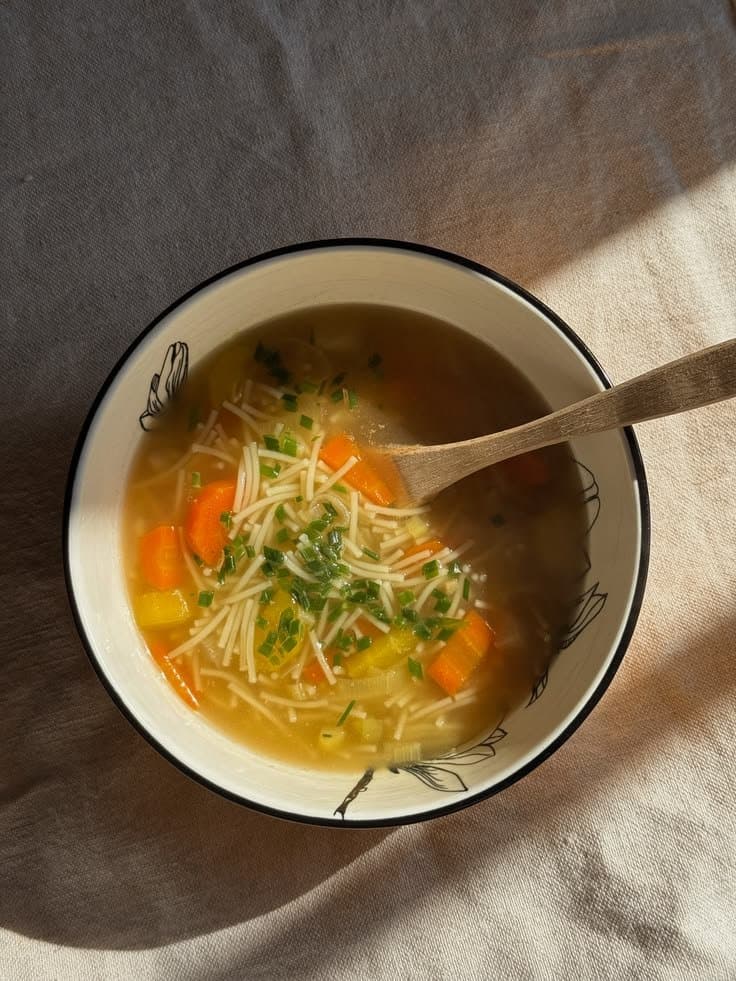
Chicken soup is one of the most classic home remedies for a cold. Warm broth, vegetables, meat and noodles have been linked with illness and recovery for generations.
Can it really help?
The short answer is: yes, but mainly for symptoms and nutrition.
Chicken soup doesn't get rid of the virus and doesn't cure a cold. It can, however, make you more comfortable, help you stay hydrated and make it easier to get energy and nutrients, especially when an infection kills your appetite.
Interestingly, a systematic review of studies on soup during acute respiratory infections was published in 2025. The results were promising, but still too limited to count chicken soup as a treatment.
What can chicken soup do during an infection?
The benefits probably don't come from a single "magic" ingredient, but from a combination of a few simple things.
| What chicken soup provides | Why it may help |
|---|---|
| Fluids | help you stay properly hydrated |
| Warmth | may briefly ease a sore throat and a blocked nose |
| Energy | especially if the soup contains noodles, rice or potatoes |
| Protein | if you eat the meat or another protein source along with the broth |
| Vegetables | increase the nutritional value of the meal |
| An easy meal | may be better tolerated when you feel weak and have no appetite |
So chicken soup works above all as a warm, simple, easy-to-eat meal.
What does the research show?
A systematic review published in 2025 analysed studies in which soup was given during acute respiratory infections.
In total it included only four studies with 342 participants. Some of them observed:
- less severe symptoms,
- a shorter illness,
- changes in some inflammation-related markers.
In some studies the difference in symptom duration was about 1–2.5 days.
That sounds interesting, but caution is warranted. The studies used different kinds of soup, had small groups of participants and differed in methodology.
So we can say that soup may help ease some symptoms, but we don't yet have enough evidence to claim that classic homemade chicken soup shortens every infection.
Nor has chicken soup been shown to have an antiviral effect. The same goes for ginger for immunity: lab studies on individual compounds are not proof that a homemade infusion will prevent an infection.
Why can warm soup make you feel better?
A warm liquid can briefly soothe throat irritation, dryness and the discomfort of a blocked nose.
That doesn't mean the steam rising from the bowl "kills viruses".
The benefit comes from comfort instead. A warm meal can be more pleasant, easier to eat and increase how much fluid you take in.
During an infection, simple things like these often matter most.
Chicken soup and hydration
When you're ill, it's easy to drink less than usual. Fever, more sweating or faster breathing can increase fluid loss further.
Chicken soup can be one way of topping up fluids, especially if plain water doesn't appeal.
That doesn't mean you need to drink huge amounts of soup or other drinks to "flush out the virus".
There's no good evidence that drinking several extra litres of fluid shortens a cold.
The most important rule is simply:
stay properly hydrated, but don't treat excess fluid as a treatment for the infection.
Chicken soup when you have little appetite
Loss of appetite is a very common part of an infection.
In that situation, a large, heavy meal can be hard to eat. A warm soup is usually much easier to manage.
It is worth paying attention, though, to what is actually in the bowl.
| Version | What it provides |
|---|---|
| Broth alone | mainly fluid and sodium |
| Broth + vegetables | plus nutrients from the vegetables |
| Broth + meat | more protein |
| Broth + noodles or rice | more energy and carbohydrates |
| Broth + meat + vegetables + noodles | a much more complete meal |
Drinking nothing but clear broth all day doesn't give your body enough energy and protein.
So when your appetite is low, it's worth treating chicken soup as the base of a fuller meal.
Is chicken soup a good source of protein?
The broth itself doesn't necessarily contain much, even if meat was simmered in it for several hours.
You'll get more protein if you eat chicken, turkey or beef along with the soup.
This matters because you still need enough protein while ill. Amino acids play a part in recovery and in the normal functioning of the immune system, among other things.
Of course, a portion of chicken won't "cure" a cold. What matters is that an infection doesn't mean several days of living on tea and plain broth.
Do the vegetables in chicken soup have a special effect?
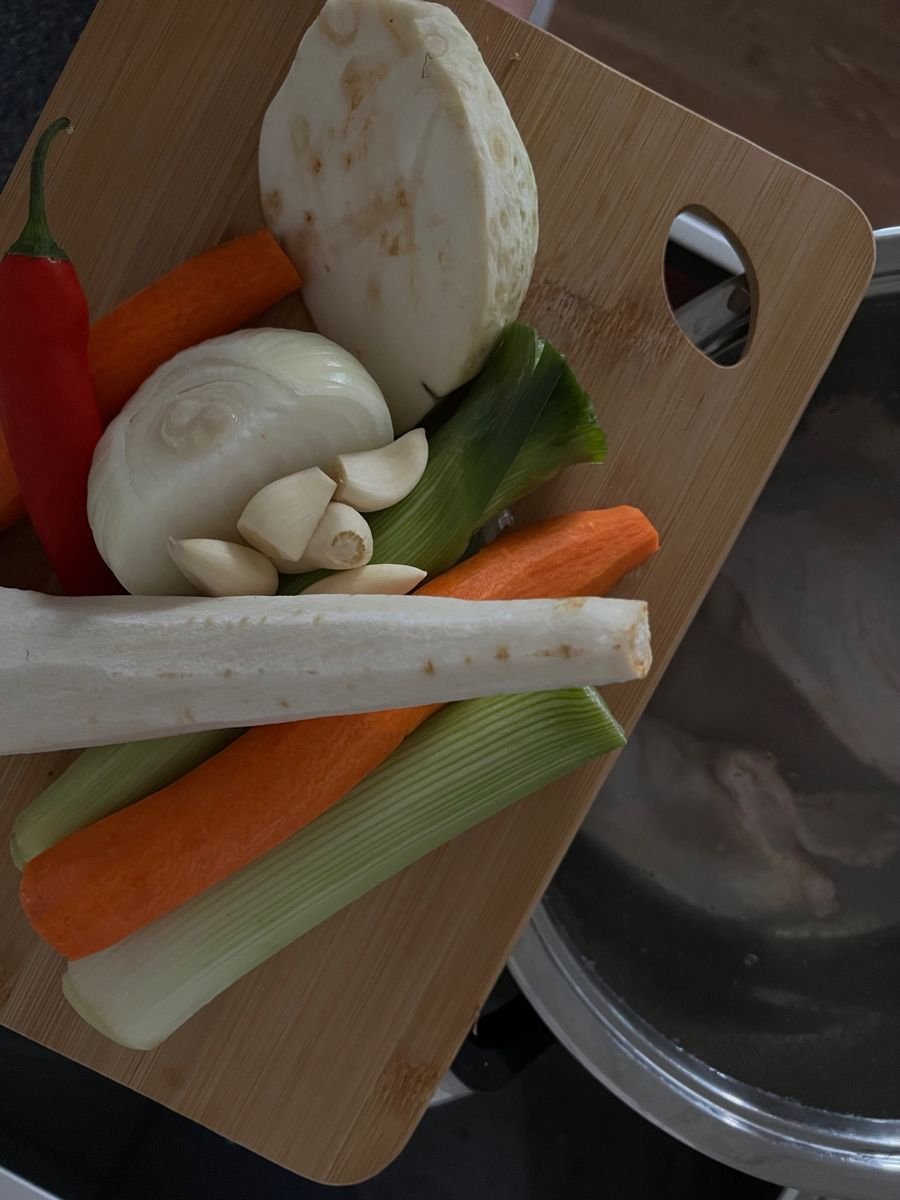
Carrot, parsley root, celeriac, leek and onion increase the nutritional value of the soup, but there's no reason to treat the combination as a special healing mix.
Carrots provide carotenoids, among other things, root vegetables provide potassium, and onions various bioactive compounds.
These are beneficial parts of a normal diet.
That doesn't mean, however, that hours of simmering turn chicken soup into a concentrated "immunity" remedy.
Your overall diet before, during and after an infection matters far more. No single food or immune supplement can replace it.
Or is the secret in the chicken?
You may come across the theory that the cysteine in chicken meat acts like mucus-thinning medicines.
It's an interesting hypothesis, but there isn't currently enough clinical evidence to explain the effect of chicken soup on a cold this way.
The same goes for an anti-inflammatory effect.
Some studies observed changes in inflammatory markers, but that doesn't mean homemade chicken soup has a proven anti-inflammatory effect.
Homemade chicken soup or instant soup?
As a warm liquid they may work similarly, but their nutritional value can differ a lot.
Homemade chicken soup is easier to turn into a fuller meal. You can add more vegetables, meat, noodles or rice and control how much salt goes in.
Ready-made stocks and instant soups often contain a lot of sodium and relatively few vegetables or little protein.
That doesn't make a stock cube a "forbidden" food. It's just worth remembering that salty broth from a cube is not nutritionally the same as soup with meat, vegetables and a source of carbohydrates.
Watch the salt
Chicken soup can be very salty, especially if stock cubes, ready-made seasonings or concentrates go in on top of the salt.
This matters above all for people with:
- high blood pressure,
- cardiovascular disease,
- kidney disease,
- a high everyday salt intake.
You don't need to give up chicken soup altogether. Just go easy on the extra salt. We cover how salt and your overall diet affect blood pressure in our piece on hypertension and diet.
Is fatty chicken soup better?
Not always.
More fat raises the energy value of the meal, which can be useful when your appetite is very low.
On the other hand, a very fatty soup can worsen nausea, a feeling of heaviness, reflux or other digestive complaints.
It's best to adjust it to what you personally tolerate.
During an infection, the most practical meal is simply one you're able to eat.
How to make a more nourishing chicken soup
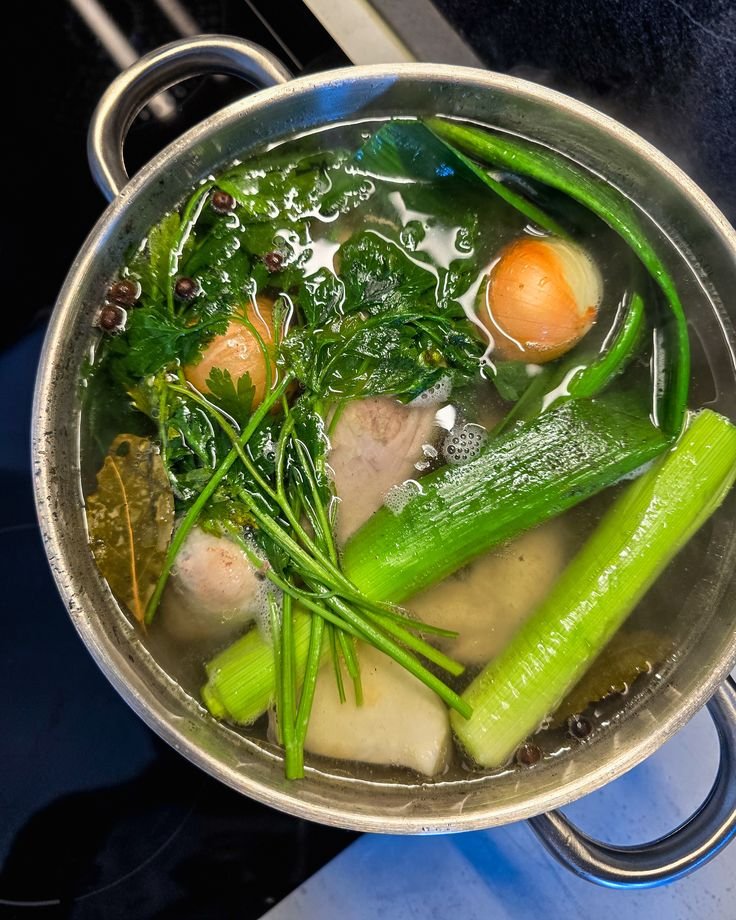
You don't need a special "healing" recipe.
Just treat chicken soup like a normal meal and take care of a few elements:
| Element | Examples |
|---|---|
| Liquid | broth |
| Protein | chicken, turkey, beef |
| Carbohydrates | noodles, rice, potatoes |
| Vegetables | carrot, parsley root, celeriac, leek |
| Extras | parsley, dill |
| Salt | a moderate amount |
When appetite is low, smaller portions several times a day can work better than one large bowl.
Does chicken soup "get you back on your feet"?
It can make you feel better.
A warm meal that provides fluid and energy can reduce discomfort, especially when you feel weak and have no appetite.
That doesn't have to mean any antiviral effect, though.
Chicken soup works more as a source of comfort and nutrition than as a medicine.
And that's the best way to think about it.
Frequently asked questions
Does chicken soup cure a cold?
No. It doesn't get rid of the virus causing the infection. It can, however, make you more comfortable, help with hydration and make eating easier.
Can chicken soup shorten an infection?
Some studies on soup observed shorter symptom duration, but the number of studies was small. The results are promising but need confirmation.
Does chicken soup help a blocked nose?
A warm liquid can briefly reduce the feeling of congestion and improve comfort. It doesn't, however, treat the cause of a runny nose.
Is chicken soup good for a sore throat?
It may ease discomfort, especially if it's warm but not very hot.
Do you need to drink lots of chicken soup during an infection?
No. The most important thing is staying properly hydrated. There's no need to drink it in very large amounts.
Does soup from a stock cube work the same as homemade?
It can provide fluid and be easy to eat, but its nutritional value is usually different. It often contains a lot of sodium and little protein or vegetables.
Should chicken soup be fatty?
It doesn't have to be. It's worth adjusting the amount of fat to your appetite and digestive tolerance.
Is chicken soup good for children?
Yes, if it's suited to the child's age. The main thing to watch is the amount of salt, especially for the youngest children.
Can vegetable broth help too?
Yes. Warm vegetable broth also provides fluid and can improve comfort. If it's meant to be a full meal, it's worth adding a source of protein and energy.
References
- Lucas S., Leach M.J., Kimble R., Cheyne J. Were Our Grandmothers Right? Soup as Medicine – A Systematic Review of Preliminary Evidence for Managing Acute Respiratory Tract Infections. Nutrients. 2025;17(13):2247. doi:10.3390/nu17132247
- Govers C., Calder P.C., Savelkoul H.F.J., Albers R., van Neerven R.J.J. Ingestion, Immunity, and Infection: Nutrition and Viral Respiratory Tract Infections. Frontiers in Immunology. 2022;13:841532. doi:10.3389/fimmu.2022.841532
- Brown L.K., Miller A. Chicken Soup for the Treatment of Respiratory Infections. Chest. 2020;158(5):2231–2232. doi:10.1016/j.chest.2020.06.062
- Malesker M.A., Callahan-Lyon P., Ireland B., Irwin R.S. Pharmacologic and Nonpharmacologic Treatment for Acute Cough Associated With the Common Cold: CHEST Expert Panel Report. Chest. 2017;152(5):1021–1037. doi:10.1016/j.chest.2017.08.009
- MedlinePlus Medical Encyclopedia. Chicken soup and sickness. U.S. National Library of Medicine. https://medlineplus.gov/ency/imagepages/17104.htm
- Mayo Clinic. Cold remedies: What works, what doesn't, what can't hurt. https://www.mayoclinic.org/diseases-conditions/common-cold/in-depth/cold-remedies/art-20046403
- World Health Organization. Sodium reduction. WHO Fact Sheet. https://www.who.int/news-room/fact-sheets/detail/sodium-reduction