
Green smoothies: a healthy habit or an unnecessary ritual?

Sonia Biecka
Dietitian

Medical review: lek. Wojciech Sierocki
Content medically reviewed by an Optimals team physician.
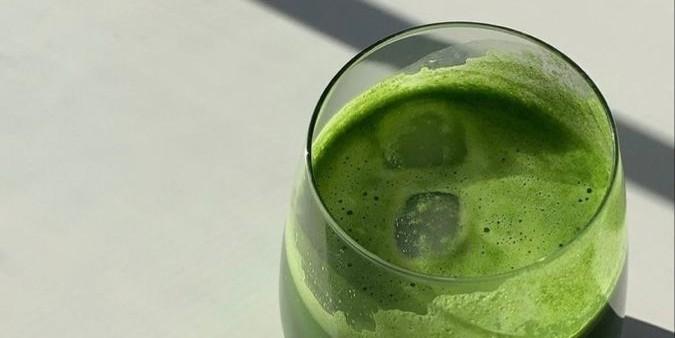
Green smoothies have been among the most popular healthy-eating trends for years. They are credited with cleansing properties, help with weight loss and even a stronger immune system. They are often presented as an easy way to give the body a large dose of vitamins and minerals.
Is it really worth starting the day with a green smoothie? From a dietetic point of view, what matters is not whether the drink is green, but what it contains, how much of it you drink and how it fits into the rest of your day's eating.
What actually goes into a green smoothie?
Green smoothies are usually built on leafy vegetables such as spinach, kale, lettuce or parsley. Fruit is added for taste, most often bananas, apples, kiwi or berries. Water, a plant-based drink, milk or yoghurt completes the mix.
Depending on the ingredients, a smoothie can provide vitamin C, folate, vitamin K, potassium, dietary fibre and bioactive compounds, including polyphenols and carotenoids.
Variety still matters. Spinach and kale have different nutrient profiles, and so do kiwi, banana and berries. Drinking the same set of ingredients every day does not automatically bring more benefit than a varied diet built on vegetables and fruit.
Are green smoothies actually healthy?
The benefits of green smoothies come mainly from the vegetables, fruit and other nutritious ingredients in them. There is no convincing evidence that serving them as a smoothie gives them any special health effect.
A meta-analysis published in Circulation in 2021, pooling data from 26 cohort studies and nearly 1.9 million participants, found that higher vegetable and fruit intake was associated with a lower risk of death from all causes. The most favourable associations were seen at about five servings a day [1].
It is worth stressing that the study looked at vegetable and fruit intake, not at green smoothies specifically. Its findings cannot simply be transferred to drinks made in a blender.
According to the 2023 WHO guideline, adults should eat at least 400 g of vegetables and fruit and at least 25 g of dietary fibre a day [2].
If a smoothie helps you reach those amounts, it can be a worthwhile addition to your diet. It should not, however, fully replace vegetables and fruit eaten in their usual form.
Blending and fibre: is a smoothie as good as whole fruit?
One of the most common arguments against smoothies is that blending destroys fibre. That is an oversimplification.
Blending breaks food down mechanically and changes its structure. If you use whole fruit and vegetables and do not strain off the pulp, much of the fibre stays in the finished drink.
Juice is a different story, especially juice made by separating out the pulp, which usually contains less fibre than the produce it came from.
| Feature | Whole fruit and vegetables | Smoothie | Juice |
|---|---|---|---|
| Fibre | Retained in its natural structure | Largely retained | Usually less |
| Food structure | Intact, or partly broken down by chewing | Mechanically broken down | Much of the pulp removed |
| Fullness | Usually greater | Depends on ingredients and texture | Often lower |
| Speed of eating | Requires chewing | Usually faster | Usually fast |
How you consume it matters too. Whole fruit has to be chewed and is usually eaten more slowly. A smoothie can be finished in a few minutes, which may affect how full you feel and how much energy you take in.
A review published in Nutrition Bulletin in 2025 notes that whole fruit has an advantage over juice because of, among other things, its fibre content, intact food structure and effect on fullness [3].
That does not mean every smoothie behaves like juice. A thick drink made from whole fruit, yoghurt and chia seeds is very different from a clear fruit juice.
Does blending raise blood glucose?
A smoothie's effect on blood glucose depends mainly on the type and amount of carbohydrate, the fibre content, how finely the ingredients are broken down, and whether there is protein and fat in it.
A study published in Nutrients in 2022 compared the glycaemic response to whole and blended fruit in 20 healthy young adults. Interestingly, blended apple and blackberries produced a lower glycaemic response than the same fruit eaten whole [4].
The study was small, however, covered a specific set of fruits and does not support the conclusion that blending always improves blood glucose control.
A study published in the American Journal of Clinical Nutrition in 2025 also assessed glycaemic responses to different forms of fruit, including smoothies. Among other things, it showed that readings from continuous glucose monitors (CGM) can overestimate the glycaemic response compared with capillary blood measurements [5].
In practice, then, there is no basis for treating every smoothie as something that sends blood glucose soaring. It is still worth keeping an eye on what goes into them, especially for people with diabetes or impaired glucose metabolism.
Green smoothies and detox: do they cleanse the body?
One of the most popular beliefs about green smoothies is that they cleanse the body. On social media you will find advice to drink them on an empty stomach to flush out toxins or speed up your metabolism.
There is no reliable clinical evidence that drinking green smoothies regularly removes unspecified toxins from the body.
Metabolising and clearing various substances is mainly the job of the liver and kidneys, with help from other organs. These processes happen whether or not you drink a spinach smoothie in the morning.
Eating well, staying hydrated and getting the nutrients you need support the body's normal physiology. That is not the same as the detoxifying effect attributed to particular foods.
Likewise, there is no basis for the claim that the chlorophyll in green vegetables automatically improves the body's cleansing.
When might a green smoothie be a less good choice?
The most common problem is not the smoothie itself but its ingredients and portion size.
Adding several bananas, lots of fruit juice, honey, syrups or peanut butter can significantly raise the drink's energy content. Some smoothies provide as much energy as a full meal without making you feel comparably full.
The UK's NHS recommends limiting fruit juice and smoothies to a combined 150 ml a day, mainly because of their free sugar content and the risk of tooth decay [6]. This advice concerns drinks and should not automatically be applied as a volume limit for every meal made in a blender.
Regularly using large amounts of raw spinach also deserves attention. Spinach contains oxalates, which in predisposed people can increase the risk of calcium oxalate kidney stones.
The German Federal Institute for Risk Assessment (BfR) recommends varying the vegetables you use and avoiding very large amounts of raw spinach every day [7].
People taking vitamin K antagonists such as warfarin should also aim to keep their intake of leafy green vegetables fairly steady. That does not mean cutting them out, but significant dietary changes should be discussed with a doctor [8].
It is also worth washing vegetables and fruit thoroughly and storing finished smoothies properly.
How to make a nutritious green smoothie

A well-composed smoothie can be part of a meal or a meal in its own right, as long as it provides enough energy and nutrients.
Depending on its purpose, consider including:
- Vegetables: spinach, kale, lettuce or cucumber.
- Fruit: kiwi, apple, berries or banana.
- A protein source: skyr, plain yoghurt, kefir or a high-protein soy drink.
- A source of fat and fibre: chia seeds, flaxseed or nuts.
- Liquid: water, milk or an unsweetened plant-based drink.
For example, a handful of spinach, kiwi, raspberries, plain yoghurt and a small amount of chia seeds makes a smoothie that provides fibre, protein and a range of vitamins and minerals.
If the drink is meant to replace a full breakfast, its nutritional and energy value needs to be raised accordingly. Simply blending a handful of spinach with water and an apple is not a balanced meal.
Frequently asked questions
Can you drink green smoothies every day?
Yes, as long as the ingredients are varied and drinking them does not lead to excess energy intake or a less varied diet. That said, you do not need to drink smoothies every day to eat healthily.
Is it best to drink a green smoothie on an empty stomach?
There is no convincing evidence that drinking a smoothie on an empty stomach brings more benefit than drinking it at another time of day. What matters most is your diet as a whole and your individual digestive tolerance.
Do green smoothies help you lose weight?
They can make weight loss easier if they replace higher-calorie foods and help you control your total energy intake. They do not, however, have any special effect that speeds up fat burning.
Are green smoothies good for your gut?
They can help you get enough dietary fibre, especially if they contain whole fruit, vegetables and seeds. A small 2024 study found changes in gut microbiota composition after drinking pectin-enriched smoothies, particularly in people with a low baseline fibre intake [9]. That does not mean every green smoothie has a proven benefit for gut health.
Is it better to drink a smoothie or eat whole vegetables and fruit?
In your everyday diet, favour whole vegetables and fruit, which need chewing and usually keep you fuller. A smoothie can be a practical way to top up your intake, especially when it is made from whole produce without straining off the pulp.
Can green smoothies cause bloating?
Yes. A large portion of raw vegetables, fruit and fibre can worsen bloating in people with a sensitive digestive tract, especially if they previously ate little fibre. Individual tolerance of ingredients matters too, for example apples, which contain fermentable carbohydrates.
Green smoothies can be a convenient way to add variety to your menu, but they are not an essential part of healthy eating. Their value depends above all on their ingredients, portion size and place in your daily diet, not on their colour or the time of day you drink them.
Put this into practice with a doctor and a dietitian
Optimals Membership · 349 PLN/mo
Ongoing care from a doctor and a dietitian, with the app every day
References
- Wang DD, Li Y, Bhupathiraju SN, et al. Fruit and vegetable intake and mortality: results from 2 prospective cohort studies of US men and women and a meta-analysis of 26 cohort studies. Circulation. 2021;143(17):1642–1654. doi:10.1161/CIRCULATIONAHA.120.048996.
- World Health Organization. Carbohydrate intake for adults and children: WHO guideline. Geneva: World Health Organization; 2023. ISBN: 9789240073593. (who.int)
- Mavadiya HB, Roh D, Ly A, Lu Y. Whole fruits versus 100% fruit juice: revisiting the evidence and its implications for US healthy dietary recommendations. Nutr Bull. 2025;50(3):411–420. doi:10.1111/nbu.70009.
- Crummett LT, Grosso RJ. Postprandial glycemic response to whole fruit versus blended fruit in healthy, young adults. Nutrients. 2022;14(21):4565. doi:10.3390/nu14214565.
- Hutchins KM, Betts JA, Thompson D, Hengist A, Gonzalez JT. Continuous glucose monitor overestimates glycemia, with the magnitude of bias varying by postprandial test and individual – a randomized crossover trial. Am J Clin Nutr. 2025;121(5):1025–1034. doi:10.1016/j.ajcnut.2025.02.024.
- National Health Service. 5 A Day: what counts? London: NHS. (nhs.uk)
- German Federal Institute for Risk Assessment. Preparing (green) smoothies: what should be considered? Berlin: BfR; 2023 Oct 30. (bfr.bund.de)
- Cambridge University Hospitals NHS Foundation Trust. Dietary advice for patients taking warfarin. Cambridge: CUH; 2025 Apr 16. (cuh.nhs.uk)
- Pihelgas S, Ehala-Aleksejev K, Kuldjärv R, Jõeleht A, Kazantseva J, Adamberg K. Short-term pectin-enriched smoothie consumption has beneficial effects on the gut microbiota of low-fiber consumers. FEMS Microbes. 2024;5:xtae001. doi:10.1093/femsmc/xtae001.