
Insulin Resistance Symptoms: What to Watch For and How to Reverse It

Redakcja Optimals Health

Medical review: lek. Wojciech Sierocki
Content medically reviewed by an Optimals team physician.

Insulin resistance is a state in which cells stop responding properly to insulin, so the pancreas compensates by producing more and more of the hormone. The most common symptoms are post-meal drowsiness, strong sugar cravings, belly fat and trouble losing weight. In most cases it is reversible without medication, through diet, movement, sleep and stress reduction.
In its early stages, insulin resistance gives no clear signals that send you straight to the doctor: it doesn't hurt and it doesn't make you cough. It develops in the background of everyday life, for months and often for years, until one day you realise it's already driving a chain of serious problems: obesity, prediabetes and type 2 diabetes, non-alcoholic fatty liver disease, polycystic ovary syndrome, cardiovascular disease.
Estimates suggest insulin resistance affects 30–40% of Polish adults, and most of them don't know it.
Below: what to check, how to recognise it, and what to do before you reach for medication.
What is insulin resistance?
Insulin is a hormone produced by the pancreas. Its job is to move glucose from the blood into cells, where it's used as fuel. When you eat a meal, glucose rises. The pancreas releases insulin so cells "let glucose in." In insulin resistance, cells stop responding properly. Put simply, they start ignoring it. The pancreas compensates by producing more and more of the hormone. For a while, blood sugar stays seemingly "in range," but insulin levels keep climbing.
This is where the problem begins, and it goes far beyond the risk of diabetes.
Chronically elevated insulin:
- promotes fat storage (especially around the belly)
- blocks fat-acid burning
- disrupts sex hormones
- raises estrogens in men and androgens in women
- amplifies inflammation
- accelerates biological ageing
8 signs and symptoms of insulin resistance you ignore
1. Fatigue after meals
Feeling sleepy and heavy 1–2 hours after eating, especially after carb-rich meals, is one of the most common and most dismissed signals. Many people treat it as a natural rhythm of the day or the result of a big portion, but it's a response to sharp glucose and insulin spikes after eating.
2. Strong sugar cravings after eating
It seems counter-intuitive, but the more insulin in your blood, the stronger the sugar cravings can be. The mechanism is simple: you eat something sweet, insulin spikes, blood sugar drops just as fast, and the brain, short of stable fuel, immediately demands another dose. It's a vicious circle that is very hard to break by willpower alone.
3. Trouble losing weight despite a diet
If you're "doing everything right" and the scale won't move, it may not be a calorie problem. High insulin blocks lipolysis, the release and burning of fat, so the body is locked out of reducing its fat stores.
4. Belly obesity
Visceral fat, accumulating around organs in the abdomen, is both a cause and an effect of insulin resistance. Excess of it deepens cell-level insulin resistance, which in turn drives more fat deposition right there, so the loop feeds itself. We cover what visceral fat is and why the scale cannot see it in a separate article.
5. Concentration problems and "brain fog"
The brain is exceptionally sensitive to glucose swings. Insulin resistance disrupts the steady supply of sugar to nerve tissue, hence the foggy head, trouble focusing, the sense that thoughts are "moving through cotton wool." Many people explain this away with stress or poor sleep for years, never connecting it to a metabolic problem.
6. Dark patches of skin – acanthosis nigricans
Dark, velvety patches in skin folds (on the neck, in the groin, under the arms) are a telltale sign of chronically high insulin. They're often dismissed as poor hygiene or clothing friction. They are one of the more readable signs that something is off in your hormonal balance.
7. Irregular periods in women
Insulin resistance disrupts ovarian function and androgen levels. It is one of the leading drivers of polycystic ovary syndrome (PCOS), which often only gets diagnosed when a woman is trying to conceive. You can read more about what connects PCOS and insulin resistance in a separate article.
8. High triglycerides with low HDL
This lipid pattern, high triglycerides paired with low "good" HDL cholesterol, is the laboratory signature of insulin resistance. It often shows up before glucose or insulin levels drift outside their reference ranges. Standard panels miss it easily.
Insulin resistance symptoms in women
In women, insulin resistance often carries a distinctly hormonal signature, and it tends to be dismissed the longest, because each symptom gets treated separately. Beyond the general signs above, watch for:
- Irregular or missing periods – chronically high insulin disrupts ovulation and androgen balance. Insulin resistance is one of the main drivers of PCOS.
- Acne and excess facial or body hair (hirsutism) – elevated insulin pushes the ovaries to produce more androgens, which shows up on the skin long before it shows up in glucose results.
- Weight gain around the middle despite unchanged habits – especially around perimenopause, when falling estrogen further reduces insulin sensitivity. If the scale keeps climbing despite your efforts, it is also worth checking hypothyroidism, which tends to get blamed for more kilograms than it actually explains.
- A history of gestational diabetes – it signals a lasting predisposition; the risk of developing type 2 diabetes later in life is several times higher.
If a few of these sound familiar, ask for fasting insulin and HOMA-IR alongside an androgen panel. Treating the skin or the cycle without addressing insulin usually means treating the symptom, not the cause.
How to check it – the actual tests
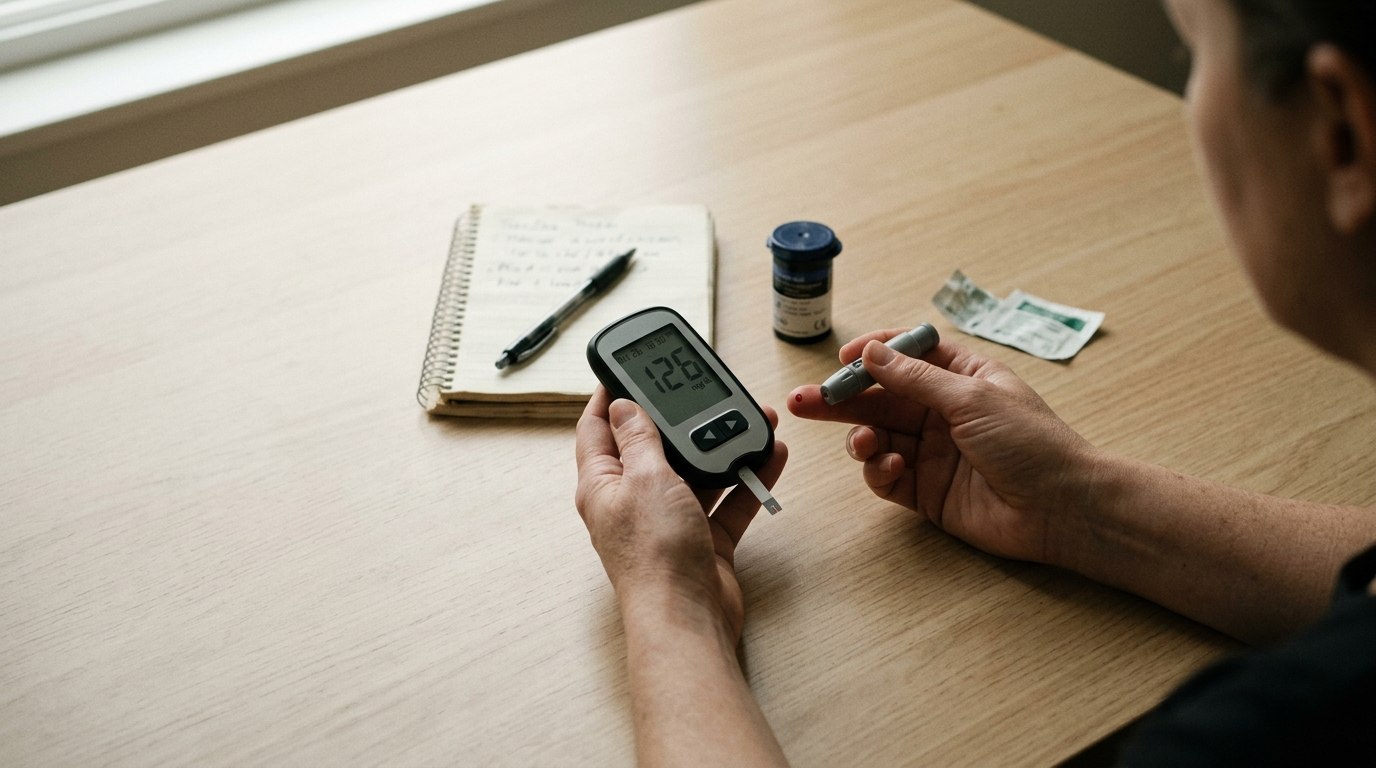
A standard blood count or fasting glucose alone isn't enough to assess insulin resistance. This panel gives a real picture.
Fasting insulin – anything above 10 mIU/ml fasting should raise a flag. Optimal: under 7–8 mIU/ml.
HOMA-IR – calculated as (insulin × glucose) / 405. A value above 2.5 suggests insulin resistance. Above 3.0 is a strong signal. Keep in mind there is no single universal threshold. Read more about what insulin, glucose, HOMA-IR and HbA1c results really mean in a separate article.
Glucose-insulin tolerance test (OGTT + insulin) – more sensitive than fasting tests. It shows how the body responds to a glucose load over time, and whether insulin spikes disproportionately. For many people, this is the test that uncovers a problem invisible in fasting results.
Triglycerides + HDL – a TG/HDL ratio above 3 is an under-appreciated additional marker of insulin-resistance risk worth factoring into interpretation.
| Test | Optimal value | Warning signal |
|---|---|---|
| Fasting insulin | < 7–8 mIU/ml | > 10 mIU/ml |
| HOMA-IR | < 2.0 | > 2.5 (strong: > 3.0) |
| TG/HDL ratio | < 2.0 | > 3.0 |
You can request all of these from a GP or order them privately. Total cost: 80–150 PLN, probably one of the best investments in metabolic health prevention you can make.
What you can do – without medication
Insulin resistance is largely a reversible state. It's one of the few serious metabolic disorders where well-targeted lifestyle change is more effective than pharmacology, provided it's actually implemented. That's not meant as comfort for people who find it hard to start, just a clinical fact.
Diet
The key dietary goal in insulin resistance is post-meal insulin stabilisation: not starving yourself or counting every calorie, but composing meals so they don't trigger sharp hormonal spikes.
- Cut processed carbs – white bread, sweets, fruit juices and ultra-processed foods cause sharp insulin spikes.
- More protein and fat – slow glucose absorption and dampen the insulin response.
- Eat non-starchy vegetables – rich in fibre, which acts as a "buffer" for glucose. It is also the basis of an anti-inflammatory diet.
- Mind the order of eating – vegetables and protein before carbs can cut the glucose spike by 30–40%. Simple and free.
- Don't count on miracle add-ons – the popular apple cider vinegar for glucose and weight loss may at most slightly flatten the post-meal spike, but it won't replace an overall diet.
Physical activity
Exercise increases cellular insulin sensitivity independently of diet, which makes it one of the strongest levers for improvement.
- Resistance training – 2–3 times a week. Muscle is one of the main "tanks" that absorbs glucose after a meal. More muscle means more room for sugar and less need to store it as fat.
- Walks after meals – a 10–15 minute stroll after eating lowers the glucose spike by 15–30%. In someone without a carbohydrate metabolism disorder, though, a post-meal rise is not in itself a problem, as we explain in our piece on glucose spikes in healthy people.
- Avoid prolonged sitting – a break every 60–90 minutes is a metabolic necessity, not a comfort thing.
Sleep and stress
Sleep deprivation raises cortisol, which directly increases insulin resistance. A single sleepless night can temporarily reduce insulin sensitivity by 25%. Stress management isn't a "soft" recommendation but a firm part of the metabolic protocol.
When you actually need medication
If HOMA-IR is above 2–2.5, lifestyle changes haven't moved the needle after 3–4 months, or there are co-existing conditions (PCOS, prediabetes), your doctor may suggest metformin as support. It's an effective drug with a good safety profile. In selected cases of obesity or diabetes, drugs acting on the GLP-1 receptor are also used, reducing appetite and supporting blood sugar control. It is then worth knowing which GLP-1 side effects to expect and which symptoms need medical advice.
But in many cases, medication is introduced too early, before non-pharmacological interventions have been given a real chance.
Summary
Insulin resistance is not a verdict. It's a signal that something in your lifestyle needs to change, and that you have the tools to change it.
Step one: get tested. Fasting insulin + HOMA-IR are easily accessible tests.
Step two: take the results to a doctor who will tailor them to your individual context.
Frequently asked questions
Can insulin resistance be reversed without medication?
In most cases, yes. A diet that limits processed carbs, resistance training, post-meal walks and adequate sleep all improve cellular insulin sensitivity. Metformin is usually only needed when lifestyle change hasn't moved the needle after 3–4 months.
Which test best detects insulin resistance?
HOMA-IR, calculated from fasting insulin and glucose, is the most accessible sensitive marker (a value above 2.5 suggests insulin resistance). A glucose-insulin tolerance test detects the problem even earlier, before fasting glucose leaves its normal range.
What are the symptoms of insulin resistance in women?
In women, insulin resistance often shows up as irregular periods, acne, excess facial or body hair and stubborn belly-weight gain – a pattern that frequently overlaps with PCOS. A history of gestational diabetes is another strong signal. Fasting insulin with HOMA-IR confirms the diagnosis.
How long does it take to improve insulin sensitivity?
The first effects of diet and activity are usually visible after 4–12 weeks of consistent implementation. Full improvement depends on your baseline HOMA-IR, visceral fat mass and how regularly you train.
At Optimals, we treat an insulin-resistance diagnosis as a starting point, not a problem to sweep under the rug. See what a free start looks like →
Dr Alicja Dudek, MD – physician specialising in endocrinology and longevity medicine, co-founder of Optimals Health. Her research focuses on reversing ageing processes through the treatment of metabolic disease.