
Creatinine and eGFR: how is kidney function assessed?

Sonia Biecka
Dietitian

Medical review: lek. Wojciech Sierocki
Content medically reviewed by an Optimals team physician.
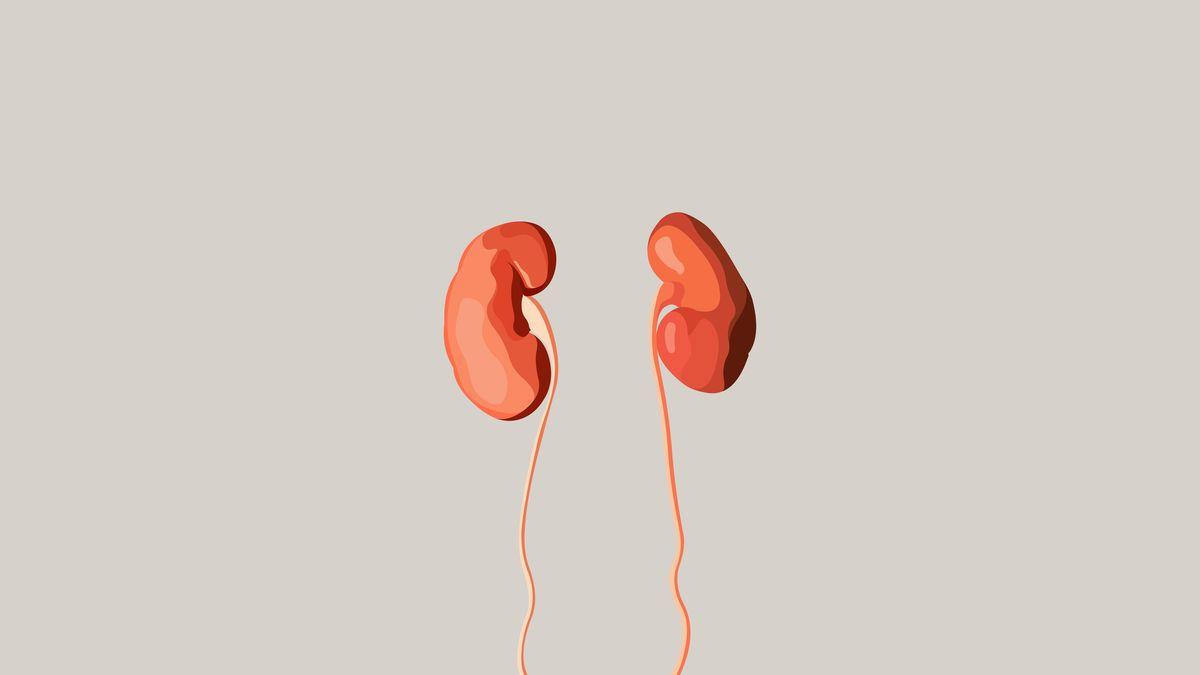
Creatinine and eGFR are the two parameters that come up most often when kidney function is assessed. You will find them in routine lab results, especially in people with high blood pressure, diabetes or other chronic conditions. Interpreting them, however, is not always straightforward.
Raised creatinine does not automatically mean kidney damage, just as a normal result does not rule out developing disease. Age, muscle mass, medications and the presence of protein in the urine all matter too.
So how should creatinine and eGFR be interpreted? The current KDIGO 2024 guidelines stress that kidney assessment should take several parameters into account rather than a single lab result [1].
What is creatinine and why is it measured in the blood?
Creatinine is a product of metabolism in the muscles, formed mainly from the breakdown of creatine and phosphocreatine. It travels in the blood to the kidneys, where it is mostly filtered by the glomeruli and then excreted in the urine.
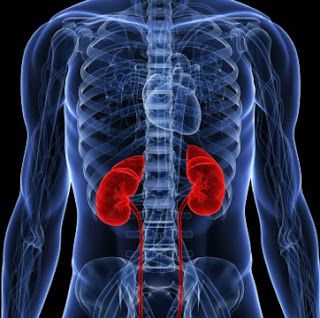
When the kidneys' ability to filter blood declines, creatinine concentration can rise. That is why measuring it is one of the basic tests used to diagnose kidney disease.
The problem is that the amount of creatinine in the blood depends not only on how well the kidneys work, but also on how much of it the body produces.
In people with a lot of muscle mass, creatinine can be physiologically higher. Conversely, in older adults, malnourished people or those with advanced muscle loss, even fairly low creatinine does not necessarily mean normal kidney filtration.
That is why the creatinine value alone, without considering other factors, is not enough to assess kidney function [2].
What is eGFR?
eGFR (estimated glomerular filtration rate) is an estimate of how efficiently the kidneys filter blood. It is most often expressed in ml/min/1.73 m² of body surface area.
Unlike creatinine alone, eGFR also takes certain patient characteristics into account, mainly age and sex.
One of the methods used to calculate eGFR in adults is the CKD-EPI equation. An updated version that does not include the patient's race was published in 2021. The researchers also showed that an equation using both creatinine and cystatin C can estimate filtration more accurately than either marker on its own [3].
Keep in mind that eGFR remains an estimate, not a direct measurement of filtration. Its accuracy can be limited in people with unusual muscle mass and during rapid changes in kidney function, among others.
How to interpret an eGFR result?
The KDIGO guidelines divide glomerular filtration values into six categories used to classify chronic kidney disease.
| Category | eGFR (ml/min/1.73 m²) | Interpretation |
|---|---|---|
| G1 | ≥90 | Normal or high filtration |
| G2 | 60–89 | Mildly decreased filtration |
| G3a | 45–59 | Mildly to moderately decreased |
| G3b | 30–44 | Moderately to severely decreased |
| G4 | 15–29 | Severely decreased filtration |
| G5 | <15 | Kidney failure |
Source: KDIGO 2024 [1]. The classification describes kidney function; a single result is not enough to diagnose chronic kidney disease.
An eGFR of 60–89 ml/min/1.73 m² does not automatically mean chronic kidney disease. Some people, particularly older adults, may have lower filtration without any other signs of kidney damage.
On the other hand, even an eGFR above 90 ml/min/1.73 m² does not rule out disease if other abnormalities are present, such as persistent albuminuria.
That is why interpretation always needs to take additional tests and the patient's health history into account.
When is chronic kidney disease diagnosed?
Chronic kidney disease (CKD) is diagnosed when abnormalities of kidney structure or function persist for at least three months and have implications for health.
The diagnostic criteria include, among others:
- persistent eGFR below 60 ml/min/1.73 m²;
- persistent albuminuria;
- abnormalities in urine sediment;
- structural kidney changes found on imaging;
- other confirmed signs of kidney damage.
Chronic kidney disease therefore cannot be diagnosed on the basis of a single abnormal creatinine or eGFR result.
That does not mean further investigation always has to wait three months. A newly detected drop in eGFR can also point to acute kidney injury, which needs prompt assessment.
NICE guidelines recommend that adults with a first eGFR result below 60 ml/min/1.73 m² have the test repeated within two weeks to rule out an acute deterioration in kidney function [4].
Why are creatinine and eGFR alone not enough?
The second key element of kidney health assessment is measuring albumin in the urine.
Albumin is a protein found in the blood that, under normal conditions, passes into the urine only in small amounts. Increased excretion can indicate damage to the kidneys' filtration barrier.
In practice, the ACR (albumin-to-creatinine ratio) is used, which is the ratio of albumin to creatinine concentration in a urine sample.
| Category | ACR (mg/g) | Interpretation |
|---|---|---|
| A1 | <30 | Normal to mildly increased albumin excretion |
| A2 | 30–300 | Moderately increased |
| A3 | >300 | Severely increased |
Source: KDIGO 2024 [1]. Values of 30 and 300 mg/g correspond roughly to 3 and 30 mg/mmol.
Albuminuria is an important risk marker for the progression of kidney disease and for cardiovascular complications. Notably, it can also occur in people with a normal eGFR.
A single raised ACR result also needs careful interpretation. A temporary increase in albumin excretion can appear during an infection, after intense physical exercise or in other conditions that affect the test result.
That is why abnormalities often need to be confirmed, ideally using a first-morning urine sample.
What can affect creatinine levels?
Creatinine results are influenced both by factors related to kidney function and by factors independent of filtration.
| Factor | Possible effect on the result |
|---|---|
| High muscle mass | Higher creatinine |
| Low muscle mass | Lower creatinine |
| Intense physical exercise | Temporary rise in creatinine |
| Eating a large amount of cooked meat | Temporary rise in creatinine |
| Creatine supplementation | Possible rise in creatinine without any real decline in filtration |
| Dehydration | Possible rise in creatinine, sometimes linked to worsening kidney function |
| Certain medications | May change creatinine concentration or genuinely affect kidney function |
Sources: KDIGO 2024 [1], the National Kidney Foundation and studies on creatine supplementation [5].
Creatine vs creatinine: does supplementation damage the kidneys?
This question matters particularly for physically active people.
Creatine and creatinine are not the same compound. Creatine helps store and rapidly regenerate energy in the muscles, while creatinine is one of its breakdown products.
Creatine supplementation can raise blood creatinine, which in turn can make the eGFR calculated from it look lower than it really is.
A meta-analysis published in 2026, covering 26 studies with 1,036 participants, found a rise in creatinine in people taking creatine. It did not, however, observe a significant decline in filtration measured with the Cr-EDTA tracer method [5].
The results suggest that a rise in creatinine during supplementation does not have to mean kidney damage. They are not, however, proof that any dose of creatine is safe for every patient, especially those with advanced kidney disease.
That is why any supplementation should be taken into account when interpreting test results.
When is it worth measuring cystatin C?
Cystatin C is a protein produced by the body's cells and used as an alternative marker of glomerular filtration.
Compared with creatinine, its concentration depends less on muscle mass. It is not entirely independent of other factors, though: it can be affected by inflammation, thyroid dysfunction and glucocorticoid use, among others.
According to KDIGO 2024, calculating eGFR from both creatinine and cystatin C is particularly useful when a creatinine-only result may be inaccurate and the filtration estimate will inform clinical decisions [1].
This applies, for example, to people with significant muscle loss, an unusual body build, or situations that require a more precise assessment before certain treatments.
It does not mean every healthy person needs routine cystatin C testing.
Who should have their kidney function checked regularly?
Kidney disease can develop for a long time without obvious symptoms. That is why screening matters most in higher-risk groups.
These include, above all, people with diabetes, high blood pressure, cardiovascular disease, a history of acute kidney injury or a family history of kidney disease.
In such cases, assessment usually includes creatinine with eGFR and a urine ACR. How often to check depends on the underlying condition, previous results and individual risk.
According to KDIGO, people with diagnosed chronic kidney disease should have their eGFR and albuminuria assessed at least once a year, and more often if they are at higher risk of progression [1].
Can diet support kidney function?
Diet matters both for preventing kidney disease and for people already diagnosed with chronic kidney disease.
The foundations are keeping blood pressure in a healthy range, good blood sugar control, limiting excessive salt intake and eating a varied diet.
In chronic kidney disease, dietary recommendations should be tailored to the stage of the disease, test results and coexisting health problems.
KDIGO 2024 suggests a protein intake of about 0.8 g/kg body weight per day for adults with CKD in categories G3–G5, taking the individual clinical situation into account. This is not a universal recommendation for all patients, however, particularly people on dialysis, those who are malnourished or have other special nutritional needs [1].
Potassium or phosphorus should not be restricted automatically in everyone with a reduced eGFR either. Such changes should follow from genuine indications.
Similarly, drinking more water than you individually need does not automatically improve kidney filtration. In some conditions, excess fluid intake can even be harmful.
When do results need urgent attention?
A sudden rise in creatinine, a rapid drop in eGFR or the appearance of worrying symptoms needs particular attention.
Reduced urine output, marked swelling, shortness of breath, significant weakness or visible blood in the urine need prompt medical assessment. Absence of urine, severe breathlessness or a rapid decline in general condition call for urgent medical help.
Remember that a normal eGFR from a few months ago does not rule out acute kidney injury now.
Creatinine and eGFR are core elements of kidney function assessment, but they are most valuable when analysed together with a urine test, blood pressure and the patient's health history. A single result can be the start of an investigation, but it should not be the only basis for diagnosing chronic kidney disease.
Frequently asked questions
Does raised creatinine always mean kidney disease?
No. Creatinine can be higher in people with a lot of muscle mass, after intense training, after eating a large amount of meat or during creatine supplementation. Any abnormal result should still be assessed in the context of eGFR and other parameters.
Does an eGFR of 60–89 mean chronic kidney disease?
Not always. These values indicate mildly decreased filtration, but without other signs of kidney damage they are not on their own a criterion for diagnosing CKD.
Does normal creatinine rule out kidney disease?
No. In people with low muscle mass, creatinine can stay relatively low despite reduced filtration. In addition, some kidney diseases in their early stages present with a normal eGFR but increased albumin excretion in the urine.
Does creatinine go up after strength training?
Yes, intense exercise can temporarily affect creatinine levels. Before the test it is worth avoiding unusually heavy training loads and telling your doctor about regular exercise and any supplements you take.
Do I need to fast before a creatinine test?
A creatinine test on its own does not always require fasting, but eating cooked meat can temporarily affect the result. NICE recommends avoiding meat for 12 hours before a creatinine test used to calculate eGFR [4]. Follow your laboratory's instructions as well.
Does drinking more water improve eGFR?
Not in every case. Correcting dehydration can improve results if a lack of fluids was the cause of the abnormality. Simply drinking more water does not, however, treat chronic kidney disease.
Can eGFR be improved with diet?
In some situations the results can improve, especially when the abnormalities have reversible causes. In chronic kidney disease, the main goal of treatment and dietary management is often to slow progression and limit complications rather than simply to raise the eGFR value.
Is eGFR interpreted the same way in children as in adults?
No. In children, equations adapted to age and development are used, often also taking height into account. A child's eGFR should not be interpreted automatically using rules and formulas designed for adults.
Put this into practice with a doctor and a dietitian
Optimals Membership · 349 PLN/mo
Ongoing care from a doctor and a dietitian, with the app every day
References
- Kidney Disease: Improving Global Outcomes (KDIGO) CKD Work Group. KDIGO 2024 clinical practice guideline for the evaluation and management of chronic kidney disease. Kidney Int. 2024;105(4S):S117–S314. doi:10.1016/j.kint.2023.10.018.
- Chen TK, Knicely DH, Grams ME. Chronic kidney disease diagnosis and management: a review. JAMA. 2019;322(13):1294–1304. doi:10.1001/jama.2019.14745.
- Inker LA, Eneanya ND, Coresh J, et al. New creatinine- and cystatin C–based equations to estimate GFR without race. N Engl J Med. 2021;385(19):1737–1749. doi:10.1056/NEJMoa2102953.
- National Institute for Health and Care Excellence. Chronic kidney disease: assessment and management. NICE guideline NG203. London: NICE; 2021. https://www.nice.org.uk/guidance/ng203
- de Souza Almeida A, da Silva LOD, Takahasi BNA, et al. Impact of creatine supplementation on kidney health: a systematic review and meta-analysis. Int Urol Nephrol. 2026 (published online 27 July 2026). doi:10.1007/s11255-026-05287-x.