
How often should you repeat lab tests if your results are normal?

Sonia Biecka
Dietitian

Medical review: lek. Wojciech Sierocki
Content medically reviewed by an Optimals team physician.

A normal blood count, glucose, TSH and lipid panel bring relief, yet they often raise the next question: when should you repeat them? In six months, in a year, or perhaps only in a few years?
There is no single universal expiry date for test results. How often to repeat them depends on the type of test, your age, health status, medications, any symptoms and your individual risk of developing disease.
A healthy, young person with no symptoms or risk factors usually does not need the same range of tests as someone with hypertension, obesity, thyroid disease, iron deficiency or a strong family history.
More testing does not always mean better prevention. A screening test should be performed when there is evidence that its use may bring more benefit than harm. The WHO points out that excessive screening can lead to false-positive results, further unnecessary diagnostics, stress and costs, without any proven improvement in health.
Prevention, diagnosis and monitoring are three different situations
Before setting a date for the next blood draw, it is worth defining why we are running the test.
Preventive tests
These apply to people who have no symptoms or diagnosed disease. Their goal is to detect specific health problems at an early stage.
In this situation tests may be performed every few years, depending on age and risk.
Diagnostic tests
These are run when new symptoms appear, such as:
- chronic fatigue,
- unexplained change in body weight,
- menstrual disorders,
- excessive thirst,
- frequent urination,
- palpitations,
- swelling,
- hair loss,
- abdominal pain,
- shortness of breath,
- reduced exercise tolerance.
In this situation you should not wait for the date set by the preventive calendar. A doctor may order tests even when previous results from a few months ago were normal.
Monitoring treatment or a diagnosed disease
People taking medication or with a diagnosed disease may need tests every few weeks, months or once a year. The frequency then depends on the type of condition, treatment, stability of results and the risk of adverse effects.
The intervals described in this article apply above all to asymptomatic adults with no diagnosed disease.
How often should you have a general health check?
In Poland, since May 2025 adults can use the „Moje Zdrowie" (My Health) programme – an adult health check.
The programme allows the check to be performed:
- once every 5 years in people aged 20–49,
- once every 3 years in people from the age of 50.
The basic package includes:
- a complete blood count,
- glucose,
- creatinine together with eGFR,
- a lipid panel,
- TSH,
- a general urine test.
Depending on age and the answers given in the questionnaire, the scope may be expanded to include, among others, liver enzymes, anti-HCV, lipoprotein(a), PSA or a faecal occult blood test.
This does not mean that everyone should perform exactly these tests only every three or five years. The programme sets an approximate rhythm of a comprehensive check for the general population. Individual risk may justify more frequent checks.
How often should you measure blood pressure?
Blood pressure can remain elevated for a long time without characteristic symptoms, which is why it should be checked regularly.
Current recommendations of the European Society of Cardiology indicate that:
- healthy adults from the age of 18 should have their blood pressure measured at least once every 3 years,
- from the age of 40 measurement is recommended at least once a year,
- more frequent measurements are justified with elevated values, excess body weight, kidney disease, diabetes, family history or the use of medications that may affect blood pressure.
A single elevated reading in the office does not always mean hypertension. A diagnosis should be confirmed by repeated measurements, ideally also outside the office – using home measurements or 24-hour ambulatory monitoring. We write more about how lifestyle affects blood pressure values in our article on hypertension and diet.
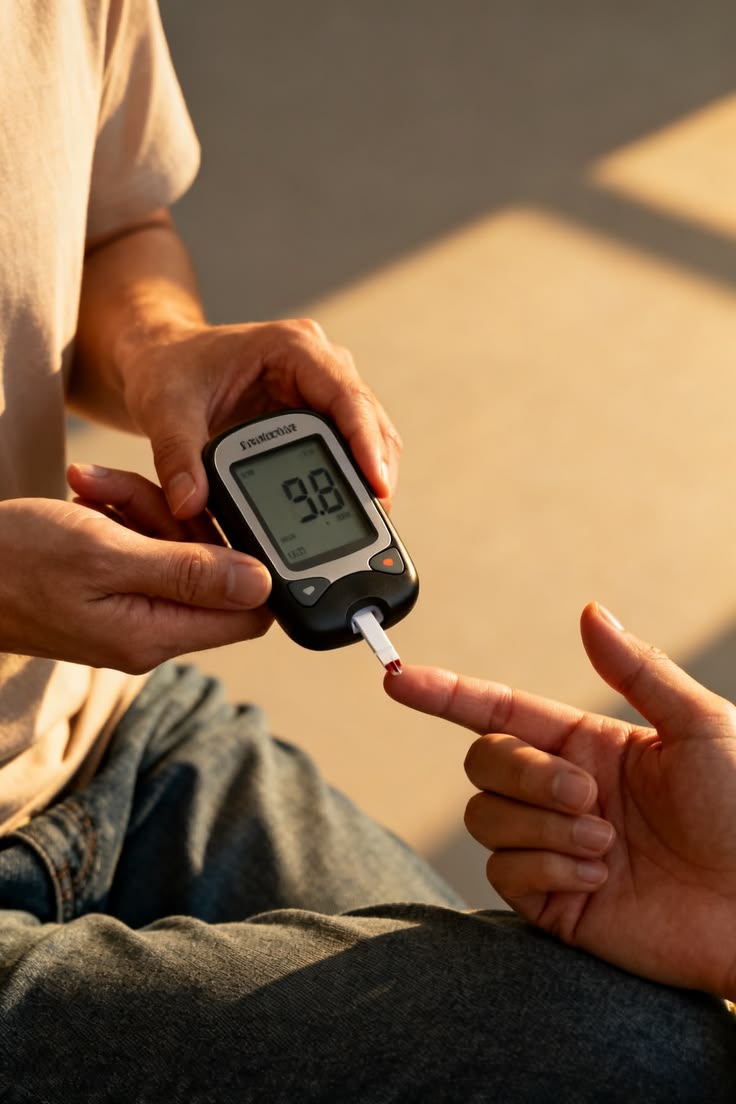
How often should you test glucose and glycated haemoglobin?
The frequency of monitoring carbohydrate metabolism depends primarily on age and the risk factors for type 2 diabetes.
If the glucose or HbA1c result is normal, an interval of about 3 years is often used in a person covered by screening. A shorter interval may be needed with:
- overweight or obesity,
- low physical activity,
- diabetes in the family,
- hypertension or dyslipidaemia,
- a history of gestational hypertension or gestational diabetes,
- PCOS,
- the use of glucocorticoids or certain psychiatric medications,
- values close to the prediabetes threshold.
The USPSTF considers a three-year interval reasonable when results are normal in people undergoing screening.
In people with prediabetes, the current standards of the American Diabetes Association from 2026 recommend checking for the development of diabetes at least once a year, with the option of adjusting the frequency to individual risk.
How often should you have a lipid panel?
In a healthy adult with low cardiovascular risk, a normal lipid panel does not have to be repeated every year. The American Heart Association recommends assessing cholesterol and other basic risk factors on average every 4–6 years in people from the age of 20 who remain in the low-risk group.
It is worth having the test earlier if:
- previous values were close to the upper limit,
- body weight has increased,
- diet or activity has changed,
- hypertension or blood-glucose disturbances have appeared,
- there is a chronic inflammatory disease or kidney disease,
- there have been early heart attacks, strokes or very high cholesterol levels in the family,
- treatment affecting the lipid profile has been started.
Different rules apply to people taking cholesterol-lowering medications. Tests are performed more often to assess the effectiveness and safety of treatment.
Do you have to do a blood count every year?
There is no universal recommendation that every healthy, asymptomatic person must have a complete blood count every 12 months.
In the Polish „Moje Zdrowie" programme, the blood count is part of a check performed once every five years in people aged 20–49 and once every three years after the age of 49.
Having a blood count earlier may be justified, among others, with:
- intensified fatigue,
- pale skin,
- shortness of breath,
- reduced fitness,
- heavy periods,
- bleeding,
- a restrictive diet,
- pregnancy or planning it,
- chronic diseases,
- frequent infections,
- taking medications that affect blood cells.
A blood count shows the current picture of the blood, but it does not directly assess iron stores, vitamin B12 or folate. Normal haemoglobin does not always rule out early iron deficiency. If you want to better understand the individual indicators, see our guide to the parameters of a complete blood count.
How often should you check TSH?
TSH is in the basic package of the „Moje Zdrowie" programme, so in an asymptomatic person it can be checked as part of the health check every three or five years.
At the same time, international recommendations do not clearly indicate that every healthy, non-pregnant person must test TSH annually. The USPSTF assesses that the evidence for the benefits of universal screening of asymptomatic adults is insufficient. If TSH does come back abnormal, it helps to know which thyroid test to start further diagnostics with.
An earlier check may be needed if the following appear:
- intolerance of cold or heat,
- unexplained change in body weight,
- palpitations,
- chronic constipation,
- excessive sleepiness or agitation,
- menstrual disorders,
- fertility problems,
- enlargement of the thyroid gland,
- an autoimmune disease,
- pregnancy or planning it.
Different rules apply to people treated for hypothyroidism or hyperthyroidism. After a change in medication dose, tests are performed much more frequently than during routine prevention.
How often should you check the kidneys?
Basic assessment of kidney function most often uses creatinine together with the calculated eGFR. In people at risk of chronic kidney disease it is worth additionally assessing albumin in the urine, ideally using the albumin–creatinine ratio.
KDIGO recommends testing eGFR and albuminuria above all in people belonging to risk groups. In patients with already diagnosed chronic kidney disease, these parameters should be assessed at least once a year, and more often when there is a high risk of progression.
More frequent checks may be needed for people with:
- diabetes,
- hypertension,
- cardiovascular diseases,
- obesity,
- autoimmune diseases,
- recurrent urinary tract infections,
- a family history of kidney diseases,
- long-term use of medications that may affect the kidneys.
In a healthy person without risk factors, creatinine and a urine test may be performed as part of a general check every three or five years.
How often should you test liver enzymes?
ALT, AST and GGT do not have to be performed annually in every healthy person.
In the „Moje Zdrowie" programme, liver enzymes belong to the extended package. They are ordered depending on age and information obtained in the questionnaire, and not automatically for every participant.
More frequent checks may be justified with:
- overweight and obesity,
- diabetes or prediabetes,
- elevated triglycerides,
- regular alcohol consumption,
- the use of medications or supplements that may affect the liver,
- a history of viral hepatitis,
- abdominal complaints,
- previous abnormal results.
Normal liver enzymes do not rule out all liver diseases, so with high risk a doctor may recommend additional assessment regardless of the results so far.
Ferritin, vitamin B12 and folate - should they be checked preventively?
These are not tests that every healthy person must perform once a year.
Their measurement is worth considering with symptoms or risk factors, such as:
- anaemia or an abnormal MCV,
- heavy periods,
- chronic bleeding,
- a vegan or very restrictive diet,
- gastrointestinal diseases,
- bariatric surgery,
- malnutrition,
- chronic diarrhoea,
- taking medications that affect the absorption of vitamin B12,
- sensory disturbances, tingling or other neurological symptoms.
The 2024 NICE guidelines recommend basing the decision to measure vitamin B12 on symptoms, clinical signs and risk factors, rather than on a fixed annual schedule for the whole population.
After a deficiency is diagnosed, the timing of a follow-up depends on its cause, severity, the type of treatment used and the resolution of symptoms.
Do you have to test vitamin D every year?
Routine, annual measurement of 25(OH)D in all healthy people is not currently recommended.
The 2024 Endocrine Society guidelines suggest not performing routine screening of 25(OH)D levels in healthy people without established indications. Nor has a single level been defined that would guarantee protection against all diseases.
The test may be justified, among others, with:
- osteoporosis or osteomalacia,
- disturbances of calcium–phosphate metabolism,
- diseases causing malabsorption,
- chronic kidney or liver diseases,
- taking medications that affect vitamin D metabolism,
- a previous deep deficiency,
- symptoms or conditions that constitute a medical indication for the test.
If a deficiency was treated, the timing of a repeat test should be set individually. Repeating the measurement every few weeks usually does not provide valuable information.
Are some tests enough to do once in a lifetime?
Yes. Not all parameters require cyclical measurement.
An example is lipoprotein(a), whose level is largely genetically determined and remains relatively stable. In the Polish „Moje Zdrowie" programme this test can be performed once in people aged 20–40, depending on qualification for the extended package.
A repeat measurement may be needed in specific clinical situations, but for most people it is more important to correctly document the first result than to repeat it every year.
How often should you undergo cancer screening?
Normal laboratory test results do not replace cancer prevention. Individual programmes have their own age ranges and intervals.
Cervical cancer prevention
Since 1 July 2026, the basic test in the Polish public (NFZ) programme is the HPV HR test, which replaced classic screening cytology.
The programme covers women aged 25–64. With a negative result, the test is performed as standard once every 5 years. A positive result means performing liquid-based cytology from the same sample and deciding on further management.
Breast cancer prevention
Under the NFZ programme, women aged 45–74 may have screening mammography every 2 years, unless there are indications for a shorter interval.
Colorectal cancer prevention
The screening colonoscopy programme covers:
- people aged 50–65,
- people aged 40–49 if colorectal cancer was diagnosed in their closest relative.
One of the conditions for participation is not having had a colonoscopy in the last 10 years. After a normal test, the next date depends on the result, the quality of bowel preparation, family history and the doctor's recommendations.
When should you repeat tests earlier despite normal results?
You should not wait until the planned check if:
- new or worsening symptoms have appeared,
- there has been a significant change in body weight,
- a very restrictive diet has been introduced,
- treatment has been started or changed,
- pregnancy has occurred or planning it has begun,
- heavy or unusual bleeding has appeared,
- a new disease has been diagnosed,
- a hereditary disease has been detected in the family,
- the result was normal but very close to the borderline value,
- the doctor recommended a shorter interval based on the whole clinical picture.
It is also not worth ignoring symptoms just because „the tests six months ago were fine". A laboratory result describes the situation on the day of the draw and gives no guarantee that a change has not occurred in the body since then.
Can testing too often be harmful?
Drawing a small amount of blood is usually not a problem in itself. The risk relates above all to the interpretation of a large number of unnecessary results.
The more parameters we measure without a specific indication, the greater the probability of finding a small, incidental deviation. It may lead to:
- stress and a sense of being ill,
- repeating further tests,
- unnecessary consultations,
- using supplements without real indications,
- further diagnostics that bring no benefit,
- overlooking what really matters for the patient's risk.
The WHO emphasises that effective prevention means using tests of proven value, in the appropriate population and at the right intervals, rather than performing as many tests as possible.
How to create your own testing calendar?
It is best to base it on four elements:
- Age and sex With age, the importance of monitoring blood pressure, blood glucose, cardiovascular risk and cancer prevention increases.
- Health history Past deficiencies, chronic diseases, pregnancies, surgeries and previous abnormalities affect the frequency of checks.
- Risk factors What matters includes body weight, activity, diet, stimulants, family history and the medications used.
- Trend of results A result still within the reference range may gradually shift in an unfavourable direction. That is why it is worth keeping previous tests and comparing them under similar conditions.
The best solution is to agree an individual preventive plan with a doctor or primary-care staff, instead of buying the same extensive laboratory package every year.
FAQ – frequently asked questions about repeating tests
Frequently asked questions
Should every adult have blood tests once a year?
No. Annual tests may be justified in older people, those with risk factors, taking medication or under care because of a disease. A healthy, young and asymptomatic person can usually have a comprehensive check less often.
Do normal results mean nothing can threaten me for the next few years?
No. Results show the state of the body at a specific moment. Risk can change under the influence of age, body weight, medications, infection, pregnancy, diet or a new disease. The appearance of symptoms is a reason to consult a doctor regardless of the date of the last test.
Is testing every six months too often?
It depends on the situation. For a healthy person without symptoms, repeating a broad package every six months is usually not needed. When treating a deficiency, changing medications, with prediabetes or a chronic disease, such an interval may be correct, and sometimes even too long.
Do you have to check normal glucose every year?
Not always. With low risk the interval may be about three years. Annual monitoring is more justified with prediabetes, obesity, a history of gestational diabetes, PCOS, the use of certain medications or the accumulation of other risk factors.
Do you have to test TSH every year?
Not in everyone. A healthy person without symptoms and without thyroid disease can test TSH as part of a periodic check. The situation is different during treatment, in pregnancy, when planning pregnancy or after symptoms appear.
Is it worth testing ferritin every year?
There is no such need in every healthy person. More frequent checks may be justified with heavy periods, a diet low in iron, a previous deficiency, pregnancy, bleeding or symptoms suggesting deficiency.
Should vitamin D be measured before every autumn-winter season?
No. Current guidelines do not recommend routine measurement of 25(OH)D in all healthy people. The test should result from specific clinical indications.
When should you repeat tests after starting supplementation?
It depends on the substance tested, the severity of the deficiency, the dose of the preparation and the cause of the problem. Some parameters change within a few weeks, others need several months. The timing should be set when treatment begins, and supplements should not be stopped or increased solely on the basis of a self-adopted schedule.
Is a result within the normal range always an optimal result?
The reference range helps to assess whether a result is typical for a given population, but it does not automatically account for all individual factors. Symptoms, the trend, age, diseases, treatment and the combined results of several parameters may matter. This does not mean, however, that every value close to the limit requires supplementation or treatment.
After a normal screening test, can you ignore worrying symptoms?
No. Screening applies to people without symptoms. A breast lump, bleeding from the genital tract, blood in the stool, unexplained weight loss or persistent complaints require diagnosis regardless of when the last mammogram, HPV test or colonoscopy was performed.
Summary
Normal results do not have to be automatically repeated every year. In a healthy person without symptoms a comprehensive check can be performed every few years, while it is worth monitoring blood pressure more often, and with age and the accumulation of risk factors – also blood glucose and the lipid profile.
Tests such as ferritin, vitamin B12, folate or vitamin D should result from the medical history, symptoms and specific indications, and not from a universal package. If you are wondering where to start, see which preventive tests are worth doing once a year.
A good preventive plan means performing the right tests, in the right person and at the right time, rather than testing everything as often as possible.
This material is for educational purposes and does not replace an individual medical consultation. The frequency of testing may differ depending on health status, medications taken, pregnancy and individual recommendations.
Literature and current recommendations – as of July 2026
- Ministry of Health, National Health Fund (NFZ). Moje Zdrowie – adult health check. Programme in force since 2025.
- McEvoy J.W. et al. 2024 ESC Guidelines for the Management of Elevated Blood Pressure and Hypertension. European Heart Journal, 2024; current ESC materials, 2026. doi:10.1093/eurheartj/ehae178.
- American Diabetes Association Professional Practice Committee. Standards of Care in Diabetes–2026. Diabetes Care, 2026;49, Supplement 1.
- US Preventive Services Task Force. Screening for Prediabetes and Type 2 Diabetes. Current recommendation on screening and a three-year interval when results are normal. (uspreventiveservicestaskforce.org)
- American Heart Association. Cholesterol and Cardiovascular Risk Assessment. Recommendations on assessing the lipid profile every 4–6 years in people at low risk.
- Demay M.B. et al. Vitamin D for the Prevention of Disease: An Endocrine Society Clinical Practice Guideline. Journal of Clinical Endocrinology & Metabolism. 2024;109(8):1907–1947. doi:10.1210/clinem/dgae290.
- Kidney Disease: Improving Global Outcomes. KDIGO 2024 Clinical Practice Guideline for the Evaluation and Management of Chronic Kidney Disease. doi:10.1016/j.kint.2023.10.018.
- NICE. Vitamin B12 deficiency in over 16s: diagnosis and management. Guideline NG239, 2024. (nice.org.uk)
- National Health Fund (NFZ). Cervical cancer prevention programme – HPV HR test. Update in force since 1 July 2026.
- National Health Fund (NFZ). Breast cancer prevention programme and Colorectal cancer screening programme.
- World Health Organization Regional Office for Europe. Screening programmes: effectiveness, benefits and potential harms and a review on population-based screening for diabetes, 2024.