
Hypothyroidism and Weight Gain: How Much Can You Really Gain?

Sonia Biecka
Dietitian

Medical review: lek. Wojciech Sierocki
Content medically reviewed by an Optimals team physician.
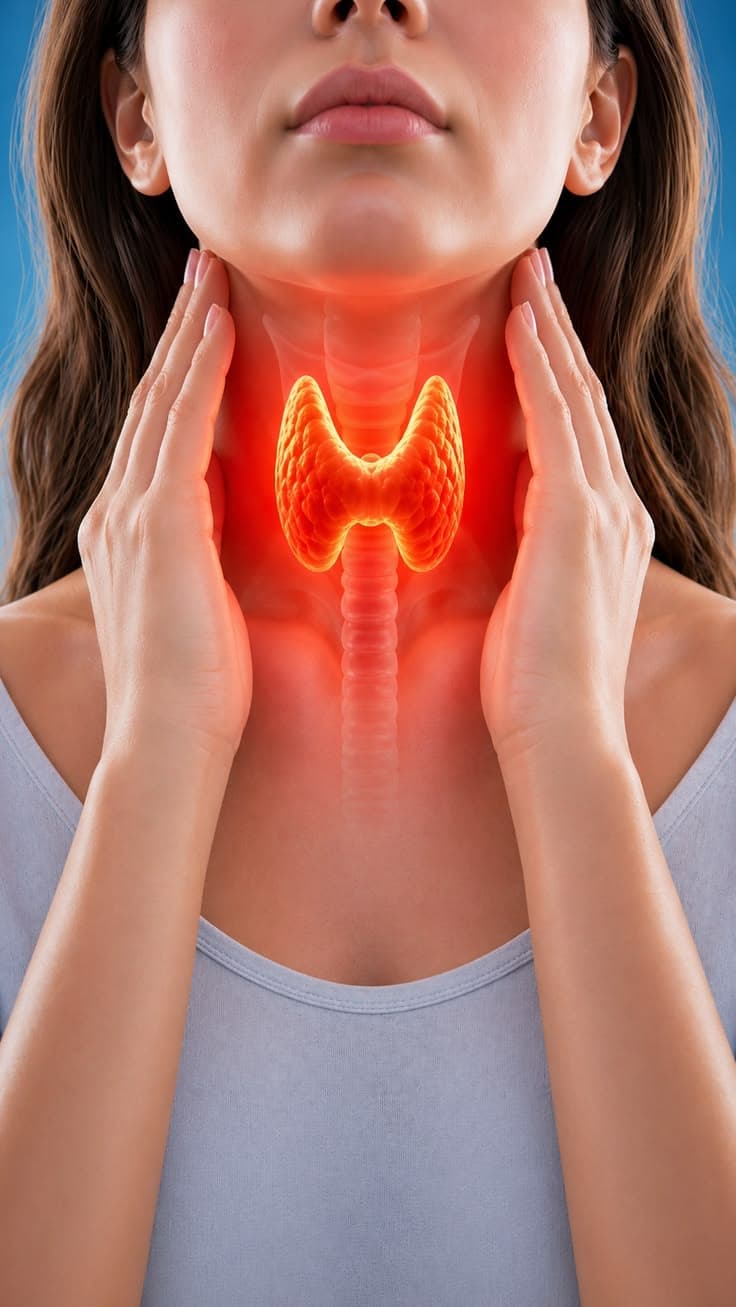
Weight gain is one of the symptoms most commonly associated with hypothyroidism. When body weight starts to rise without any obvious change in diet, many people suspect the thyroid. The link does exist, but it is usually far weaker than popular social-media messaging suggests.
Untreated, overt hypothyroidism can cause weight gain. Most often, though, it is not the only cause of being overweight or obese. And part of those extra kilograms comes from retaining water and sodium, not from an increase in body fat.
The key takeaway
In most people, hypothyroidism accounts for a relatively small amount of weight gain. The American Thyroid Association notes that this is usually around 5–10 pounds, or roughly 2–4.5 kg. The exact figure depends on factors such as the severity and duration of the hypothyroidism. A substantial part of this gain may come from fluid retention.
If body weight has risen by ten kilograms or more, hypothyroidism alone usually does not explain the whole change. In that situation, also look at diet, physical activity, sleep quality, medications, perimenopause and body weight, mood disorders, and other metabolic factors. Stubborn weight gain despite your best efforts can also be a sign of insulin resistance, which deserves its own check, separate from the thyroid.
How does hypothyroidism affect body weight?
Thyroid hormones, chiefly thyroxine (T4) and triiodothyronine (T3), help regulate metabolic rate, heat production, and energy expenditure.
In hypothyroidism their action is insufficient, which can lead to several changes that favour weight gain.
Lower resting energy expenditure
The body uses less energy to sustain basic life functions. The difference is not always large, but if it persists for many weeks or months it can favour a gradual rise in body weight.
The degree of hypothyroidism matters, however. The greater the deficit of thyroid hormones, the more pronounced the metabolic changes can be. In mild, subclinical hypothyroidism, the effect on energy expenditure and body weight is usually much smaller.
Sodium and water retention
Hypothyroidism can lead to fluid accumulation in the tissues. That is why part of the weight gain comes not from stored fat but from an increased water content in the body.
This may be accompanied by:
- facial swelling, particularly around the eyelids,
- a feeling of being "puffy",
- swelling of the hands or feet,
- rings and shoes fitting more tightly,
- less variation in body weight despite dietary changes.
In a small study of people treated for hypothyroidism, weight loss after starting therapy averaged about 4.3 kg. At the same time there was no significant reduction in fat mass. The result indicated that much of the loss was due to the removal of excess water associated with myxoedema.
Fatigue and spontaneously reduced activity
Hypothyroidism can cause drowsiness, weakness, muscle aches, low mood, and worse exercise tolerance. As a result, someone who was previously active may unconsciously start moving less. If chronic fatigue persists despite a normal TSH, it is worth checking for other causes too.
It is not just the number of workouts that falls. Spontaneous daily activity may also decline: walking, taking the stairs, doing household chores, or how often you change position. These small differences, repeated every day, affect total energy expenditure.
Constipation and slower gut transit
Slower intestinal motility can cause constipation and a temporary rise in weight linked to a larger volume of gut contents. This is not an increase in body fat, but it can show up on the scale and add to a sense of heaviness.
Changes in appetite and eating patterns
Classically, hypothyroidism does not have to increase appetite, and in some people it may even reduce it. At the same time, fatigue, low mood, and lack of energy can encourage reaching for readily available, high-calorie foods.
In practice, then, body weight is affected not only by the drop in metabolism itself but also by changes in activity, recovery, and eating behaviour.
How much weight can you gain with hypothyroidism?
There is no single figure that fits everyone. The effect depends on:
- the degree of hormone deficiency,
- how long the condition has lasted,
- baseline body weight,
- age,
- activity level,
- the amount of retained water,
- eating patterns,
- the presence of other conditions and medications.
The figure most often cited is around 2–4.5 kg linked to hypothyroidism, although in severe, long-untreated disease the change can be greater. This does not mean that every patient will gain weight. Some people have clear hormonal abnormalities without a meaningful change in body weight.
| Situation | Likely effect of the thyroid on body weight |
|---|---|
| Overt, untreated hypothyroidism | Moderate, usually a few kilograms |
| Severe, long-standing hypothyroidism | Potentially greater, with a significant contribution from retained water |
| Subclinical hypothyroidism | Usually small or hard to distinguish from other factors |
| Hashimoto's with normal TSH and FT4 | Autoimmunity alone does not usually explain large weight gain |
| Properly treated hypothyroidism | The ability to lose weight is essentially similar to people without hypothyroidism |
Does starting treatment cause weight loss?
Not always. Levothyroxine treatment replaces the missing hormones and restores normal thyroid function, but it is not a weight-loss drug.
After starting treatment, you may see:
- reduced swelling,
- loss of some retained water,
- improved energy and exercise tolerance,
- improved gut function,
- an easier return to regular activity.
There does not have to be a large drop in body fat, however. In a study of 101 patients with primary hypothyroidism, starting levothyroxine did not produce a significant change in body weight across the whole group. Only about half of the participants lost weight.
Treatment removes the hormonal obstacle, but it does not automatically create the energy deficit needed to reduce body fat.
Why isn't the scale moving despite a normal TSH?
A normal TSH means that, in primary hypothyroidism, the treatment dose is usually appropriate. If body weight is not falling, that does not necessarily mean the medication is not working. Very often weight stops dropping despite diet and exercise for reasons that have nothing to do with the thyroid.
The most common explanations are:
The weight gain had more than one cause
Hypothyroidism may have accounted for a few kilograms, but the rest of the change could stem from reduced activity, eating patterns, chronic stress, sleep deprivation, or other health factors.
Habits changed during a period of feeling unwell
If activity was lower and diet was more calorie-dense for many months, then even after hormones are corrected, body weight does not always return to its earlier level on its own.
Water dropped, but body fat did not
Early in treatment the scale may fall slightly thanks to reduced swelling. Further reduction requires action aimed specifically at changing body composition.
Other factors are making it harder to lose weight
Contributors may include:
- sleep deprivation or sleep apnoea,
- menopause,
- polycystic ovary syndrome,
- depression and anxiety disorders,
- limited activity due to pain or joint disease,
- certain medications, for example glucocorticoids, some antidepressants, antipsychotics, or antiepileptics,
- frequent snacking or consuming calories in drinks,
- overly restrictive diets that lead to alternating periods of restriction and overeating.
Overt versus subclinical hypothyroidism
This distinction matters a great deal when judging the effect of the condition on body weight.
Overt hypothyroidism
In primary overt hypothyroidism, TSH is elevated and FT4 is low. This is exactly why an elevated TSH is followed by FT4 rather than a whole panel at once, which we cover in more detail in our guide to which thyroid tests you actually need. Here the hormone deficit is clear and can cause symptoms, including weight gain, swelling, constipation, drowsiness, feeling cold, and a general slowing down.
The first-line treatment remains levothyroxine. European guidelines from 2025 confirm its role as the core therapy for hypothyroidism.
Subclinical hypothyroidism
In subclinical hypothyroidism, TSH is elevated but FT4 stays within the reference range. Symptoms may be mild, non-specific, or absent altogether.
The effect of subclinical hypothyroidism on body weight is much less clear-cut. In a meta-analysis of 21 randomised trials covering 2,192 people, thyroid hormone treatment did not produce a significant improvement in BMI, quality of life, or thyroid-related symptoms. This does not mean subclinical hypothyroidism is never treated. The decision depends on factors such as how high the TSH is, age, symptoms, the presence of antibodies, coexisting conditions, and pregnancy planning.
What your TSH level says about your weight
TSH is the pituitary's signal to the thyroid, so it moves in the opposite direction to thyroid hormone levels: an underactive thyroid pushes TSH up, an overactive one pushes it down. That is why the same symptom, a changing weight, can mean very different things depending on where your TSH sits.
| TSH pattern | What it usually means | Typical effect on weight |
|---|---|---|
| High TSH, low FT4 | Overt hypothyroidism | Modest gain, usually 2–4.5 kg, partly water |
| High TSH, normal FT4 | Subclinical hypothyroidism | Small or hard to separate from other factors |
| Normal TSH on levothyroxine | Well-controlled hypothyroidism | Ability to lose weight essentially normal |
| Low or suppressed TSH | Overactive thyroid or too high a levothyroxine dose | Tends toward weight loss, including muscle, not gain |
High TSH and weight gain
A high TSH with a low FT4 means overt hypothyroidism, and the mechanisms described above apply: the higher the TSH and the longer it has been elevated, the more noticeable the effect can be. Even then, the thyroid's contribution is usually counted in single kilograms. A high TSH with a normal FT4 is subclinical hypothyroidism, where the effect on weight is much smaller and often indistinguishable from other factors.
Low TSH and weight gain
A low or suppressed TSH usually points the other way: toward an overactive thyroid or an overly high levothyroxine dose. The typical effect is weight loss, not gain, and part of that loss can be muscle. If your TSH is low and your weight is still rising, the cause is most likely outside the thyroid.
There are two nuances. Hyperthyroidism can sharply increase appetite, and in a minority of people the extra intake outweighs the extra energy burned. And when an overactive thyroid is treated, some people regain weight as their metabolism returns to normal. Neither changes the practical conclusion: a suppressed TSH is not a weight-loss tool, and keeping it low on purpose carries the heart and bone risks described below.
Can obesity raise TSH?
The relationship between the thyroid and body weight can run in both directions.
Hypothyroidism can favour a small weight gain, but obesity itself can also affect the hypothalamic–pituitary–thyroid axis. Some people with obesity show a slightly elevated TSH with a normal FT4, without classic, primary hypothyroidism.
After weight loss, TSH can fall. That is why a small rise in TSH should not automatically be read as proof that the thyroid is the main cause of obesity. Results should be interpreted together with FT4, symptoms, antibodies, medical history, and medications.

Hashimoto's and weight gain
Hashimoto's disease is the most common cause of primary hypothyroidism in countries with adequate iodine intake. It is an autoimmune condition in which the immune system gradually damages the thyroid.
A diagnosis of Hashimoto's on its own, however, does not automatically mean a slowed metabolism. What matters most is current thyroid function.
If a person has positive anti-TPO or anti-TG antibodies but normal TSH and FT4, the thyroid can still produce an adequate amount of hormones. In that situation, large weight gain should not automatically be attributed to Hashimoto's.
If overt hypothyroidism develops alongside Hashimoto's, it may then affect body weight through the mechanisms described above.
Do you need a higher levothyroxine dose to lose weight more easily?
No. The levothyroxine dose should be chosen to ensure normal hormone levels, not to artificially speed up metabolism.
Taking too high a dose can lead to iatrogenic hyperthyroidism and cause:
- heart palpitations,
- heart rhythm disturbances,
- hand tremor,
- insomnia,
- anxiety,
- loss of muscle mass,
- worse bone health,
- an increased risk of atrial fibrillation.
Any weight loss driven by excess hormones is not a safe reduction of body fat. It can include muscle loss and is usually not lasting.
What to check if your weight is rising
If the weight gain is unexplained and accompanied by symptoms suggesting hypothyroidism, the basis of diagnosis is measuring:
- TSH,
- FT4.
In selected situations a doctor may also order:
- anti-TPO antibodies,
- anti-TG antibodies,
- a lipid panel,
- glucose or HbA1c,
- a complete blood count,
- ferritin,
- vitamin B12,
- liver function tests,
- creatinine and a general urine test.
The range of tests depends on symptoms and medical history. Weight gain alone is not enough to diagnose hypothyroidism: it is a common, non-specific symptom.
How to take levothyroxine correctly
If TSH stays elevated despite treatment, it is worth first checking how the medication is being taken. Even a correctly chosen dose can work less well if its absorption is irregular.
Levothyroxine should be taken consistently, as directed by your doctor. Most often it is taken:
- in the morning, on an empty stomach, with water, an appropriate interval before eating,
- or in the evening, several hours after the last meal.
Calcium and iron supplements can reduce its absorption, so a gap of several hours is usually kept between them. Its action can also be affected by certain antacids, gastrointestinal conditions, large amounts of fibre, and irregular pill-taking.
After starting treatment or changing the dose, follow-up TSH and FT4 are usually checked after a few weeks, because the body needs time to reach a new hormonal balance.
How to lose weight with hypothyroidism
Once thyroid hormones are corrected, the basic principles of weight reduction are similar to those in people without hypothyroidism. There is no special "thyroid diet" that automatically speeds up metabolism.
What matters most:
A moderate energy deficit
Very restrictive diets can worsen fatigue, increase the risk of muscle loss, and make long-term results harder to maintain. A small, sustainable deficit is a better approach.
Adequate protein
Protein supports satiety and protects muscle mass. This is especially important when activity was previously limited by fatigue and weakness.
Strength training and daily movement
Resistance training helps preserve or rebuild muscle. Daily activity matters just as much: walking, standing up frequently, taking the stairs, and limiting long periods of sitting.
Sleep and recovery
Insufficient sleep can increase hunger, reduce spontaneous activity, and make appetite harder to control. If there is loud snoring, morning headaches, or daytime sleepiness, it is worth considering an assessment for sleep apnoea.
Tracking more than just the scale
It can help to watch:
- waist circumference,
- how clothes fit,
- strength and stamina,
- consistency of activity,
- how you feel,
- body composition, if measured under comparable conditions.
When to see a doctor
A consultation is warranted if weight gain is accompanied by:
- marked drowsiness and weakness,
- constant feeling of cold,
- constipation,
- dry skin and hair loss,
- swelling of the face or limbs,
- menstrual irregularities,
- low mood,
- a slowed heart rate,
- difficulty concentrating,
- an enlarged neck circumference,
- sudden or rapidly progressing weight gain.
A rapid rise in weight combined with marked swelling, breathlessness, chest pain, or a significant worsening of general wellbeing needs prompt assessment. Such symptoms may have causes other than the thyroid, including cardiac, renal, or hepatic ones.
Summary
Hypothyroidism can cause weight gain, but its effect is most often moderate. In many patients it accounts for around 2–4.5 kg, with a significant part of that being retained water rather than body fat.
After starting treatment, some people lose a few kilograms, especially if there was swelling. Levothyroxine, however, is not a weight-loss drug and does not automatically reduce body fat.
When TSH and FT4 are normal and weight is still rising, it is worth looking for additional causes. The best results come from combining proper treatment of hypothyroidism with an appropriate diet, movement, sleep, and an assessment of other health factors.
Frequently asked questions
Can hypothyroidism cause obesity?
It can favour weight gain, but it is rarely the only cause of obesity. Most often it accounts for a few kilograms, part of which is water retention. Large weight gain usually has several coexisting causes.
How much weight can you lose after starting treatment?
A single figure cannot be predicted. People with marked swelling may lose a few kilograms of water. In others, weight changes very little or stays the same. A large reduction in body fat additionally requires an appropriate diet and activity.
Does levothyroxine speed up weight loss?
Levothyroxine corrects the hormone deficit in people with hypothyroidism. It should not be used as a weight-loss drug in people with normal thyroid function. Increasing the dose beyond need can lead to heart rhythm disturbances, muscle loss, and weaker bones.
Can you lose weight with hypothyroidism?
Yes. Once hypothyroidism is properly corrected, the ability to lose weight is essentially similar to people without thyroid disease. The process may feel harder if fatigue, sleep deprivation, low activity, or other health problems are still present.
Does Hashimoto's cause weight gain despite a normal TSH?
The mere presence of thyroid antibodies does not automatically mean a slowed metabolism. If TSH and FT4 are normal, large weight gain should prompt a search for other causes as well.
Can a low TSH cause weight gain?
Usually not. A low or suppressed TSH most often reflects an overactive thyroid or too high a levothyroxine dose, which tends to cause weight loss rather than gain. If your TSH is low and your weight is rising, look for other causes and discuss the result with your doctor, because a suppressed TSH carries its own heart and bone risks.
Does an elevated TSH always mean the thyroid is the cause of being overweight?
No. A slight rise in TSH can also occur in people with obesity and sometimes falls after weight loss. The result should be interpreted together with FT4, symptoms, age, medications, and thyroid antibodies.
Do you need to cut out gluten with hypothyroidism?
There is no indication that everyone with hypothyroidism or Hashimoto's should follow a gluten-free diet. It is necessary chiefly in diagnosed coeliac disease or another medically confirmed reaction to gluten. Unjustified elimination may bring no benefit and make a balanced diet harder to achieve.
Does a normal TSH mean the dose is perfect?
It most often means good control of primary hypothyroidism, but the result should be interpreted together with FT4, symptoms, how the medication is taken, and the clinical situation. Special rules apply to pregnancy and central hypothyroidism, among others.
At Optimals we treat a thyroid result as a starting point, not a ready-made answer to the question of body weight. See how the free start works →
References
- Centanni M, Duntas L, Feldt-Rasmussen U, et al. ETA guidelines for the use of levothyroxine sodium preparations in monotherapy to optimize the treatment of hypothyroidism. Eur Thyroid J. 2025;14(4). doi:10.1530/ETJ-25-0123.
- Jonklaas J, Bianco AC, Bauer AJ, et al. Guidelines for the treatment of hypothyroidism: prepared by the American Thyroid Association Task Force on Thyroid Hormone Replacement. Thyroid. 2014;24(12):1670–1751. doi:10.1089/thy.2014.0028.
- American Thyroid Association. Thyroid and Weight. Patient information brochure. Updated 2024. (thyroid.org)
- Karmisholt J, Andersen S, Laurberg P. Weight loss after therapy of hypothyroidism is mainly caused by excretion of excess body water associated with myxoedema. J Clin Endocrinol Metab. 2011;96(1):E99–E103. doi:10.1210/jc.2010-1521.
- Lee SY, Braverman LE, Pearce EN. Changes in body weight after treatment of primary hypothyroidism with levothyroxine. Endocr Pract. 2014;20(11):1122–1128. doi:10.4158/EP14072.OR.
- Ríos-Prego M, Anibarro L, Sánchez-Sobrino P. Relationship between thyroid dysfunction and body weight: a not so evident paradigm. Int J Gen Med. 2019;12:299–304. doi:10.2147/IJGM.S206983.
- Feller M, Snel M, Moutzouri E, et al. Association of thyroid hormone therapy with quality of life and thyroid-related symptoms in patients with subclinical hypothyroidism: a systematic review and meta-analysis. JAMA. 2018;320(13):1349–1359. doi:10.1001/jama.2018.13770.
- Biondi B. Subclinical hypothyroidism in patients with obesity and metabolic syndrome: a narrative review. Nutrients. 2024;16(1):87. doi:10.3390/nu16010087.
- Bekkering GE, Agoritsas T, Lytvyn L, et al. Thyroid hormones treatment for subclinical hypothyroidism: a clinical practice guideline. BMJ. 2019;365. doi:10.1136/bmj.l2006.
- Gökkaş U, et al. Efficacy of levothyroxine monotherapy in achieving clinical euthyroidism and its effects on body weight and metabolic parameters in women with hypothyroidism. Sci Rep. 2024.