
Heart palpitations: when can stress be the cause, and when do you need tests?

Sonia Biecka
Dietitian

Medical review: lek. Wojciech Sierocki
Content medically reviewed by an Optimals team physician.
A sudden racing heartbeat, strong thumping in the chest or the sense that your heart briefly "skips" can be unsettling. These sensations often appear during periods of increased stress, after a sleepless night or after a lot of caffeine. Their cause, however, is not always emotional tension.
Palpitations can be a normal physiological response, but they can also be a symptom of heart rhythm disorders, thyroid disease or anaemia. What matters is the character of the symptoms, the circumstances in which they occur and whether other symptoms come with them.
What exactly are heart palpitations?
Palpitations are the subjective sensation of an abnormal or unusually noticeable heartbeat. Patients describe them as a fast pulse, forceful beats, fluttering in the chest, or a feeling that the heart briefly stops and then starts again.
Importantly, palpitations do not always mean the heart is actually beating too fast. Some people feel strong beats even at a normal heart rate, while others may not notice an arrhythmia at all.
A 2024 review published in American Family Physician emphasised that the causes of palpitations include cardiac disorders as well as metabolic, hormonal, pharmacological and psychological factors [1].
That is why a description of the symptoms alone is not enough to make a diagnosis.
Why can stress cause heart palpitations?
In a stressful situation the sympathetic nervous system is activated, preparing the body for increased effort and quick reactions. Among other things, adrenaline and noradrenaline are released, the heart speeds up and blood pressure rises.
This is a natural physiological response that can occur before a public talk, an important exam or in a threatening situation.
The problem arises when the tension lasts for a long time. Chronic stress can heighten your attention to signals coming from the body, so that even a normal heartbeat becomes more noticeable.
Palpitations can also accompany panic attacks. In such situations they often come with rapid breathing, trembling, sweating, dizziness or an intense sense of threat.
Keep in mind, though, that palpitations during stress do not rule out a heart rhythm disorder. What is more, stress can be one of the triggers of arrhythmia in predisposed people [2].
Palpitations vs arrhythmia: how to tell the difference?
There is no single characteristic symptom that lets you tell a stress response from a heart rhythm disorder on your own. Certain features can, however, help a doctor establish the cause.
| Observation | What it may suggest |
|---|---|
| Heart rate rising gradually during stress | A physiological response to tension |
| A very fast, regular rhythm that starts suddenly and stops just as suddenly | Possible paroxysmal supraventricular tachycardia |
| An uneven, irregular heartbeat | Possible rhythm disorders, including atrial fibrillation |
| Single strong beats or a "skipping" sensation | Possible extra (ectopic) heartbeats |
| Palpitations during exercise, with fainting or chest pain | A red flag that needs urgent assessment |
These features are only a rough guide and are not meant for diagnosing arrhythmia yourself.
For example, paroxysmal tachycardia can also occur during a period of severe stress. Conversely, single extra heartbeats are common in people with no diagnosed heart disease.
What settles the question is a recording of the heart rhythm, ideally taken while the symptoms are present [2, 3].
What else can cause heart palpitations?
Caffeine and energy drinks
Caffeine stimulates the central nervous system and can make the heartbeat more noticeable, especially in people who are sensitive to it.
That does not mean any amount of coffee triggers rhythm disorders.
A randomised trial published in The New England Journal of Medicine in 2023 assessed the effect of drinking coffee on heart activity in 100 adults. It found no significant increase in premature atrial contractions, but did observe more premature ventricular contractions and shorter sleep on coffee days [4].
The results suggest that the body's response to caffeine may depend on the type of rhythm disturbance and on individual susceptibility.
Sleep deprivation and exhaustion
Too little sleep can amplify the stress response and make palpitations more noticeable. Chronic fatigue also often goes hand in hand with more caffeine and less recovery.
Anaemia and hormonal disorders
Palpitations can occur in, among other conditions, anaemia, hyperthyroidism, fever and dehydration. In some people electrolyte disturbances, episodes of hypoglycaemia or side effects of medication also play a role.
Around the menopause, palpitations are often reported together with hot flushes and sleep problems. New symptoms should not, however, be automatically attributed to hormonal changes without proper assessment.
When do heart palpitations need to be checked?
Single, short episodes of palpitations do not necessarily mean disease. There are, however, situations in which you should see a doctor.
Tests are particularly advisable when palpitations:
- keep coming back or gradually get worse;
- last longer than a few minutes or appear for no obvious reason;
- occur during physical exercise;
- occur alongside diagnosed heart disease;
- appear in someone with a family history of sudden cardiac death or inherited rhythm disorders.
Signs that need urgent medical help are above all palpitations combined with chest pain, marked shortness of breath, fainting or feeling close to fainting. A persistent, very fast heartbeat with a clear deterioration in how you feel also needs urgent assessment.
In these situations call 112 (the European emergency number) or your local emergency number. Even if the worrying symptoms have passed, you still need an urgent medical assessment [5].
What tests are done for heart palpitations?
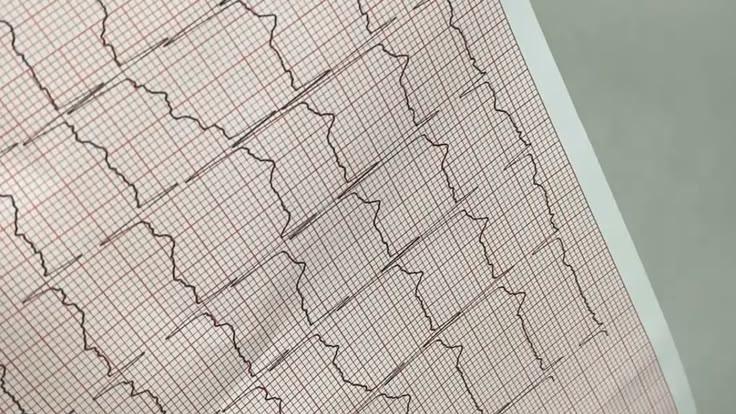
Diagnosis starts with a thorough history, a physical examination and a 12-lead ECG. The ECG shows the heart rhythm and can reveal some conduction abnormalities.
A normal ECG does not always rule out arrhythmia, especially when the disturbances come in episodes.
Depending on how often the symptoms occur, the doctor may recommend:
- Holter ECG: usually a 24–48 hour recording, especially when symptoms occur daily.
- Longer ECG monitoring: for less frequent episodes that a short recording failed to capture.
- Echocardiography: when a structural heart abnormality is suspected.
- Laboratory tests: e.g. a complete blood count, TSH, electrolytes or blood glucose, depending on the history and symptoms.
Experts from the International Society for Holter and Noninvasive Electrocardiology and the Heart Rhythm Society stress that the length of monitoring should match how often symptoms occur. For sporadic episodes, a longer recording can increase the chance of capturing them [6].
It is also worth remembering that a smartwatch heart rate reading is not equivalent to a full cardiac work-up. Some devices can record a simplified ECG, but an irregular rhythm notification needs proper interpretation, and a normal result does not rule out every arrhythmia [3].
What can you do if palpitations are linked to stress?
If testing has ruled out significant cardiac causes, it makes sense to look at the factors that may be making the symptoms worse.
Regular sleep, cutting back on excessive caffeine, staying hydrated and regular physical activity can all help. People living with chronic stress may also benefit from psychological support.
With palpitations it is also important to avoid self-medicating with supplements that supposedly regulate the heart. Magnesium or potassium should be supplemented only when there is a real indication, because both deficiency and excess can be clinically significant.
A good idea is to keep a short symptom log noting the time the palpitations started, how long they lasted, the circumstances, any medication taken and any accompanying symptoms. This information can make further testing easier.
Heart palpitations do not always mean serious illness, but they should not automatically be put down to stress. Even if the symptoms appear during periods of increased tension, their cause is worth assessing in the context of your overall health. This helps avoid both unnecessary worry and missing disorders that need treatment.
Frequently asked questions
Can stress cause heart palpitations at rest?
Yes. The stress response does not always fade as soon as the stressful situation ends, so palpitations can also appear while you are resting. If the symptoms keep coming back, though, other causes are worth ruling out.
Can you have palpitations with a normal heart rate?
Yes. Some people feel strong heartbeats even though their heart rate is normal. Single extra heartbeats are also possible, and they cannot always be recognised from a pulse reading alone.
Does magnesium deficiency cause heart palpitations?
A significant magnesium deficiency can promote heart rhythm disorders. That does not mean every episode of palpitations is caused by low magnesium, or that supplements will help people whose magnesium levels are normal.
Are heart palpitations after coffee dangerous?
Not necessarily. Caffeine can make the heartbeat more noticeable, but its effect on rhythm disorders varies. If symptoms regularly appear after coffee, it is worth cutting down and discussing them with a doctor, especially when they are strong or keep recurring.
Can palpitations be a symptom of anxiety or a panic attack?
Yes. Palpitations are one of the symptoms that can occur in anxiety disorders and during panic attacks. A psychological cause should not, however, be assumed just because stress is present, without assessing possible physical causes.
Does a normal ECG mean the heart is healthy?
Not always. A standard ECG records the heart's electrical activity at one moment in time. If rhythm disturbances happen only occasionally, the test may miss them. In such cases the doctor may recommend Holter monitoring or a longer ECG recording.
When should you see a cardiologist?
A consultation is advisable especially when palpitations keep coming back, get worse, occur during exercise or come with other worrying symptoms. Testing can also start with a GP, who will decide whether further investigations are needed.
Put this into practice with a doctor and a dietitian
Optimals Membership · 349 PLN/mo
Ongoing care from a doctor and a dietitian, with the app every day
References
- Gauer RL, Thomas MF, McNutt RA. Palpitations: evaluation, management, and wearable smart devices. Am Fam Physician. 2024;110(3):259–269. PMID: 39283849.
- Ribero-Vargas D, Jaramillo-Alvarez JC, Gandara-Ricardo J. Palpitations: a practical approach. Cureus. 2025;17(11):e97748. doi:10.7759/cureus.97748.
- Van Gelder IC, Rienstra M, Bunting KV, et al. 2024 ESC Guidelines for the management of atrial fibrillation developed in collaboration with the European Association for Cardio-Thoracic Surgery (EACTS). Eur Heart J. 2024;45(36):3314–3414. doi:10.1093/eurheartj/ehae176.
- Marcus GM, Rosenthal DG, Nah G, et al. Acute effects of coffee consumption on health among ambulatory adults. N Engl J Med. 2023;388(12):1092–1100. doi:10.1056/NEJMoa2204737.
- National Health Service. Heart palpitations. NHS; last reviewed 17 March 2026. (nhs.uk)
- Steinberg JS, Varma N, Cygankiewicz I, et al. 2017 ISHNE-HRS expert consensus statement on ambulatory ECG and external cardiac monitoring/telemetry. Heart Rhythm. 2017;14(7):e55–e96. doi:10.1016/j.hrthm.2017.03.038.