
Does dairy make acne worse? What the research says

Sonia Biecka
Dietitian

Medical review: lek. Wojciech Sierocki
Content medically reviewed by an Optimals team physician.
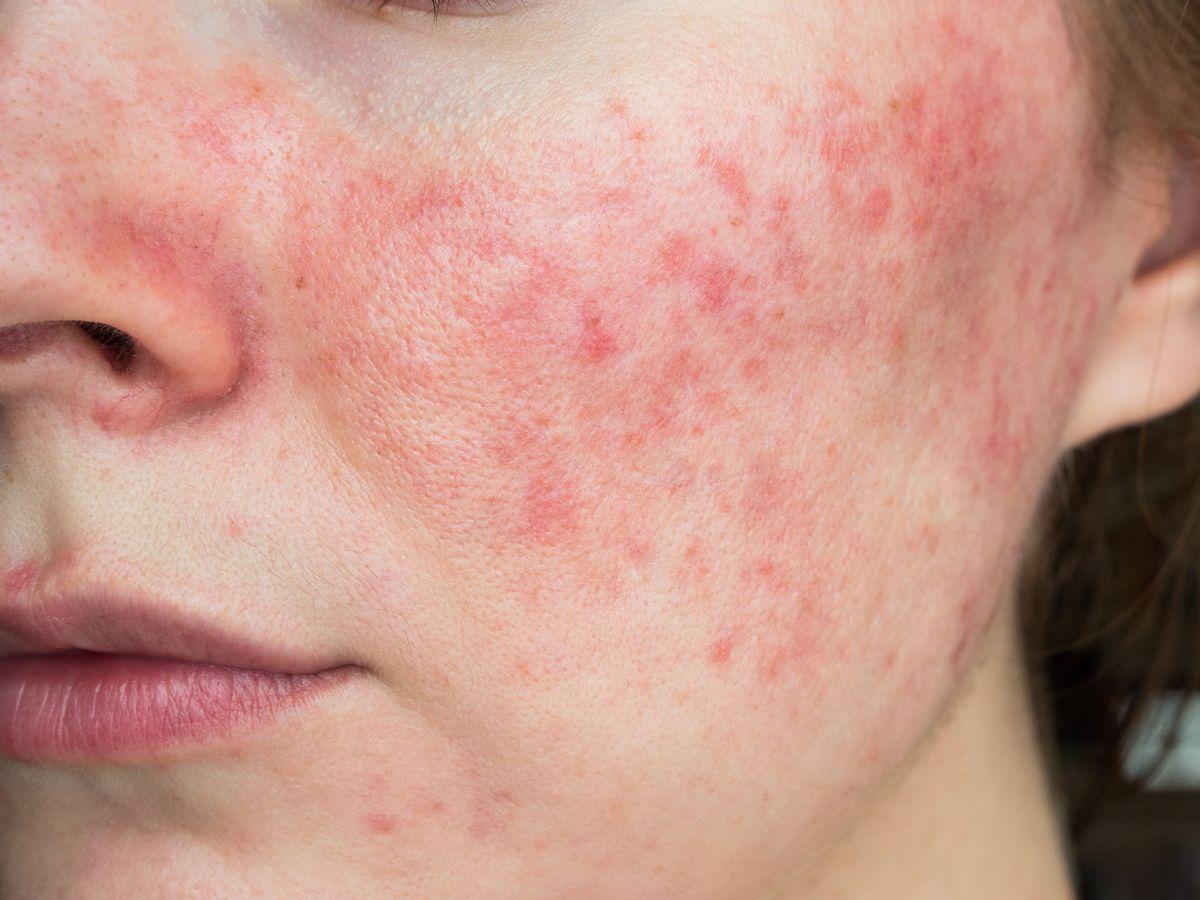
Milk, yoghurt, cheese and protein powders increasingly turn up on lists of foods suspected of making acne worse. On social media you can find advice to cut out dairy completely, especially for people with hormonal acne. Is that really justified?
Research suggests that some dairy products may be linked to acne, but the relationship is not clear-cut. The type of product, how much dairy you eat and your individual susceptibility to skin lesions all matter. What is more, most of the available evidence comes from observational studies, which cannot establish cause and effect.
Where does acne actually come from?
Acne vulgaris is a chronic inflammatory disease of the pilosebaceous unit. Several interconnected mechanisms drive it: excess sebum production, abnormal keratinisation of the follicle openings, changes in the skin microbiome, including the activity of Cutibacterium acnes bacteria, and the inflammatory response.
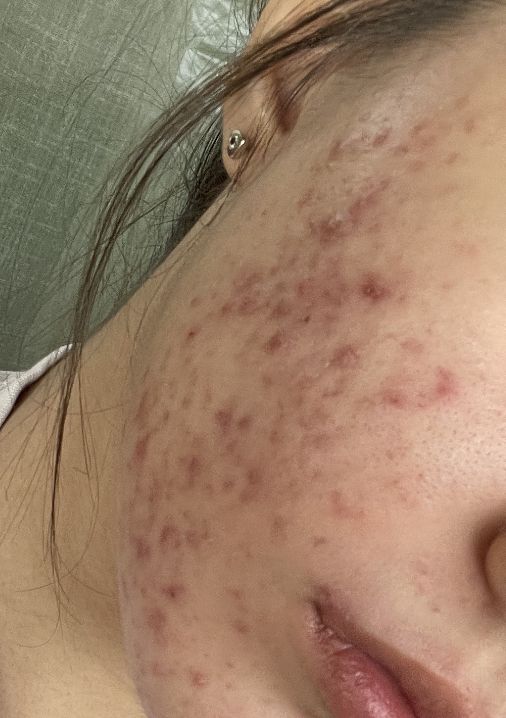
The course of the disease is also shaped by genetic predisposition and hormonal factors, particularly the activity of androgens, which regulate the sebaceous glands.
Diet can influence some of these processes, among other things through its effect on insulin and insulin-like growth factor 1 (IGF-1). But it is neither the only nor the most important factor behind acne in every person.
Dairy and acne: what do studies show?
One of the most frequently cited publications is the 2018 meta-analysis by Juhl et al., covering 14 observational studies and data from 78,529 children, adolescents and young adults aged 7–30.
It found that eating dairy products was associated with a higher likelihood of acne. The odds ratio was 1.25 for total dairy intake and 1.28 for milk [1].
That means roughly 25% and 28% higher odds of acne in the groups studied, not a direct increase in the risk of developing acne by that amount.
The authors pointed out important limitations of the studies analysed, including their methodological heterogeneity, the risk of error in dietary assessment and possible publication bias.
Similar associations were observed in the NutriNet-Santé study, published in JAMA Dermatology in 2020. An analysis of 24,452 adults found a link between milk intake and acne. The same relationship was seen for sugary drinks and for foods high in sugar and fat [2].
Not all studies confirm these observations, however. A Danish analysis of more than 20,000 adults found no significant link between milk intake and acne, including when Mendelian randomisation was used [3].
So the current evidence points to a possible association, but does not confirm that drinking milk directly causes acne.
Does every kind of dairy act the same way?
The available research suggests the relationship between dairy and acne may differ depending on the product.
| Product | What does research suggest? |
|---|---|
| Skimmed milk | Some studies observed a relatively strong association with acne |
| Whole milk | A positive association was also observed, though often weaker than for skimmed milk |
| Plain yoghurt | Findings are inconsistent |
| Kefir | There is not enough research to assess its effect on acne |
| Cheese | No consistent association with worse acne has been shown |
| WPC/WPI protein powders | Some studies suggest a link, but clinical trial results are inconsistent |
The meta-analysis by Aghasi et al., published in Clinical Nutrition in 2019, found a significant association between milk intake and acne, particularly for skimmed milk. It found no statistically significant association for yoghurt and cheese [4].
Bear in mind, though, that another meta-analysis from 2018 pointed to a possible link for yoghurt as well [1]. So the findings are not fully consistent.
There is currently not enough evidence to advise everyone with acne to cut out dairy as a whole food group.
Why might milk affect acne?
One proposed mechanism is the effect of milk and its components on insulin metabolism and the IGF-1 signalling pathway.
IGF-1 is a growth factor involved in, among other things, regulating cell division and anabolic processes. It may also affect sebaceous gland activity and the processes behind acne lesions.
Milk proteins, especially the whey fraction, are insulinotropic, meaning they can stimulate insulin secretion. Under certain dietary conditions, dairy intake may also affect IGF-1 levels.
Another proposed mechanism is activation of the mTORC1 pathway, which helps regulate cell growth and protein synthesis. Its overactivity may play a role in how acne develops.
These mechanisms are biologically plausible, but they do not mean every serving of milk leads to worse skin. A recent 2026 review by Dessinioti and Dréno stresses that despite numerous observations, there are still too few well-designed intervention studies to support firm dietary recommendations [5].
Protein powders and acne: does whey matter?
The use of whey-based protein powders, especially concentrate (WPC) and isolate (WPI), is a separate question.
A case-control study published in 2024 found that whey protein supplements were used more often by young men with acne than by the control group: 47% versus 27.7% [6].
That does not mean the supplements caused the acne.
Interestingly, a double-blind randomised trial, also published in 2024, found no greater acne severity in men taking 30 g of whey protein daily for six months compared with the control group [7].
The trial included only 49 participants, however, so it cannot fully rule out individual susceptibility.
In practice, people who notice their skin getting worse after starting a supplement can consider pausing it for a while and watching how their skin responds. There is no reason, though, for everyone with acne to give up whey protein as a precaution.
Can a dairy-free diet improve your skin?
For some patients, cutting back on milk may coincide with better skin. The problem is that it is hard to tell how much of the effect comes from dropping dairy itself and how much from other changes in eating habits.
People who give up dairy often cut down on sweetened milk drinks, desserts, sweets and ultra-processed snacks at the same time. That can lower the glycaemic load of the diet, which is also studied in relation to acne.
So before starting a restrictive elimination diet, it is worth reviewing your whole menu.
Replacing what you eliminate matters too. Dairy is a source of complete protein, calcium, vitamin B12 and other nutrients. If you cut it out, make sure you get them from other foods, such as fortified plant drinks, calcium-set tofu, fish or other well-chosen sources.
What is worth changing in your diet if you have acne?
Instead of starting by eliminating whole food groups, take a look at the everyday eating habits that can make skin problems worse.
- Limit high glycaemic load foods, especially sugary drinks, sweets and large amounts of refined grain products.
- Eat more vegetables, fruit and whole grains, which provide fibre and bioactive compounds.
- Include sources of unsaturated fatty acids, such as fish, nuts, seeds and olive oil.
- Review your intake of milk and protein powders, especially if you notice a link between using them and worse skin.
- Avoid unjustified elimination diets, which can make it harder to keep your diet balanced.
Remember that diet is one of several elements supporting acne care. The 2024 American Academy of Dermatology guidelines call for more research into dietary interventions, and the foundation of treatment remains dermatological therapy of proven effectiveness [8].
Frequently asked questions
Is lactose-free milk better for acne?
There is no evidence that removing lactose reduces the risk of worse acne. Lactose-free milk still contains milk proteins, including casein and whey proteins. If milk's potential effect on the skin comes from mechanisms linked to its proteins, removing only the lactose need not help.
Do skyr and plain yoghurt make acne worse?
There is no clear evidence that eating skyr or plain yoghurt regularly makes acne worse. Research on fermented dairy products is inconsistent, so routinely cutting them out is not recommended.
Is skimmed milk worse for skin than whole milk?
Some observational studies found a stronger link between acne and skimmed milk. That does not mean whole milk protects against acne, nor that you should eat more saturated fat.
Do I need to give up dairy if I have hormonal acne?
There are no grounds for advising everyone with hormonal acne to cut out dairy completely. It is worth reviewing your diet and checking for possible hormonal disorders, especially if there are other symptoms such as irregular periods or excess hair growth.
How long after cutting out dairy might skin improve?
No reliable, universal timeframe has been established for when cutting out dairy should improve the skin. If you try limiting a specific product, track your skin for a few weeks while keeping treatment and other habits as stable as possible. No improvement argues against continuing an unjustified elimination.
Can diet alone cure acne?
No. Diet may influence acne in some patients, but it does not replace dermatological treatment. Severe inflammatory lesions, painful nodules or lesions that leave scars call for a dermatology consultation.
Put this into practice with a doctor and a dietitian
Optimals Membership · 349 PLN/mo
Ongoing care from a doctor and a dietitian, with the app every day
References
- Juhl CR, Bergholdt HKM, Miller IM, Jemec GBE, Kanters JK, Ellervik C. Dairy intake and acne vulgaris: a systematic review and meta-analysis of 78,529 children, adolescents, and young adults. Nutrients. 2018;10(8):1049. doi:10.3390/nu10081049.
- Penso L, Touvier M, Deschasaux M, et al. Association between adult acne and dietary behaviors: findings from the NutriNet-Santé prospective cohort study. JAMA Dermatol. 2020;156(8):854–862. doi:10.1001/jamadermatol.2020.1602.
- Juhl CR, Bergholdt HKM, Miller IM, Jemec GBE, Kanters JK, Ellervik C. Lactase persistence, milk intake, and adult acne: a Mendelian randomization study of 20,416 Danish adults. Nutrients. 2018;10(8):1041. doi:10.3390/nu10081041.
- Aghasi M, Golzarand M, Shab-Bidar S, Aminianfar A, Omidian M, Taheri F. Dairy intake and acne development: a meta-analysis of observational studies. Clin Nutr. 2019;38(3):1067–1075. doi:10.1016/j.clnu.2018.04.015.
- Dessinioti C, Dréno B. Diet and acne: facts and controversies. J Eur Acad Dermatol Venereol. 2026;40(11):1765–1774. doi:10.1111/jdv.70504.
- Muhaidat J, Qablan A, Gharaibeh F, Albataineh GH, Abdo N, Alshiyab D, et al. The effect of whey protein supplements on acne vulgaris among male adolescents and young adults: a case-control study from North of Jordan. Dermatol Res Pract. 2024;2024:2158229. doi:10.1155/2024/2158229.
- Sompochpruetikul K, Khongcharoensombat T, Chongpison Y, Rittirongwattana W, Asawanonda P, Noppakun N, et al. Whey protein and male acne: a double-blind, randomized controlled trial. J Dermatol. 2024;51(7):1022–1025. doi:10.1111/1346-8138.17109.
- Reynolds RV, Yeung H, Cheng CE, et al. Guidelines of care for the management of acne vulgaris. J Am Acad Dermatol. 2024;90(5):1006.e1–1006.e30. doi:10.1016/j.jaad.2023.12.017.